

























































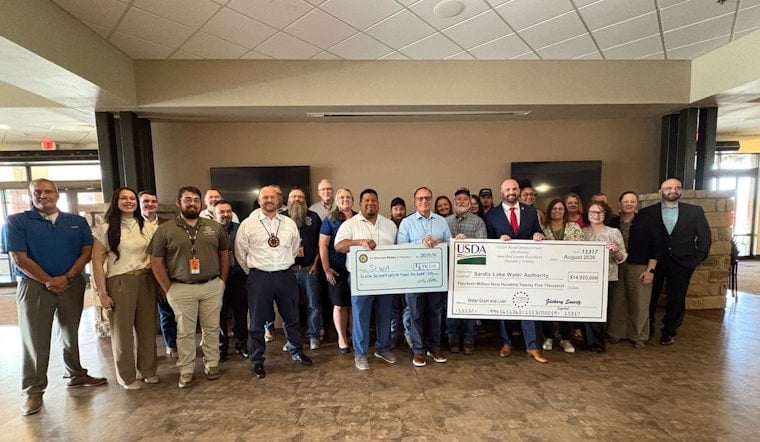
Rural southeastern Oklahoma is getting a water-system upgrade with a price tag usually associated with a much bigger place. The Choctaw Nation announced more than $30 million for a new treatment plant expected to boost Sardis Lake Water Authority’s capacity from 1 million to 3.3 million gallons per day.
The check presentation in Durant brought tribal, state and federal officials together Tuesday, according to News 9. The authority serves about 5,500 residents and businesses across rural parts of Pushmataha and Latimer counties, including schools, clinics, restaurants and senior housing.
New Plant Aims To Stabilize Southeast Oklahoma Water Service
The Choctaw Nation’s water-resource program says it works with local providers on safe, reliable infrastructure, regulatory compliance and funding opportunities, as outlined by the Choctaw Nation. For Sardis Lake customers, the larger facility is expected to improve reliability while creating room for future residential and commercial growth.
The project will expand drinking-water service around Clayton and Nashoba while supporting several rural water districts, News 9 reported. The increased capacity could also give local operators more flexibility when demand rises or equipment needs to be taken offline for maintenance.
Investment Builds On Earlier Water-System Work
The new plant is not the first major investment tied to Sardis Lake Water Authority. In 2024, the Oklahoma Water Resources Board approved more than $3.2 million for system improvements, alongside Choctaw Nation matching funds, with planned work involving the intake structure, plant building, filters, chemical systems and electrical equipment, according to the Oklahoma Water Resources Board.
The announcement also fits into a broader tribal-state push to upgrade aging water infrastructure across the reservation area. In 2025, Biskinik reported that the Choctaw Nation had committed more than $28 million in American Rescue Plan funding across 15 water projects, with combined state matching funds pushing the overall investment above $48 million.
For a region where a water outage can ripple through schools, clinics and local businesses, the significance is straightforward: more treatment capacity gives communities more room to grow without treating every new customer as a gamble. In rural Oklahoma, economic development often begins with infrastructure most people notice only when it stops working.





