

























































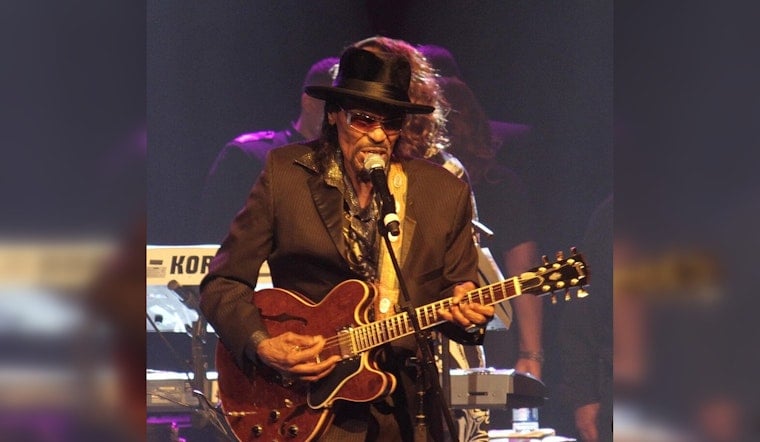
The family of go-go pioneer Chuck Brown has withdrawn its support from Chuck Brown Day, the annual D.C. festival built in his honor, just days before its 12th edition is set to take the stage at Fort Dupont Park. Nekos Brown, the musician's son, says the split follows three years of what he describes as poor communication, a lack of professionalism, and the city's failure to follow through on agreed-upon obligations.
The rupture became official in February, when Nekos Brown notified the D.C. Department of Parks and Recreation that the family was stepping away from the event, according to FOX 5 DC. Brown told the outlet that protecting his father's legacy has become a major daily task, and that much changed for the worse once the festival moved away from its original home at Chuck Brown Memorial Park. The family has accused organizers of marginalizing them, failing to honor agreements, and engaging in what they describe as prolonged problematic behavior.
From a Memorial Park to Fort Dupont
Chuck Brown Day began small, drawing roughly 1,000 attendees in its first year, but the crowds grew so large that the celebration eventually outgrew its birthplace. The Chuck Brown Memorial Park in Langdon, dedicated in 2014 as a $1.8 million, 42,000-square-foot space shaped like a guitar pick, was designed with a mosaic wall tracing Brown's life, though plans for a 900-seat amphitheater there were scrapped after neighbors raised noise concerns. As the event's attendance swelled past 10,000 last year, the D.C. Department of Parks and Recreation relocated the festival to Fort Dupont Park in Southeast Washington, a move the family cites as the starting point of deteriorating communication.
Despite the family's exit, the city intends to move forward with this year's celebration. Thennie Freeman, director of the D.C. Department of Parks and Recreation, said the agency respects the family's decision to withdraw support but maintains the department has had a positive, long-standing relationship with Chuck Brown's family. Chuck Brown Day, Freeman said, is Chuck Brown Day, and the event aims to pay homage to go-go music and culture without disrespecting the family.
Saturday's Festival Still On, Name Unchanged For Now
Gates for the 12th annual Chuck Brown Day open Saturday at 11 a.m. at Fort Dupont Park, with music beginning at 2 p.m. The event will keep its current name for the time being, even as the family reconsiders its role. Nekos Brown has indicated the family would consider returning if new leadership and direction are put in place, though no such changes have been announced.
The date carries deep symbolism: Chuck Brown was born August 22, 1936, in Gaston, North Carolina, and moved to D.C. at age six. Then-Mayor Vincent Gray designated August 22 as Chuck Brown Day in 2012, following Brown's death that May at age 75 from pneumonia complications and multi-organ failure, establishing the tribute to honor his legacy as the city's unofficial ambassador of music.
A Genre Woven Into the City's Identity
Brown, widely known as the Godfather of Go-Go, built the genre in the 1970s by having percussionists play continuous breakdown beats between songs so crowds never had to stop dancing, according to WBSS Media. His band's 1979 single Bustin' Loose spent four weeks at No. 1 on the Billboard R&B chart, reached No. 34 on the Hot 100, and sold more than 500,000 copies, per Popdose. The Neptunes later sampled the track for Nelly's 2002 hit Hot in Herre, and the song still plays at Nationals Park after home runs and at Capital One Arena following Capitals wins, according to KUNC. In 2005, the National Endowment for the Arts awarded Brown a National Heritage Fellowship, the federal government's highest honor in folk and traditional arts, recognizing him for creating a musical genre unique to the nation's capital.
Go-go's institutional standing in D.C. has only grown since Brown's death. In 2020, Mayor Muriel Bowser signed the Go-Go Music of the District of Columbia Designation Act into law, officially naming go-go the city's music after the bill, introduced by then-Ward 5 Councilmember Kenyan McDuffie, passed the D.C. Council unanimously. Last year, the Go-Go Museum & Cafe opened in Anacostia, a project that grew out of the #DontMuteDC movement following a 2019 neighborhood dispute over outdoor go-go music.
Federal Friction Over Brown's Legacy
The family's withdrawal comes amid other recent tensions over how Brown is publicly honored. In December, Republicans on the U.S. House Oversight Committee removed a bill from D.C. Delegate Eleanor Holmes Norton that sought to rename a Northeast D.C. post office after Brown, citing his 1950s murder conviction. Brown served eight years in prison during that decade for an incident he maintained was self-defense — the same period in which he traded cigarettes for his first guitar.
Also unresolved is the fate of the Chuck Brown Foundation's Back-to-School Giveaway, a tradition that has distributed free backpacks and school supplies to children at the festival, leveraging its multi-thousand attendance to help District students ahead of the school year. The dossier does not indicate whether that giveaway will continue at Saturday's event now that the family has stepped back, leaving one more open question hanging over a celebration built to honor a man D.C. still calls its unofficial ambassador of music.



.jpg)