

























































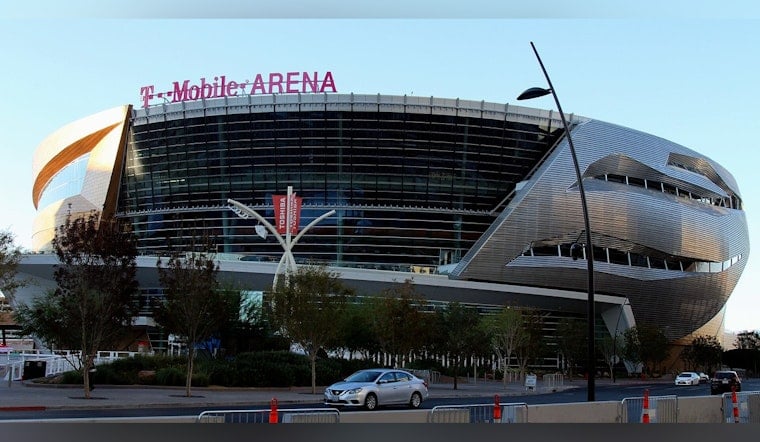
Chuy Lizárraga and Julio Preciado are bringing their new joint U.S. tour to T-Mobile Arena on Sunday, Sept. 13, with special guest Luis Ángel “El Flaco” joining the bill for a night billed as a showcase of regional Mexican music. The Las Vegas stop lands squarely during Mexican Independence Day weekend, one of the city's busiest stretches for Latino tourism and live entertainment.
According to FOX5 Las Vegas, the new U.S. tour includes two staging concepts, Chuy Lizárraga y Julio Preciado and El Chou de Chuy Lizárraga, both featuring songs pulled from each artist's catalog. Tickets go on sale Friday, Aug. 21, at 10 a.m. through AXS, the outlet reports. The T-Mobile Arena date is part of a broader run, and as reported by El Sol de Mazatlán, the joint tour spans 13 cities between Sept. 12 and Oct. 31, opening in Palm Desert, California, before hitting New York, Houston and Los Angeles.
Three Generations of Sinaloense Vocal Royalty
The Las Vegas bill brings together singers who each fronted some of the genre's most influential bandas before striking out on their own. Julio Preciado gained nationwide fame as the lead singer of Banda El Recodo from 1991 to 1998 before founding Banda Perla del Pacífico and building a solo career around hits like “Como Este Loco,” per Concerts 50. Banda El Recodo is widely regarded as “La Madre de Todas las Bandas,” making Preciado's tenure there a touchstone for longtime fans of the genre.
Chuy Lizárraga, a Sinaloa native, performed with groups including Banda San José de Mesillas and La Original Banda El Limón before going solo in 2004 with Su Banda Tierra Sinaloense. He broke through internationally in 2010 with “La Peinada,” a song that spent months on Billboard's Regional Mexican Airplay chart, according to AllMusic. Guest performer Luis Ángel “El Flaco” adds a third generation to the lineup, having spent 16 years as a lead vocalist for Banda Los Recoditos before launching his own solo career in 2020 with hits including “Ando Bien Pedo” and “El Que Te Amó,” per Apple Music.
A Proven Format Before Landing in Las Vegas
The pairing did not arrive in Las Vegas untested. Before announcing the fall tour, Chuy Lizárraga and Julio Preciado tried out their joint headlining format at other major arenas over the summer, including Toyota Arena in Ontario, California, and Allstate Arena in Rosemont, Illinois, the dossier's event reporting indicates. Those dates suggested the co-headlining pairing could draw crowds in large U.S. venues even before the broader tour was confirmed, reflecting a wider trend of legacy band leaders teaming up for joint tours across regional Mexican music.
El Grito Weekend Turns the Strip Into a Latin Music Battleground
The Sept. 13 date puts the show right in the thick of Mexican Independence Day weekend, historically one of the highest-grossing non-holiday weekends for Las Vegas tourism and a magnet for top Latin music acts across Strip arenas, as Hoodline's earlier coverage of the weekend has detailed. Nevada's population is roughly 30 percent Hispanic, and Las Vegas draws heavily from visitors arriving from Mexico during the holiday.
That same night, Latin rock band Soda Stereo is playing Dolby Live inside Park MGM, putting traditional Sinaloense brass in direct competition with classic Latin rock for the same audience on the same weekend. It is a pattern the city leans into deliberately, diversifying its Latin music offerings during mid-September rather than betting on a single genre.
Regional Mexican Music's Arena-Sized Arrival
T-Mobile Arena itself underscores how far regional Mexican acts have come on the Strip. The venue opened in April 2016 behind Park MGM and New York-New York as a $375 million, 20,000-seat arena co-owned by MGM Resorts International and AEG, and it hosts between 100 and 150 major events a year, ranging from NHL hockey games to global touring acts. A year earlier, in September 2025, Carín León became the first Latino artist to headline Sphere in Las Vegas during Mexican Independence Day celebrations, a milestone Hoodline covered at the time and one that reflects regional Mexican music's steady climb from smaller halls to the city's biggest, most technologically advanced stages.





.jpg)