

























































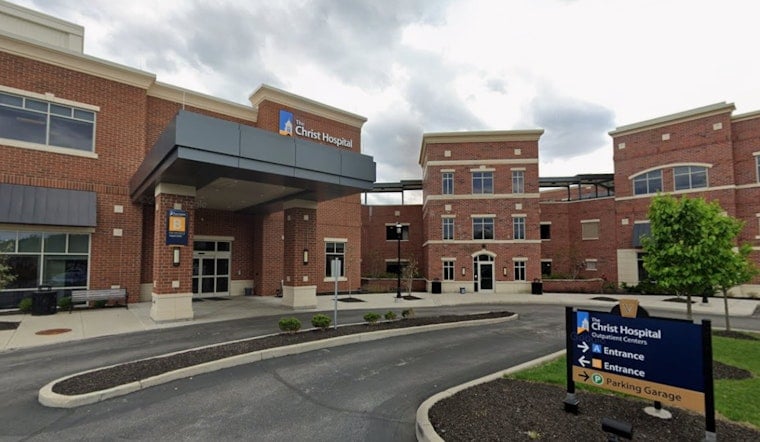
A Cincinnati cardiologist has landed a $3.6 million federal grant to lead what her hospital calls the nation's first clinical trial testing a treatment for a form of heart disease that disproportionately strikes women. Dr. Odayme Quesada, medical director of The Christ Hospital's Women's Heart Center, will run the five-year study out of the Carl & Edyth Lindner Center for Research and Education, with patient enrollment expected to begin this fall.
The trial, funded through a National Institutes of Health R01 research grant and formally named aDAPt-ANOCA, will examine whether dapagliflozin, an FDA-approved medication currently used to treat type 2 diabetes and heart failure, can effectively treat coronary microvascular dysfunction in patients with angina and nonobstructive coronary artery disease, according to WKRC. The condition, known by the acronyms ANOCA and CMD, affects the heart's tiny blood vessels and can cause persistent chest pain, pressure and shortness of breath even when major coronary arteries show no significant blockages. Researchers plan to enroll 120 men and women, splitting participants so that half receive dapagliflozin and half receive a placebo, with neither patients nor the research team told who got which until the study wraps.
The trial will be conducted at The Christ Hospital in collaboration with University of Cincinnati researchers, cementing Cincinnati's role as a hub for this line of cardiac research. That role traces back to 2020, when Quesada was recruited to The Christ Hospital from Cedars-Sinai Medical Center in Los Angeles specifically to build the city's first dedicated Women's Heart Center and Coronary Microvascular and Vasomotor Dysfunction program, per The Christ Hospital Health Network.
Why So Many Patients Get Sent Home Without Answers
The scale of the problem is significant. The Christ Hospital has said nearly 1 million patients in the United States are evaluated each year for obstructive coronary artery disease as a possible cause of chest pain, and up to 70% of those patients are found to have no significant blockages at all. Nationally, data from the NIH-sponsored Women's Ischemia Syndrome Evaluation and American College of Cardiology registries estimate that 3 million to 4 million Americans suffer from ischemia or angina without obstructive coronary artery disease, according to a study published in Circulation. The Christ Hospital has put the estimated annual economic burden of ANOCA in the United States at $21 billion, and the network notes the condition disproportionately affects women.
“Too many patients, particularly women, are told their heart tests look fine, but they continue to have persistent chest pain,” Quesada said, attributing the problem to coronary microvascular dysfunction. She added that there are currently no treatments that target and reverse CMD once it develops, a gap her team's earlier work helped illuminate. Between October 2020 and July 2024, 422 patients underwent invasive coronary functional testing at The Christ Hospital Women's Heart Center, with comprehensive testing showing that 42% had mixed microvascular disease and 19% had endothelial-independent coronary microvascular dysfunction, according to a study indexed on PubMed.
Local Pilot Data Pointed to a Diabetes Drug
The choice of dapagliflozin was not a shot in the dark. Retrospective registry data presented at the American Heart Association in November 2024 by Christ Hospital researchers showed that ANOCA patients treated off-label with SGLT2 inhibitors, the drug class that includes dapagliflozin, experienced significant reductions in moderate-to-severe angina symptoms, per findings published in American Heart Association Journals. Separately, a four-year follow-up study published in August 2025 found that dapagliflozin treatment produced a sustained 30% improvement in coronary flow reserve and reduced epicardial fat thickness in patients, offering physiological evidence that the drug can improve blood flow through the microvasculature.
Those local findings arrive against a backdrop of disappointing results from broader trials. The 2,476-patient WARRIOR trial, sponsored by the NIH and published in 2025, found that traditional intensive medical therapy, including statins, ACE inhibitors and aspirin, failed to reduce major adverse cardiovascular events in women with nonobstructive coronary artery disease. That result underscores why researchers are now testing therapies aimed directly at restoring microvascular function rather than relying on standard heart-disease medications. Cincinnati's trial is not the only one chasing this approach; federal clinical trial listings show academic institutions including the University of Virginia have launched parallel studies investigating dapagliflozin for microvascular angina, part of a broader national shift in cardiology toward SGLT2 inhibitors.
A Long Runway of Federal Research Funding
The $3.6 million R01 grant is not Quesada's first major NIH award. She previously received a five-year NIH K23 Career Development Award to investigate long-term cardiovascular risks associated with hypertensive disorders during pregnancy, according to The Christ Hospital's fellowship faculty page, reflecting a research career built around sex-specific cardiovascular conditions. Quesada holds the Ginger Warner Endowed Chair in Women's Cardiovascular Health at The Christ Hospital and earned her medical degree and a Master of Health Science from Yale University School of Medicine after growing up in Cuba and attending the University of Florida, according to her Wikipedia entry.
Dr. Dean Kereiakes, chairman of The Christ Hospital Heart & Vascular Institute, said Quesada's selection to lead the nation's only study of its kind reflects a commitment to meaningful clinical research and better treatment options. The trial adds to a run of cardiovascular milestones at the hospital this year, following Hoodline's coverage of a world-first robotic aorta repair and Ohio's first new tricuspid valve implant at the same facility.
For now, the open question researchers hope to answer is whether dapagliflozin's mechanism, already shown in diabetes studies to improve coronary flow reserve and reduce epicardial fat, will translate into meaningful symptom relief in a rigorous, double-blind, placebo-controlled setting across both men and women. With enrollment set to begin this fall at the Lindner Center, patients in Cincinnati and beyond may soon have an answer to a question that has gone unresolved for millions of Americans living with chest pain and no clear diagnosis.





