

























































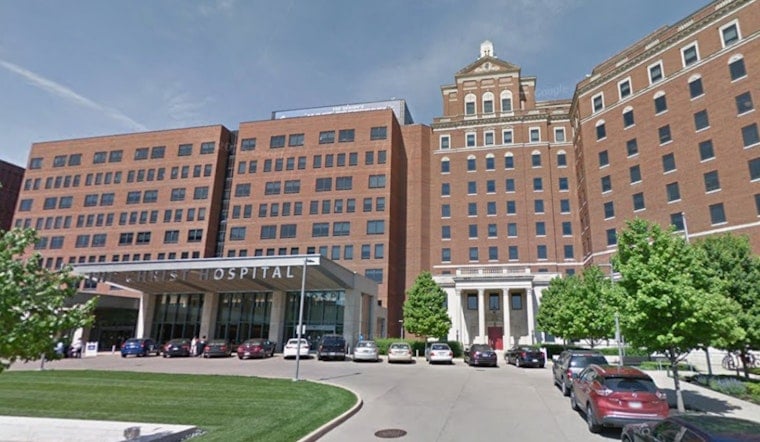
Surgeons at The Christ Hospital in Cincinnati say they have completed the world's first robotic replacement of the ascending aorta, removing an enlarged section of the body's largest artery and swapping in a synthetic graft through small incisions between the ribs rather than cracking open a patient's chest. Dr. Juan B. Umana-Pizano and Dr. J. Michael Smith co-led the cardiac surgery team behind the procedure, according to the hospital's doctors.
The ascending aorta, the segment closest to the heart, becomes a surgical concern when it weakens and enlarges, and traditionally that kind of repair has meant a sternotomy — dividing the breastbone to open the chest. According to Local 12, the Christ Hospital team instead used a totally endoscopic robotic approach to remove the affected section and replace it with a surgical graft. The hospital's own account, detailed in a press release, specifies that the team used Intuitive Surgical's da Vinci 5 system to complete the graft placement through small rib incisions, avoiding the chest-opening breastbone division altogether.
A Track Record Building Toward This Moment
Dr. Smith brought considerable robotic experience into the operating room. He has personally performed more than 4,000 robotic heart procedures over the course of his Cincinnati career, and the announcement of this world-first landed just one day after The Christ Hospital named him President of its Heart & Vascular Institute on August 12. That same day, the hospital also named Dr. Daniel Pelchovitz as Medical Director of the institute, formally restructuring its cardiovascular executive leadership.
Smith was already no stranger to firsts on this platform. In March 2025, he led a Christ Hospital team in performing the first robotic aortic valve replacement in the United States using the da Vinci 5 robot, according to a report from LINK nky. Dr. Umana-Pizano, the lead cardiothoracic surgeon on this latest procedure, earned his medical degree from Universidad de Los Andes in Bogota, Colombia, and completed his surgical residency and fellowship at the Cleveland Clinic before joining the Cincinnati hospital.
Regulatory Timing Lines Up With the Milestone
The operation comes only months after the Food and Drug Administration cleared Intuitive Surgical's da Vinci 5 system for key cardiac procedures in January, a clearance that prompted the company to pursue a measured rollout emphasizing specialized training for complex heart surgeries, per MedTech Dive. Nationwide, da Vinci robotic procedure volume grew 15% in 2025 to exceed 2 million cases, while robotic cardiac surgery across all da Vinci platforms globally reached roughly 17,000 procedures that same year, the outlet reports.
That growth trend extends well beyond Cincinnati — hospitals elsewhere in the country, including Pomona Valley Hospital in California, have also added da Vinci 5 systems as robotic-assisted surgery becomes more common across specialties.
Why the Repair Method Matters Regionally
The stakes behind less invasive aortic repair are significant. Aortic aneurysms and dissections cause nearly 10,000 deaths annually in the United States, and a rupture or tear in the aortic wall is an immediate life-threatening emergency, according to the Centers for Disease Control and Prevention. A 2026 CDC WONDER population analysis spanning 1999 to 2024 found that residents of the U.S. Midwest consistently experience the nation's highest age-adjusted mortality rate for abdominal and thoracic aortic aneurysms, according to research published in MDPI — underscoring why expanded access to less invasive aortic repair carries particular weight for patients across Greater Cincinnati and the broader region.
This is not the only structural heart milestone The Christ Hospital has claimed this month. Just a week earlier, chief of cardiothoracic surgery Dr. Geoffrey Answini led the hospital's team in performing Ohio's first Triformis valve implant on August 6, a separate first-of-its-kind procedure in structural heart care. Together, the two announcements point to an institute pushing hard to expand its national profile in cardiovascular innovation.
Robotic ascending aorta repair offers a real recovery advantage by sparing patients a sternotomy, but the approach depends heavily on a patient's specific anatomy and isn't yet an option for every case of aortic disease — a limitation that remains part of the broader conversation as hospitals weigh how quickly to expand robotic cardiac programs.





