

























































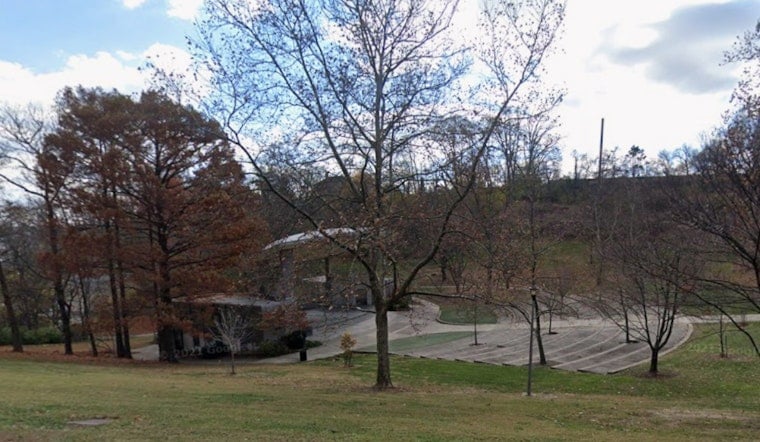
Cincinnati musician Yemi Oyediran will debut an original jazz suite Thursday, August 27, at Seasongood Pavilion in Eden Park that turns a 19th-century Nigerian civil war his own family helped finance into a live performance blending jazz, West African percussion and modern beats. The piece, titled Kiriji Asoro Fabunmi: The Legend of Fabunmi, closes out the 2026 season of It's Commonly Jazz, the free summer concert series that has run in Cincinnati since 1985.
According to Cincinnati CityBeat, the performance features six jazz pieces built around the Kiriji War, described in the piece as the longest civil war of the pre-colonial Yoruba empire. The show also weaves in six moments of dance and celebration, and Oyediran says he wants the Eden Park crowd to dance, honor ancestors, look inward and reflect on their place in the world. He has also said he hopes the night gives Cincinnati audiences the feeling of being part of a large extended family, and that the real takeaway is a deeper connection with self and community through music.
A Family Story Passed Down at Christmas
The performance's roots run through Oyediran's own bloodline. Per CityBeat's reporting, his great-grandfather helped finance the Kiriji War and rallied his town and parts of the region to support the effort led by Fabunmi of Okemesi, described as a Yoruba warlord who helped launch the conflict. The war itself began in Oyediran's ancestral hometown, and the outlet reports that Oyediran's ancestors gathered family members each Christmas to tell stories about the war, their town and family history.
Oyediran has said ancestry matters for knowing oneself and others, and he wants audiences to walk away discussing their own families after the performance. The historical episode at the center of the suite carries real documented weight: the Kiriji War drew its name from the thunderous ki-ri-ji sound produced by imported European breech-loading rifles and cannons that revolt forces deployed, according to CYSTADS. The 16-year war officially broke out on July 30, 1877, in Okemesi, when Prince Fabunmi led an uprising against Ibadan's imperial dominance by killing an abusive tax official named Awopetu during the annual Erinle festival, the same outlet reports. It reached an official peace agreement on September 23, 1886, through a treaty negotiated by British colonial administrators and Christian missionaries, ending 16 years of major open warfare between the Ekiti-Parapo Confederacy and Ibadan, according to Wikipedia, which notes the date is still widely commemorated as a day of Yoruba unification and Ekiti independence.
A Griot's Drum Carries the Narration
Central to the show is Dr. Joshua Kerobo, described by CityBeat as the performance's central storyteller, who will narrate the events of the Kiriji War vocally and musically while playing the traditional Yoruba instrument ilu gangan, an hourglass-shaped talking drum. Kerobo will guide the audience into moments of reflection throughout the piece, and CityBeat identifies him as a griot, a West African historian and storyteller. The Facebook event page for It's Commonly Jazz confirms Kerobo's role in the eight-piece ensemble alongside arranger Brandon Scott Coleman, bassist Brandon Meeks and mallets and trumpet player Josh Strange, in what the page describes as the closing concert of the 2026 summer jazz program.
The talking drum's role isn't just theatrical color. Yoruba is a tonal language, and the ilu gangan can produce sounds similar to those tones because drummers squeeze leather tension cords under their arm to adjust pitch and replicate the high, mid and low inflections of spoken Yoruba, according to research published in Frontiers in Communication, which classifies the instrument within the dùndún family of hourglass-shaped pressure drums. That acoustic mechanic is what lets Kerobo's drum effectively speak alongside his narration during the performance.
Jazz Arrangements Built From Jùjú Pioneers
Arranger Brandon Scott Coleman transformed six traditional Nigerian songs into modern jazz works for the show, tackling Nigerian music arrangement for the first time, per CityBeat's account. Five of those songs were written by Chief Commander Ebenezer Obey, who formed his International Brothers band in 1964 and became a pioneer of modern Jùjú music by integrating Yoruba proverbs with layered guitar arrangements, according to Historical Nigeria. CityBeat reports that Obey's five songs honor regions of Nigeria represented in the performance, with arrangements drawing on artists ranging from Thelonious Monk and John Coltrane to Wayne Shorter and Herbie Hancock's 1970s sound.
The sixth song, I Remember My Darling, was written by I.K. Dairo and gets a freer arrangement inspired by Ornette Coleman in the show, CityBeat notes. Dairo introduced the ten-button accordion and talking drum to modern Jùjú music in the late 1950s and was appointed a Member of the Order of the British Empire by Queen Elizabeth II in 1963, according to RootsWorld, which notes he remains the only African musician ever awarded an MBE. Coleman has said he expects the musicians in his ensemble to interpret his arrangements through their own voices, and CityBeat reports he intentionally left room for players to improvise and bring their own perspectives into the music.
Sherman's Beats Bridge Generations of Black Music
Saxophonist, music director and composer Ziaire Trinidad Sherman composed the musical works beneath Kerobo's narration and studied changes in Nigerian music across generations to build the score, according to CityBeat's reporting. Sherman drew inspiration from Black American music broadly, and one hip-hop-inflected section of the performance pulls from Nas, Jay-Z, DJ Premier and RZA. Sherman also overdubbed different saxophones for one Afrobeat-inspired composition, and has said the musicians create a shared soundscape that uplifts the story.
Sherman's sound combines electronics and live band instrumentation, and the performance moves between modern electronic Afrobeats and older acoustic Afrobeat traditions associated with Fela Aníkúlápó Kútì, the genre's originator. CityBeat's arrangement breakdown also describes Ijesha as a calypso-style piece associated with Thelonious Monk, Ekiti as combining a bebop-style melody with swing and Afro-Caribbean shifts, and Egba as drawing from Herbie Hancock's 1970s sound — a musical map that mirrors the geography of the historical conflict itself. Band members span different generations, according to the outlet, echoing the intergenerational storytelling at the heart of the project.
Eden Park's Long-Running Free Jazz Stage
The show closes out a Cincinnati institution. It's Commonly Jazz was founded in 1985 by Swifton Commons shopping center manager Carolyn Wallace as a courtyard concert series before becoming Cincinnati's longest-running free summer jazz series, according to WOSU Public Media, which reports the series moved to Eden Park's Seasongood Pavilion in 2008 while adopting eco-friendly event practices. That pavilion, dedicated in 1960, is a concrete outdoor amphitheater donated to the City of Cincinnati by Martha S. Stern in honor of her brother, former Cincinnati Mayor Murray Seasongood, who led the city from 1926 to 1930, according to Cincinnati Parks.
Oyediran's connection to Cincinnati's music history runs beyond this single performance. Beyond his live drumming, he co-produced and directed the 2025 PBS documentary King of Them All: The Story of King Records, which chronicled Cincinnati's historically influential mid-century record label, according to Movers & Makers. That label was known for recording Black and white artists together in Evanston, the outlet notes, a detail that adds another layer to Oyediran's role as a local chronicler of music history. The performance begins at 6 p.m. Thursday at Eden Park.





