

























































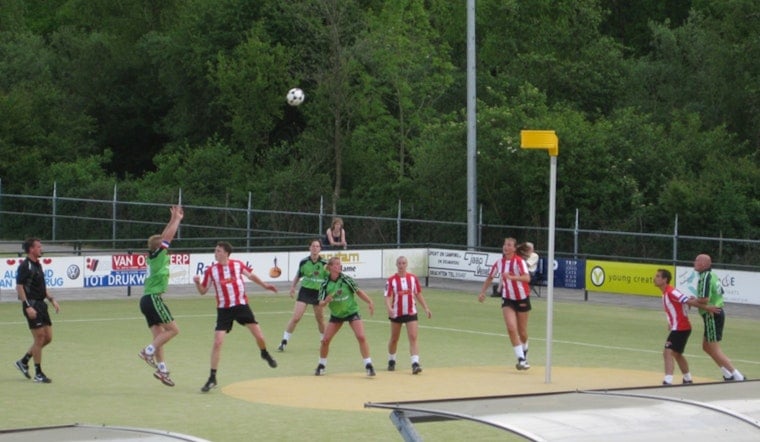
A netless basket nearly 12 feet in the air, teams mixing men and women on equal footing, and a broom-wielding squad trying to knock a ball into a net — this is the scene organizers are planning for Sawyer Point Park on Sept. 27, when Rec Fest Cincinnati brings 16 niche sports together for one free afternoon downtown. The event runs from noon to 6 p.m. and is designed to introduce Cincinnatians to games most have never seen played, let alone tried themselves.
The event is the brainchild of Kyle Reiser, who runs Queen City Korfball, and it will bring together 15 other niche sports teams to organize the festival, according to the Cincinnati Enquirer. Reiser told the paper that visitors will be able to move between sports and try them out alongside teams that are actively recruiting new players. Backing the effort is the newly formed Cincinnati Regional Sports Commission, which sees the gathering as more than just a fun day in the park.
Attendees can expect a lineup that includes Cincinnati Gladiators Handball Club, Skate Downtown Cincinnati, and Cincinnati Ultimate, alongside tennis, pickleball, rugby, Australian football, fishing, disc golf, women's football, e-sports, roller skating and cricket. Food trucks and music will round out the atmosphere, and the festival will feature designated areas where visitors can learn the basics of each sport and sign up for local teams on the spot. Attendance is free, though visitors must complete a waiver to participate in any of the activities.
What Exactly Is Korfball?
Korfball, the sport lending its name to much of the buzz around the event, was invented in Amsterdam in 1902 by Dutch schoolmaster Nico Broekhuysen, who adapted a Swedish game called ringboll into a team sport built around gender equality, according to Encyclopaedia Britannica. Broekhuysen swapped out traditional metal rings for woven baskets, or korfs, which give the sport its name. Teams consist of eight players — four men and four women — and players guard only opponents of the same sex, per the Enquirer's rundown of the game's rules.
The sport has a surprisingly deep international pedigree. Korfball appeared as an official demonstration sport at the 1920 Summer Olympics in Antwerp and again at the 1928 Games in Amsterdam, a showcase reportedly organized with help from Broekhuysen himself, according to Wikipedia's history of the sport. Today the International Korfball Federation, established in 1933, represents more than 60 national member associations and oversees world championships in both indoor and beach formats, the federation notes on its website.
Rec Fest will also introduce Cincinnatians to a handful of other unfamiliar games. Team handball pits two squads of seven players against each other as they try to throw a ball into the opposing goal, while broomball players use specially designed brooms to knock a ball into a net. Gaelic football features two teams of 15 attempting to kick or punch a ball through or over the opposing goal, with players allowed four steps before they must bounce the ball. Orienteering competitors, meanwhile, will navigate unfamiliar terrain using nothing but a detailed map.
A New Sports Commission With Big Ambitions
Rec Fest is as much an economic strategy as it is a community event. Ben Huffman, executive director of the Cincinnati Regional Sports Commission, told the Enquirer that niche sports represent where the city is headed and that growing local participation creates an opening to land larger events. Huffman took the helm of the commission in June 2025 after 19 years in Warren County, where he grew sports tourism's economic impact from $1 million to more than $135 million annually, according to Visit Cincy.
Huffman has said niche sports have the potential to bring millions of dollars into Greater Cincinnati, and history in the region backs that up. Warren County hosted the World Flying Disc Federation's World Ultimate Club Championships in both 2018 and 2022, and the 2018 event alone generated more than $10 million in direct economic impact, per data reported by the Enquirer. The commission works alongside Visit Cincy to pursue sports events that benefit the local economy, and it currently has financial backing from both Hamilton County and the city of Cincinnati.
That public investment has already taken shape: the Hamilton County Board of Commissioners approved a $150,000 grant in April 2025, funded by local lodging tax revenue, to support the sports commission's launch and its event-bid efforts while the organization finalized its independent tax-exempt status, per county records. The commission has said Rec Fest itself could help bring niche-sport world championships to Cincinnati down the road. It's also part of a broader push that includes vying for Cincinnati to host matches for the 2031 Men's Rugby World Cup, a story Hoodline covered in its NFL Draft bid coverage.
Catching Up With Regional Rivals
Cincinnati's move to formalize a sports commission comes years after Midwest peers like Indianapolis, Louisville and Columbus built their own versions of the same playbook, according to Realm Cincinnati. Those cities have long used dedicated commissions to secure amateur and collegiate tournaments, and Cincinnati's late entry into that competition helps explain the urgency behind events like Rec Fest. The stakes extend beyond niche sports alone: Cincy Region visitor spending exceeds $6.5 billion annually, with Hamilton County tourism directly supporting 46,000 jobs and generating $229 million in local tax revenue, according to Cincinnati People.
Whether a free festival at Sawyer Point can translate into sustained league membership — or eventually a world championship bid — remains to be seen. But for now, organizers are betting that curiosity about a netless basket or a broom-swinging melee is enough to get Cincinnatians in the door on Sept. 27.




