

























































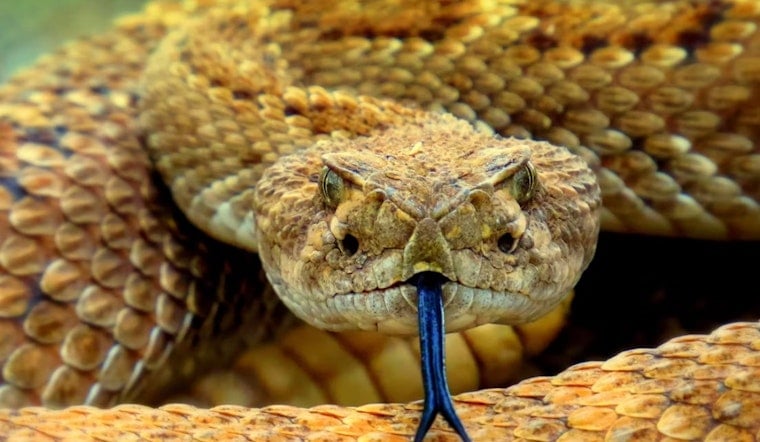
A rattlesnake nearly struck Albert Mond's one-year-old pit bull near Meade and Fairmount avenues in City Heights, and the 29-year-old, who is homeless, responded by pinning the snake with a branch and grabbing it with his bare left hand. He then walked to a nearby CVS, where workers gave him a crate, and he taped the reptile inside and sat with it through the night.
Mond told 10News that his dog jumped three to four feet in the air when the snake nearly struck it. He said his motivation was the safety of people in the area, and that he felt obligated to protect children, a nearby YMCA, and a school zone. Mond called 911, but according to his account, emergency responders could not help him because nobody was hurt. He reached out to ABC 10News the following morning to share what happened.
A Long Night Guarding a Taped Crate
Reporter Michael Chen, who wrote the original account, contacted snake wranglers after hearing from Mond, and the company dispatched wrangler Jared Roussel to the scene. Roussel removed the snake from the crate and described it as an older, 3.5-foot-long rattlesnake that was, in his words, real skinny and dehydrated. He believes the snake may have come from a nearby canyon in search of water or food.
That geography lines up with the neighborhood's layout: City Heights sits alongside the City Heights Canyons Loop, a 4.5-mile network connecting five urban canyons — Swan, Manzanita, Hollywood, Pepper, and 47th Street — that run directly against residential streets near Fairmount Avenue, according to San Diego Canyonlands. Those canyon corridors give rattlesnakes a natural path into backyards and sidewalks as they search for water during hot months. Roussel said he planned to hydrate the snake before relocating it, and Mond said afterward that the snake was out of his neighborhood.
Why Officials Warn Against Copying Him
Roussel cautioned that people should not follow Mond's example, advising instead that people keep their distance from rattlesnakes, watch them from afar, and call a snake wrangler. That guidance mirrors official City of San Diego safety instructions, which tell residents to stay at least six feet away from a rattlesnake, keep it in view, and call animal control rather than attempt a capture or pinning, per the City of San Diego. For residents facing an immediate threat to people or pets, the San Diego Humane Society runs a dedicated Humane Law Enforcement dispatch line at 619-299-7012.
There's also a legal wrinkle behind Roussel's warning. Under California Fish and Game Code Section 2118 and California Department of Fish and Wildlife guidelines, relocating captured wildlife without state authorization is illegal, largely because relocated reptiles face up to a 90% mortality rate, according to KPBS. That rule is part of why professional wranglers, rather than well-meaning bystanders, are typically the ones trusted to move a captured snake safely.
Bare Hands Against Long Odds
The species Mond likely encountered, the Southern Pacific rattlesnake, is the most common venomous snake in urban and coastal San Diego County and frequently turns up in canyons bordering residential areas, per the San Diego Herpetological Society. The county is also home to three other native rattlesnake species, including the Red Diamond rattlesnake, a California Species of Special Concern, according to the California Department of Fish and Wildlife.
Mond avoided what could have been a costly and dangerous outcome. Severe rattlesnake bites in Southern California require specialized antivenom such as CroFab or Anavip, running roughly $2,500 per vial, with multi-vial ICU treatment often totaling tens of thousands of dollars, according to research published in the Journal of Medical Toxicology. Domestic pets are bitten by rattlesnakes roughly 20 times more often than humans due to their curious behavior around hidden wildlife, per the Snake School for Dogs — a statistic that underscores why Mond moved so quickly once his dog was nearly struck.
The encounter also landed during an unusually dangerous stretch for rattlesnake activity statewide. California recorded 77 poison control calls and three bite fatalities in just the first three months of 2026, far above the typical statewide average of zero to one fatality per year, according to the California Poison Control System. Roughly 90% of venomous snakebites in California occur between April and October, when warm weather pushes both snakes and people outdoors, per the California Department of Fish and Wildlife. Mond wanted, above all, for children and the rest of the community to be safer, even if his method broke from the rules officials say are meant to keep both people and snakes alive.


