

























































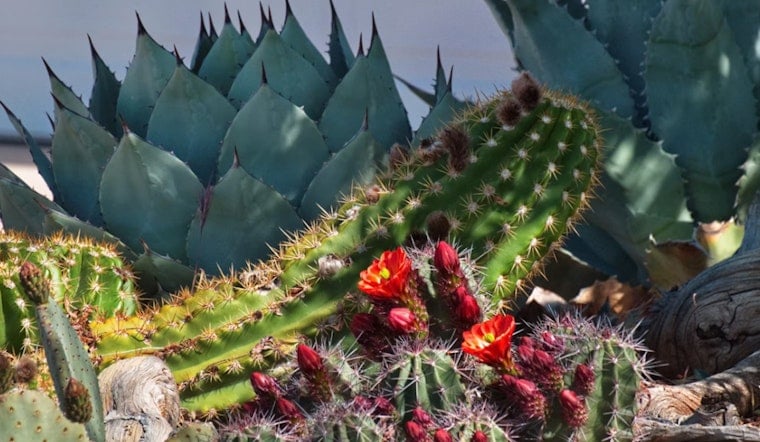
The New Orleans Botanical Garden is trading thirsty landscaping for cacti, agaves and yuccas, unveiling a completely reworked Sun Garden that leans on drought-tolerant plants instead of the water-hungry varieties that once filled the space. The redesign, which began in May 2026, strips out much of the garden's old plant material and replaces it with hundreds of heat-tolerant species meant to survive New Orleans summers with far less irrigation.
The public can see the finished project for the first time at a free community event scheduled for 10 a.m. to noon on September 2, according to New Orleans CityBusiness. The date lines up with the garden's weekly free admission day for Louisiana residents, a program supported by The Helis Foundation; non-residents will still pay the standard admission rate that day. Visitors with a Louisiana ID get in free, while everyone else pays the garden's regular ticket price.
Workers excavated about three inches of soil from the Sun Garden site and mixed in sand and pea gravel to fix drainage problems, then added rocks, washed gravel and new elevation changes to reshape the terrain, per the same account. Two large blue agaves that were already established in the garden were kept in place through the overhaul, anchoring the new design around the site's existing bones.
What's Actually Growing There Now
The reworked Sun Garden centers on large agaves, yuccas and prickly pear cacti as its primary landscape features, filled out with ghost plant, ice plant and a broader mix of cacti and succulents. The goal, per the CityBusiness report, is a working demonstration of xeriscaping techniques that New Orleans homeowners could realistically use in their own yards, since xeriscaping reduces the need for supplemental watering once plants take root.
City Park Conservancy CEO Rebecca Dietz framed the project as part of the broader stewardship of the park's grounds. “The Botanical Garden is a special part of City Park, and caring for it means nurturing and enhancing its spaces,” Dietz said, according to the outlet. She also credited the people who did the physical work of the redesign: “Our horticulture team put tremendous care and hard work into bringing the Sun Garden vision to life,” Dietz said.
Free Succulents and a Custom Sno-Ball
Botanical Garden staff will be on hand during the September 2 event to talk through the renovation and offer tips on growing succulents and drought-tolerant plants at home. Visitors may walk away with a complimentary succulent while supplies last, and Imperial Woodpecker Sno-Balls is bringing its limited-edition City Park Bloom Ball flavor, a lemon, ginger and hibiscus creation, offering a limited number free before selling additional sno-balls to the crowd. Hoodline previously covered Imperial Woodpecker's fourth stand opening near City Putt earlier this month.
The New Orleans Botanical Garden sits at 5 Victory Ave. inside City Park's 1,300 acres, a park that draws about 16 million visits annually, according to the organization. City Park Conservancy, the nonprofit that handles the park's day-to-day operations, partners with the City Park Improvement Association to manage the grounds. Standard adult admission runs $15 for Louisiana residents with valid state ID and $25 for non-residents, with children ages 3 to 12 admitted for $7 and kids 2 and under free, per New Orleans City Park.
A Depression-Era Garden Adapting to a Hotter Future
The Sun Garden's makeover is part of a much older story. The Botanical Garden opened in 1936 as the City Park Rose Garden, built with Works Progress Administration funding as the city's first public classical garden, before being rechristened the New Orleans Botanical Garden in the early 1980s as its focus widened beyond roses, according to New Orleans City Park. The 10-acre garden still preserves 1930s Art Deco landscape architecture designed by architect Richard Koch, landscape architect William Wiedorn and sculptor Enrique Alférez, as documented by The Cultural Landscape Foundation, and today houses more than 2,000 plant varieties across specialized collections like the Japanese Garden and Historic Train Garden.
The garden has weathered disaster before. Hurricane Katrina flooded the site under roughly four feet of water in August 2005, wiping out nearly all of its plant life except its historic live oaks, per the Cultural Landscape Foundation, and its recovery afterward became a local symbol of civic rebuilding. The garden's modern identity owes much to former director Paul Soniat, who retired in late 2023 after 41 years leading the facility from a neglected, underfunded rose garden into a major regional attraction, as reported by NOLA.com.
The Sun Garden project also fits into City Park's long-range planning. City Park Conservancy and the City Park Improvement Association approved City Park 2050 in August 2025, a 25-year master plan from landscape architecture firm Michael Van Valkenburgh Associates that centers on environmental resilience and park stewardship, shaped by a multi-year community engagement effort called Making Gumbo. As New Orleans faces more intense summer heat waves and dry spells alongside its traditional flooding risks, the drought-tolerant plantings offer a small-scale test case for how the park's landscaping might adapt going forward.





