

























































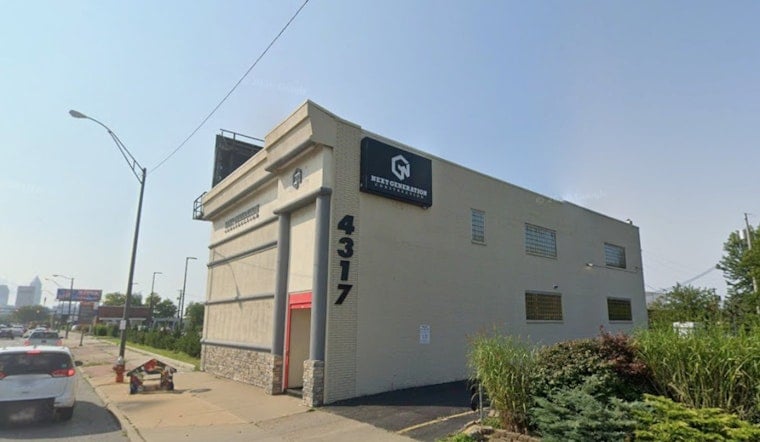
For more than two decades, a felony conviction from Shakorie Davis's youth trailed him onto every construction site he tried to walk, even ones his own company was building. This month, Ohio Gov. Mike DeWine granted the 47-year-old Cleveland builder a full pardon, closing out a case that began when Davis stole a $300 gold chain outside South High School in 2007 and served more than 20 months in prison on theft and drug charges from the late 1990s.
Davis is the founder of Next Generation Construction, a firm he started in 2009 that has since grown by more than 912 percent in five years and was named the fifth-fastest-growing company in Northeast Ohio, according to Cleveland.com. The company now employs more than 100 people and has built a reputation well beyond its founder's past — yet that past kept surfacing in the most mundane ways. Davis was routinely denied a visitor's badge and had to be escorted around job sites his own firm was working on because of his record, and he was also denied a small-business loan and a United Kingdom visa, the outlet reported.
The Cleveland State University Pardon, Clemency and Reentry Clinic connected Davis with Ohio's Expedited Pardon Project, a program launched in 2019 to give qualified applicants a faster route than the state's traditional clemency process. Davis's application took about 16 months to move through the system, and the Ohio Parole Board ultimately approved his case by a unanimous 8-0 vote before DeWine granted the full pardon. His case became the 40th pardon granted through CSU's program, according to Cleveland.com's reporting.
A Program Built to Clear a Backlog
Davis's outcome sits inside a much larger effort. Since the Expedited Pardon Project launched in December 2019, it has received 1,662 applications from 84 Ohio counties and 33 states, resulting in 287 pardons granted by DeWine as of February 2026, according to the Drug Enforcement and Policy Center at Ohio State's Moritz College of Law. The CSU clinic alone has helped more than 500 people pursue pardons, record sealing, or expungement, and currently has 40 local applications pending, though the clinic has paused new applications outside the expedited track, per Cleveland.com.
To qualify for the expedited track rather than the traditional clemency process, applicants must go at least 10 years without another felony or misdemeanor conviction, pay all court fines and restitution, show a post-offense employment history, and complete voluntary community service, according to the Legal Aid Society of Cleveland. Applicants with violent or sexual felony convictions are automatically disqualified. The expedited pardon requirement of at least 10 years without another conviction matches what Davis had to demonstrate, and the program also requires ongoing employment and community involvement.
The efficiency gap between the two paths is stark. Traditional clemency applications in Ohio can take two years or longer and face high rejection rates, while the Expedited Pardon Project bypasses standard waitlists to bring review times down to months, according to the Hamilton County Public Defender. For comparison, former Gov. Ted Strickland granted 290 total pardons across his entire four-year term from 2007 to 2011, while rejecting roughly 75 percent of the clemency recommendations the Ohio Parole Board sent him, per the Collateral Consequences Resource Center. DeWine's 287 pardons since 2019 reflect the dedicated law-school intake pipeline that didn't exist under previous administrations.
What a Pardon Actually Changes
A pardon does not erase history the way many assume. Under Ohio Revised Code 2967.04, a gubernatorial pardon remits legal penalties and restores civil rights such as holding public office or serving on a jury, but it represents executive forgiveness rather than a judicial declaration of innocence, according to Ohio Legal Help. What has changed since April 2023 is what happens next: under Ohio Senate Bill 288, people granted a governor's pardon can now ask courts to have their official criminal records sealed or permanently expunged, a pathway that didn't clearly exist before, per the Ohio Judicial Conference. DeWine's office sealed Davis's state criminal record following his pardon.
The clinic network vetting these cases keeps expanding. In February 2026, the University of Toledo College of Law joined the Expedited Pardon Project's service providers, backed by a $100,000 grant from the Ohio Department of Rehabilitation and Correction, joining existing partners at Cleveland State, Ohio State, Akron, Dayton, and the Ohio Justice and Policy Center, according to UToledo News. Demographic data published by the Drug Enforcement and Policy Center in February 2026 shows the program's applicant pool is nearly evenly split, with 48 percent identifying as White and 47 percent as Black or African American, and two-thirds identifying as male; more than half report household incomes below $50,000.
Building Cleveland While Carrying a Record
Even while boxed out by his own record, Davis's company kept landing major work. Next Generation Construction leads lead-mitigation efforts in Cleveland, is helping build Cuyahoga County's new jail, and is part of the CLE Connection Group joint venture — alongside major regional builders including Gilbane Building Co. and Donley's — selected for the $1.6 billion overhaul of Cleveland Hopkins International Airport, according to Cleveland.com. Davis, who learned carpentry, started out flipping houses, and returned home from prison at age 25, told the outlet he built what is now a $50 million company after founding it in 2009 with nothing but that trade behind him.
Davis has also built a civic profile alongside his business one. He was named to the inaugural advisory committee for The Marshall Project – Cleveland in February 2025, joining local civic and legal leaders supporting nonprofit journalism on criminal justice reform and reentry, according to The Marshall Project – Cleveland. He has also served on numerous community boards, joined YPO, and put four children through college, per Cleveland.com's account. Khalida Jackson, quoted in that reporting, said the criminal justice system is meant to restore, not just punish.
Life After the Pardon
Davis told Cleveland.com he plans small but symbolic errands now that his record is sealed: requesting a visitor's badge at every job site instead of an escort, and applying for TSA PreCheck this year. He said he created a new identity for himself over the years and hopes his story helps change perceptions of what rehabilitation looks like. His advice to others chasing the same second chance is straightforward — keep a steady work history, give back to the community, stay on the right side of the law, and pay your taxes.
Davis has also said he believes the state should do more to help people approaching the 10-year pardon eligibility mark navigate the process before they even reach it. That view echoes a challenge facing the courts themselves: Cleveland Municipal Court and Cleveland Housing Court were shut down for more than two weeks by a cyberattack, according to Cleveland.com, underscoring how fragile the administrative machinery behind record-sealing and court filings can be even as demand for pardon relief keeps growing.



