

























































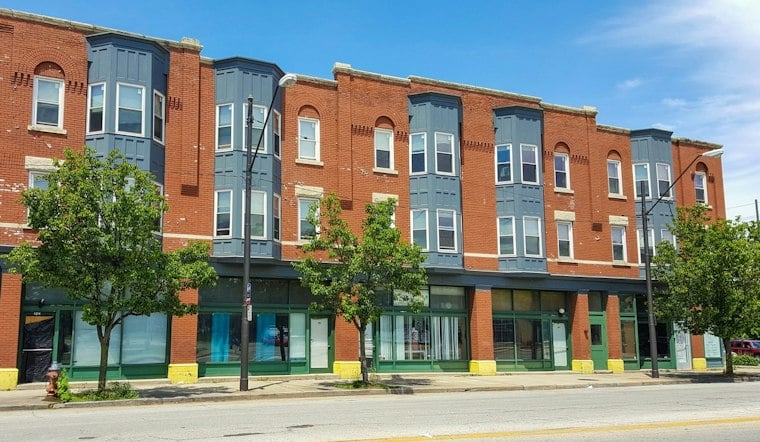
A development proposal for Cleveland's Asiatown neighborhood would set aside 101 of 120 planned apartments for renters earning 60% of area median income, with eight units reserved at 30% AMI and 11 at 80% AMI. The project, known as Midtown Lofts and also referred to as Mingyue Place, is proposed for Payne Avenue and would replace a vacant commercial building and parking area with two apartment buildings.
The 60% AMI tier makes up about 84% of the proposed apartments, while the 30% tier accounts for roughly 7% and the 80% tier about 9%, according to cleveland.com. Area median income, or AMI, is a regional benchmark used to determine who qualifies for affordable housing, and the income limits vary by household size. A household of one could earn up to $44,100 annually and still fall within the 60% AMI category in 2026, while a household of four could earn up to $63,000. Those figures are income ceilings rather than minimum earnings, and households earning less than the listed amounts may still qualify, subject to other eligibility requirements — though qualifying does not guarantee an apartment.
What the Numbers Mean for Rent
For apartments designated at 60% AMI, the 2026 maximum monthly gross rents are $1,181 for a one-bedroom, $1,417 for a two-bedroom and $1,638 for a three-bedroom, the outlet reported. Those figures are program ceilings, not confirmed Midtown Lofts asking rents, and the 2026 limits could change before the development opens. Gross rent includes an estimated allowance for covered utilities that tenants pay separately, and when those utilities are not included, the landlord's rent generally must be reduced by the applicable allowance — though Midtown Lofts has not established its specific utility allowance.
The 2025 application tied to the project also lists zero units with rental subsidies, though that listing does not establish whether additional tenant assistance may become available later. Development-financing resources like tax credits and bonds are separate from any rental assistance that might eventually be paid on behalf of individual tenants.
Developer, Financing and a Unit-Count Puzzle
NRP Holdings LLC proposed Midtown Lofts in partnership with MidTown Cleveland, and the Ohio Housing Finance Agency proposal document lists NRP Holdings as lead developer with Midtown Cleveland, Inc. as co-developer. That 2025 application requested an estimated $10 million in 10-year Ohio Low-Income Housing Tax Credits and a $2.5 million Housing Development Loan. Separately, the Port of Cleveland authorized up to $30 million in tax-exempt multifamily housing revenue bonds to support part of the project's construction costs, describing the plan as two multifamily buildings with 120 affordable units and about 3,500 square feet of commercial space intended for the Cleveland Public Library.
Exactly how those 120 apartments break down building by building, and bedroom by bedroom, depends on which document you consult. A May 2026 public notice from Cleveland and Cuyahoga County identified the project locations as 3301 and 3338 Payne Avenue, with 61 apartments in one building and 59 in the other. But a June 2025 report from NEOtrans described 65 apartments in the north building and 55 in the south building. The bedroom mix has shifted in the telling too: the 2025 proposal summary listed 36 one-bedroom, 45 two-bedroom and 39 three-bedroom apartments, while a later NEOtrans report described a proposed mix of 35 one-bedroom, 47 two-bedroom and 38 three-bedroom units. That 2025 summary did not specify how bedroom sizes break down among the three income categories.
Nothing Final Yet
Cleveland.com's reporting is explicit that the published proposal establishes a proposed apartment distribution, not a verified final affordability agreement — the final binding affordability requirements for Midtown Lofts have not been verified. The project is proposed to receive federal HOME funding through Cleveland and Cuyahoga County on top of the state tax credits, loan and Port-backed bonds already described.
The proposal lands amid a broader affordability squeeze across the county. A Cuyahoga County housing study found that nearly 44% of county renters were cost-burdened, meaning housing payments exceeded 30% of their annual income, and about 23% were severely cost-burdened, with payments reaching at least half their income, according to cleveland.com. In response, County Executive Chris Ronayne proposed using $1 million from the County Housing Fund for a low-interest loan program to encourage construction of affordable single-family homes in inner-ring suburbs, along with $500,000 for rental-property repairs and $50,000 to improve housing-condition data tracking — initiatives that would each require County Council approval.
The Payne Avenue site itself sits in a Census tract where the median household income is $24,569, according to city Geographic Information System data cited by NEOtrans, underscoring the gap between neighborhood incomes and the broader AMI figures used to set the project's rent ceilings.





