

























































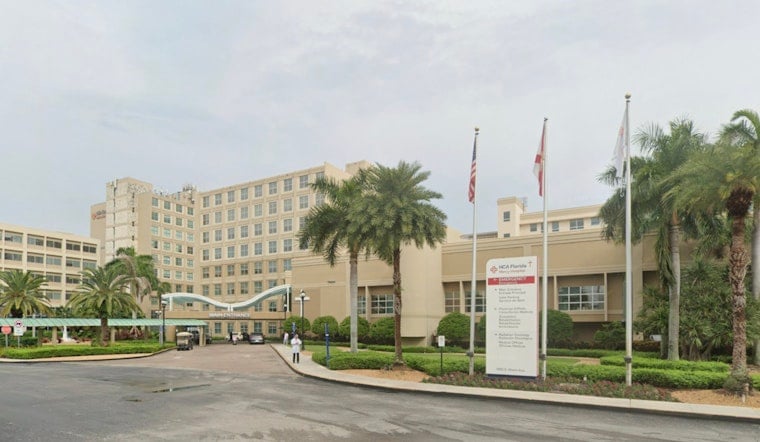
A hospital on Biscayne Bay has become the first in Florida to complete a surgery guided almost entirely by magnets. HCA Florida Mercy Hospital performed the procedure using the MARS platform, a system that controls surgical instruments from outside the patient's body through magnetic positioning rather than the traditional mechanical arms threaded through incisions.
The milestone was reported by Miami's Community Newspapers, which detailed how Mercy Hospital partnered with Levita Magnetics, the company behind MARS, to bring the technology to the region. The system is built on Levita's dynamic magnetic positioning technology and is designed to reduce the number of traditional incisions a procedure requires, according to the outlet's reporting. Dr. Nestor de la Cruz-Muñoz performed the procedures at Mercy Hospital, per the same account.
Dr. de la Cruz-Muñoz is not new to the hospital. He rejoined HCA Florida Mercy Hospital as Medical Director of Metabolic and Bariatric Surgery in August 2025, returning to an institution where he previously practiced general and bariatric surgery from 1999 to 2004, according to HCA Florida Healthcare. He brings more than 25 years of surgical experience and previously served as a Professor of Clinical Surgery at the University of Miami Miller School of Medicine, per HCA's announcement.
How the Magnetic System Works
The MARS system is surgeon-controlled for both the camera and tissue retraction, the Community Newspapers report notes, and it provides active magnetic retraction of tissue along with stable, surgeon-directed visualization during a procedure. Because the magnet operates externally, the platform eliminates the need for an additional assistant standing at the operating table to hold instruments in place, per the outlet's coverage. The approach is associated with fewer incisions, less scarring, less postoperative pain, and faster recovery in bariatric procedures, the report states.
The technology did not appear overnight. Levita Magnetics originally secured FDA De Novo classification in 2015 for a first-generation, handheld Magnetic Surgical System that required an assistant to manually hold the external magnet, according to The Robot Report. That earlier, hand-operated version proved the safety of magnetic retraction across more than 2,500 procedures before the robotic MARS system automated the control, per the same outlet. Levita Magnetics' magnetic surgery systems overall have now been used in more than 2,500 surgeries, per the Community Newspapers report.
Funding and Regulatory Path to Florida
Levita Magnetics closed a $26 million Series C funding round in August 2022, led by an investment group managed by Evan Norton, with additional backing from MedTex Ventures, Invermaster, and Carao Ventures, according to MD+DI. That capital supported the push toward FDA clearance and initial commercialization of the robotic MARS platform. The FDA cleared the MARS platform in August 2023 for abdominal procedures including bariatric, gallbladder, colorectal, and prostate surgeries, according to a study cited via PMC. Initial commercial clinical cases using the platform in routine care settings began in October 2023 across selected medical centers, per The Robot Report.
Levita Magnetics is described as a Silicon Valley medical technology company headquartered in Silicon Valley and focused on advancing minimally invasive surgery, per the Community Newspapers report. The company was co-founded by Dr. Alberto Rodríguez-Navarro, a minimally invasive surgeon credited as the inventor of dynamic magnetic positioning, and businessman and entrepreneur Nicolas Luksic. Rodríguez-Navarro said that bringing MARS to Florida advances Levita's mission to make surgery less invasive and more human-centered, according to the outlet.
Miami Office Set as Regional Hub
Levita Magnetics has also opened a new Miami location that will serve as a training and expansion hub for the East Coast and Latin America, per the Community Newspapers report. Mercy Hospital, which is part of HCA — the nation's largest healthcare system — now offers the MARS platform in Florida as part of that broader push into the region.
The hospital where the procedure took place carries its own long institutional history. HCA Florida Mercy Hospital opened in Coconut Grove in December 1950 as a 125-bed, cross-shaped facility on Biscayne Bay and now operates as a 488-bed acute care hospital, remaining Miami-Dade County's only Catholic hospital, according to the Archdiocese of Miami. HCA Healthcare purchased the hospital from Catholic Health East in May 2011, entering into a covenant agreement with the Archdiocese to preserve its Catholic identity while expanding clinical capabilities, the Archdiocese notes.
A Shifting Landscape for Bariatric Care
The Florida debut of MARS also arrives amid a broader shift in how patients approach weight management. U.S. metabolic bariatric surgery volume declined roughly 8.7% from 2022 to 2023 even as GLP-1 weight-loss drug prescriptions surged 105.6% over the same period, according to GlobalData. Despite that trend, bariatric surgery remains a long-term option for patients seeking a durable, less invasive weight-management alternative, per the Community Newspapers report, and research indicates that many patients regain weight after discontinuing GLP-1 medications.
The rise of platforms like MARS also fits within a rapidly expanding surgical robotics industry. The global surgical robotics market is projected to grow from $18 billion in 2024 to $83 billion by 2032, and industry surveys have found that 78% of U.S. laparoscopic surgeons express interest in adopting surgical robotics, according to figures reported via a Nagarro market summary. For Mercy Hospital, the new platform marks both a technological first for the state and a fresh chapter in a Coconut Grove institution that has served South Florida for 75 years.




