

























































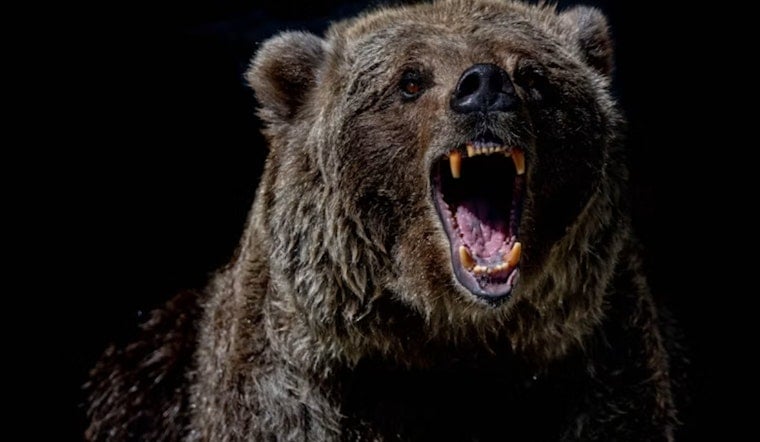
A man in his 60s was hospitalized with leg injuries Friday evening after a bear attacked him near the North Fork trail parking lot in Jefferson County, marking the sixth reported bear attack in Colorado so far in 2026. The angler was walking back to the parking lot near the confluence of the Platte River around 8 p.m. when a subadult sow knocked him to the ground and bit his legs before his friends managed to scare the animal off.
Colorado Parks and Wildlife officers responded to search for the bear, and a U.S. Department of Agriculture Wildlife Services team joined the effort, according to a CPW news release cited by Denver7. The attack continued for several minutes before the angler's friends intervened, and the bear was located Saturday morning with the help of a dog team. The 50-to-60-pound sow was euthanized that same morning under agency policy, and the release notes that no cubs were found in the area and that the angler was not carrying fish at the time.
The injuries were described as non-life-threatening by a CPW spokesperson, according to 9News, and the man was treated at a local hospital. That same 9News report places the North Fork Trail incident as the third black bear attack reported in Colorado within a single week in August, following two others earlier that week in Steamboat Springs and Aspen.
A State Reeling From a Week of Bear Attacks
On August 18, a bear forced open a sliding glass door and struck a woman in the face in Steamboat Springs, and the following day a bear bit a sleeping man on the head at Rio Grande Park in Aspen, according to CBS News. Both victims were hospitalized with facial and head injuries and later released. That cluster came just two days after a female black bear swiped at a man outside an apartment laundry room in EagleVail on August 17, an incident Hoodline covered in its report on a habituated sow trapped near Vail.
Jefferson County had already seen a high-profile encounter earlier in the season. Colorado's first reported bear attack of 2026 happened June 21 at Apex Park in Golden, when a young black bear scratched a female hiker's leg and grabbed her backpack, forcing a temporary park closure, per The Colorado Sun. That bear reportedly followed the hiker for more than 30 minutes despite hazing efforts.
Why Bears Are Losing Their Fear of People
Wildlife officials attribute this year's surge in human-bear conflicts to widespread drought, low winter snowpack, and summer wildfires that have severely depleted natural food sources like berries and acorns, according to KUNC. Those conditions are colliding with hyperphagia, the late-summer biological phase in which black bears forage up to 20 hours a day and need as much as 20,000 calories daily to build fat reserves for hibernation, the same outlet's Colorado Sun reporting explains. A single unsecured bird feeder or trash can can supply high-density calories otherwise unavailable in the drought-stricken backcountry.
Colorado Parks and Wildlife has repeatedly urged residents and visitors to never feed or approach bears, warning that accessible food teaches them to approach homes and lose their natural fear of humans. The agency's guidance includes securing windows and doors, safely storing trash, animal feed, and other attractants, cleaning and storing outdoor grills, and never leaving pet food outdoors. Intentionally feeding wildlife remains illegal in Colorado.
CPW also advises specific responses depending on how an encounter unfolds. If people spot a bear before it notices them, they should stand still and quietly move away; if a bear sees them, they should back away slowly and never run. Should a bear approach, the agency recommends holding ground, waving arms, and yelling “hey bear,” and if a black bear makes physical contact, people should fight back aggressively rather than play dead.
Record Numbers and New Financial Penalties
The agency reported 6,129 bear sightings and conflict reports between January 1 and August 13 of this year, nearly double the 3,115 reports logged during the same period in 2025, according to CPW figures cited by Denver7. State officials say 2026 is on track to set a record for bear reports since statewide digital tracking began in 2019. For comparison, the Denver Gazette reported that CPW logged 5,299 total bear sightings and conflict reports across all of 2025, resulting in 78 euthanizations and 52 relocations, with improper trash disposal involved in more than 57% of incidents and property damage in over 46%, as reported by the Denver Gazette.
In June 2026, Colorado implemented steeper legal penalties for human negligence in bear country, allowing wildlife officers to issue $1,000 tickets on a first offense and up to $5,000 for a third offense to people who fail to secure food or trash, according to GearJunkie. Under Colorado Parks and Wildlife's Administrative Directive W-2, bears classified as dangerous — those that pose an immediate threat to human safety or that injure a person — must be euthanized rather than relocated, per the Colorado Bear Coalition, with relocation reserved primarily for first-time nuisance bears that haven't harmed anyone.
The North Fork trail attack is the latest entry in what has become a defining trend of the summer, following Hoodline's earlier coverage of a reported bear attack near Boulder and its look at how Colorado treats bear spray as a lifesaver compared with other states. As drought conditions persist and bears continue hunting for calories before winter, wildlife officials say the responsibility for preventing further attacks increasingly falls on residents and visitors to secure their food and trash.





