

























































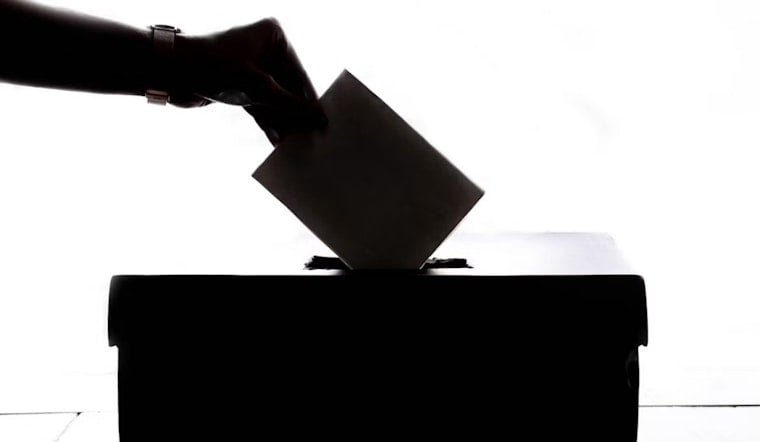
Colorado voters will decide in November whether mail-in ballots need more than a signature to count. The Colorado Secretary of State's Office certified Initiative 362 for the November 3 general election ballot on August 26, validating 133,321 signatures out of more than 180,000 submitted — comfortably clearing the state's 124,238-signature threshold.
The measure, a constitutional amendment, would require voters to include the last four digits of their Social Security number, driver's license number, or REAL ID number on mail-in ballots, according to the Denver Gazette. Colorado law currently requires only that voters sign their mail ballots, which are then checked against signatures on file in a state database. Because the measure amends the state constitution, it also had to clear a geographic distribution rule: signatures equal to at least 2% of registered voters in each of Colorado's 35 state Senate districts, a requirement designed to ensure statewide support for constitutional changes, as Complete Colorado reports.
Who's Behind the Push
The initiative was backed by former Colorado Deputy Secretary of State Suzanne Taheri, who served under Republican Secretary of State Wayne Williams, and by El Paso County Treasurer Chuck Broerman, who previously served as El Paso County Clerk and Recorder from 2015 to 2023. Complete Colorado notes that both proponents held senior roles managing state and county election systems before launching the initiative.
Money is flowing behind the effort. The issue committee backing the measure, Colorado Voter Trust Initiative, had raised $2.2 million as of July 2026, according to campaign finance disclosures reported by The Colorado Sun. The Sun reports the funding comes primarily from a group called Coalition for American Prosperity and Growth, which is registered to a mail-drop store in Colorado Springs and has not disclosed its underlying contributors.
How a Rejected Ballot Would Get a Second Chance
If an election official spots a missing or mismatched ID number on a return envelope, county clerks would be required to notify the voter and give them a chance to fix the problem before the ballot gets tossed, per reporting from Ballotpedia News. That cure mechanism would mirror the process Colorado already uses for signature discrepancies, which currently gives voters eight days after an election to resolve mismatches.
Supporters, per the Denver Gazette, say the additional verification step is necessary to head off fraudulent ballots. Opponents counter, also per the Gazette, that Colorado's elections are already secure and warn the measure could lead to voter disenfranchisement by causing otherwise valid ballots to be rejected over an administrative error.
Part of a Record National Wave
Colorado's measure is the seventh voter identification question certified for a statewide ballot in 2026, the most in a single year in U.S. history, according to Ballotpedia News. Other states weighing similar measures this year include Arizona, California, Nevada, North Carolina, Ohio, and Oklahoma. North Carolina already requires a notary or two witnesses to sign mail ballot envelopes, while Georgia and Texas require voters to provide a driver's license or Social Security number with their return envelope, per the Denver Gazette's reporting.
Nationally, 21 states already require some form of identification number — a driver's license number, Social Security number, or similar — for absentee or mail-in ballots as of August 2026, Ballotpedia News reports. Colorado remains one of eight states with a universal all-mail voting system, in which every active registered voter is automatically mailed a ballot ahead of each election, a system the state built through legislation in 2013.
A Crowded Ballot, a High Bar
Initiative 362 will be one of as many as 14 statewide ballot measures Colorado voters face in November, and like all constitutional amendments, it needs 55% of the statewide vote to pass — a threshold voters adopted through Amendment 71 in 2016, The Colorado Sun notes. That supermajority requirement, combined with a packed ballot and the undisclosed donor structure behind the measure's biggest backer, makes passage far from guaranteed.
The debate arrives as Colorado continues to enforce its existing mail ballot safeguards. In a case Hoodline reported on in March, a Douglas County woman was sentenced to three years in state prison after a jury convicted her of felony forgery and impersonating an elector for mailing in 2022 ballots for her deceased ex-husband and her son. Local prosecutors said existing signature verification checks were what flagged those fraudulent ballots in the first place, illustrating the layer of protection Initiative 362's backers argue is not enough on its own.
Colorado voters currently must present identification such as a driver's license, passport, or birth certificate when voting in person, and first-time mail voters already must provide a photocopy of their identification documents. Whether that will be enough to satisfy voters weighing an additional numerical ID requirement on every mail ballot envelope will be decided when the state's crowded November ballot goes before them.





