

























































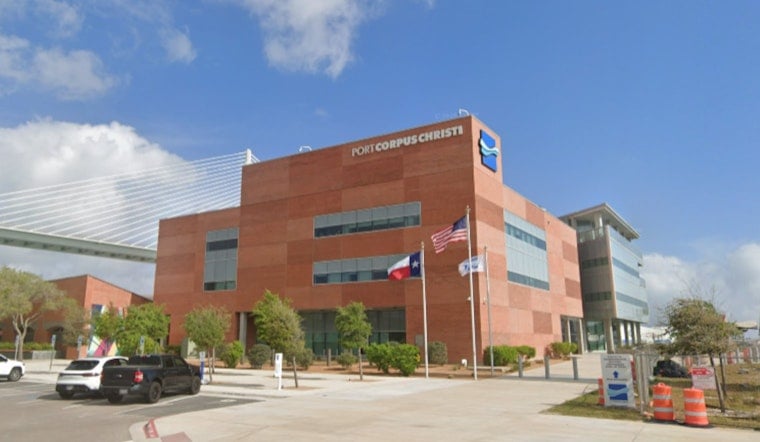
The Port of Corpus Christi has signed an agreement with the U.S. Maritime Administration to explore small modular reactors, port microgrids, and nuclear-powered vessel concepts, making it the second port in the country to join a federal push toward nuclear energy in commercial shipping. The agreement does not authorize construction of any nuclear-powered ships, nor does it commit the government or the port to deploying a particular reactor design.
Transportation Secretary Sean Duffy announced the partnership alongside Maritime Administrator Stephen Carmel, Rep. Michael Cloud, and Port of Corpus Christi officials, according to gCaptain. “Small modular reactors have the potential to reshape America's maritime sector, lower shipping costs, and bolster our supply chains,” Duffy said. Carmel added that the reactors could help reduce costs and make Gulf Coast maritime supply chains more resilient to disruptions from extreme weather and power-grid failures.
A Second Port Joins a May Initiative
The agreement builds on an initiative MARAD launched in May aimed at developing commercially viable small modular reactors for the U.S. marine transportation system, per the same gCaptain report. Under the new agreement, MARAD and the Port of Corpus Christi will study facilities capable of supporting new vessel propulsion systems, resilient port microgrids, and shoreside power infrastructure. The initiative will also examine how reactor construction could eventually be integrated into U.S. shipyards, and MARAD and the port will work to develop a maritime nuclear technology workforce.
Rep. Cloud said small modular reactor technology has the potential to power port operations, support the broader industrial complex, and advance maritime propulsion capabilities. The Port of Corpus Christi is already a major LNG gateway and the nation's largest petroleum export port, the report notes, positioning it as a potentially significant location for studying advanced nuclear power in energy-intensive port and industrial operations.
Why Corpus Christi's Infrastructure Fits the Bill
The port's physical capacity has grown substantially in recent years. In June 2025, the U.S. Army Corps of Engineers and the Port of Corpus Christi completed a $625 million ship channel improvement project, according to the U.S. Army Corps of Engineers, deepening the 36-mile channel from 47 feet to 54 feet and widening it to 530 feet. That expansion, jointly funded by Congress and the port authority, gives the port capacity to host very large crude carriers and other advanced energy assets.
The port's energy footprint has also expanded quickly. The U.S. Department of Energy approved a 12% export expansion for Cheniere Energy's Corpus Christi LNG terminal in February, pushing capacity to 4.45 billion cubic feet per day and making it the second-largest LNG export facility in the nation. Customers at the port moved a record 54.5 million tons of commodities in the first quarter of 2026, according to Baird Maritime, driven by a 33% year-over-year surge in LNG exports following the startup of Cheniere's Stage 3 expansion. S&P Global Ratings has assigned the Port of Corpus Christi Authority a AA- credit rating, classifying both its enterprise and financial risk profiles as Very Strong, according to the port authority itself.
How Long Beach Got There First
The Port of Long Beach became the first U.S. seaport to formalize cooperation with MARAD on small modular reactor technology for commercial maritime use, signing its Memorandum of Cooperation on July 22, less than a month before Corpus Christi's agreement. That deal, per the Port of Long Beach, establishes a framework for nuclear technology work on vessels, port operations, and other maritime assets, and includes coordination with the U.S. Coast Guard, Department of Energy, and Nuclear Regulatory Commission — the same three agencies expected to coordinate safety standards, inspections, and operating protocols for the Corpus Christi effort.
Long Beach also leased berth space to startup BlueCore Energy to build and test floating nuclear reactor prototypes. BlueCore's initial prototype is a 10-megawatt electric, water-cooled small modular reactor installed on a 185-foot barge, engineered to run for several years without refueling and generate power equivalent to 15,000 homes, according to WorkBoat. The company delivered its electric test reactor barge to Long Beach's Berth 48 in July.
Regulatory Hurdles Still Loom
Commercial maritime nuclear deployment still faces steep obstacles, including high upfront costs, complex regulation, liability and insurance questions, and public acceptance barriers, along with port-access concerns. Internationally, the International Maritime Organization's Sub-Committee on Ship Design and Construction agreed in January on a draft workplan targeting 2030 for adoption of a revised Code of Safety for Nuclear Merchant Ships and updated SOLAS Chapter VIII regulations. Experts at Lloyd's Register and the International Atomic Energy Agency project that broad commercial adoption of nuclear-powered merchant ships will likely occur around 2035, provided those updated SOLAS frameworks are completed on schedule, according to the International Chamber of Shipping.
State-level rules add another wrinkle. California's 1976 statutory restriction on new nuclear power plant construction creates potential legal ambiguities for floating small modular reactor deployments at the Port of Long Beach, according to CBS News, whereas Texas offers a more permissive regulatory framework for industrial nuclear projects. Legal experts cited by the outlet say it remains unclear whether floating SMR barges fall under California's decades-old nuclear ban — a question that does not apply to Corpus Christi's Texas-based agreement.
Not the Nation's First Attempt at Nuclear Shipping
MARAD's push echoes a much older experiment. The agency previously operated the NS Savannah, launched in 1959 under President Eisenhower's Atoms for Peace program as the world's first nuclear-powered merchant ship, before withdrawing it from service in 1972 due to high operating costs. Nuclear propulsion has otherwise been used aboard naval vessels and icebreakers for decades, giving the technology a long track record outside the commercial shipping world MARAD is now trying to bring it into.
The Trump administration's stated aim, per the agreement announcement, is to ensure the United States leads in maritime nuclear technology innovation, framing small modular reactors as a potential way to lower shipping costs, strengthen domestic shipbuilding, and improve the resilience of U.S. maritime infrastructure. The Corpus Christi agreement follows the port's recent momentum as a cargo hub, including DP World's big terminal bet on the same deepened channel, and comes amid broader consolidation in the Texas energy grid. For now, MARAD describes the Corpus Christi agreement as exploratory, with no timeline yet set for when — or whether — small nuclear reactors will actually power a Gulf Coast port.





