

























































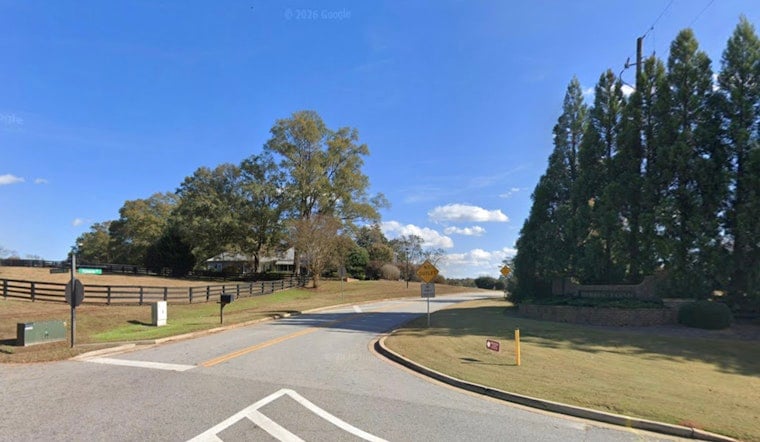
A proposed 255-acre data center near Walt Sanders Road in Coweta County is facing organized resident opposition, with neighbors warning the project would consume 28,000 gallons of water daily. The development, known as Project Oak, is scheduled for a public hearing on August 25.
According to FOX 5 Atlanta, Coweta County residents are organizing against the proposed data center over concerns about its water usage. The project is being pursued by developer LDO Coweta, LLC, which revised the footprint down from an original 450-acre proposal after dropping a northern 200-acre parcel, according to The Newnan Times-Herald. The remaining 255 acres would still house five data center buildings totaling over 1.8 million square feet.
A Countywide Signature Drive Nears Its Target
The pushback against Project Oak is unfolding alongside a broader campaign led by the grassroots group Citizens for Rural Coweta, which has launched a Georgia Home Rule petition seeking 14,000 voter signatures to force a countywide referendum on data center development. As of August 10, the group reported 12,750 signatures gathered, per Protect Coweta. If validated by the probate court, Coweta would become only the third county in Georgia history to stage a citizen-driven Home Rule voter referendum, the group notes.
Project Oak is just one piece of a much larger picture. Coweta County is currently facing five separate proposed data center campuses — Project Sail, Project Oak, Project Peach, Project Pegasus, and Project Bridgeport — that collectively span more than 1,600 acres of rural land, according to the same Protect Coweta accounting. Two of those five projects have already won county commission approval, a track record that has fueled the current wave of community organizing.
Project Sail Set the Stage for Backlash
The immediate precedent for today's fight was Coweta's approval of Project Sail in April, when the Coweta County Board of Commissioners voted 3-2 to approve the 829-acre, $17 billion hyperscale campus developed by Prologis and Atlas Development near Newnan, as reported by AJC.com. That project requires 900 megawatts of electricity, roughly equivalent to the output of a nuclear reactor, and was approved despite objections from county planning staff, the outlet reported.
The Project Sail approval has since drawn a legal challenge. In May, seventeen Coweta County landowners filed a lawsuit in Coweta County Superior Court against the county and Atlas Development seeking to overturn the approval, alleging the site sits in a state-designated groundwater recharge area within the Middle Chattahoochee River basin, according to The Citizen. The plaintiffs argue county commissioners ignored zoning rules and cut residents out of required public comment periods.
County and State Rules Have Tried to Manage the Boom
Coweta County has attempted to get ahead of the surge before. The county enforced a data center moratorium from May 7, 2025 to December 16, 2025, during which officials drafted and adopted a formal countywide data center ordinance that set new industrial requirements and building height limits up to 70 feet, according to the Coweta County Zoning Coordinator.
At the state level, the Georgia Public Service Commission approved rules in January 2025 requiring large-load electricity customers using over 100 megawatts to pay for their own upstream generation and transmission infrastructure under long-term 15-year contracts, a move intended to protect residential ratepayers from absorbing grid expansion costs tied to hyperscale facilities. Yet Governor Brian Kemp vetoed separate legislation in May 2024 that would have temporarily suspended state sales tax exemptions on high-technology data center equipment, preserving the tax breaks that continue to draw developers to the state, as WABE reported. State lawmakers had pushed to pause the exemption over power grid concerns, but Kemp argued a pause would harm high-tech infrastructure investment.
The energy demands of the county's data center boom have also collided with private property rights. In May, Georgia Power faced resident backlash over plans to exercise eminent domain across more than 330 private properties in Coweta and Fayette counties to build the high-voltage transmission lines needed to supply hundreds of megawatts to local hyperscale sites, according to Energy News Beat.
Water Concerns Reflect a National Pattern
The 28,000 gallons of daily water use tied to Project Oak fits into a much larger national trend. U.S. data centers consumed more than 17 billion gallons of water in 2024, a figure that has triggered community backlash and municipal moratoriums in communities well beyond Coweta County, according to The Guardian. Large facilities often rely on evaporative cooling during extreme heat peaks, placing heavy localized stress on municipal water systems, the outlet noted.
That water infrastructure concern carries added weight in Coweta County following a recent cyberattack that forced the county's water authority to manual operations. Several key questions remain unresolved: whether Citizens for Rural Coweta will reach its 14,000-signature threshold in time to trigger the historic referendum, how the Superior Court will rule on the pending Project Sail lawsuit, and whether LDO Coweta, LLC will secure approval for its scaled-down 255-acre Project Oak proposal at the August 25 public hearing.





