

























































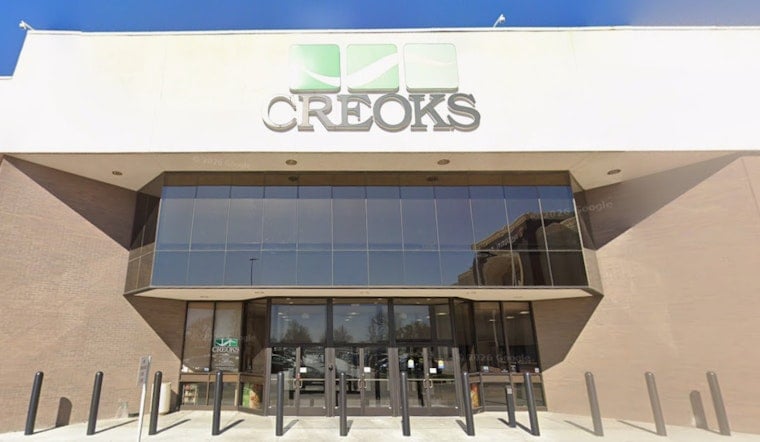
CREOKS Health Services is planning a 62-bed substance use treatment center near the Tulsa-Creek County line, converting existing buildings near 3314 West 61st Street into a facility offering detox care, residential treatment and continuing recovery support under one roof. The project is currently moving through the zoning process, with construction expected to begin in early 2027 and take eight to 12 months to complete.
According to KTUL, the center will include 47 residential treatment beds and 15 medically supervised detox beds serving both men and women. CREOKS also plans to add connecting space between the existing buildings on the property, along with recreation and outdoor areas for residential patients. Once fully operational, the facility could handle roughly 1,700 treatment episodes each year.
A Direct Line From Detox to Long-Term Care
Amanda Hammack, CREOKS' senior program director, told the station the center is meant to give patients a direct path from detox into longer-term recovery care, rather than forcing them to navigate separate facilities during a fragile window. Detox stays typically run three to 10 days depending on the substance involved and a patient's medical needs, averaging around five days, while residential treatment averages about 28 days and includes therapy, recovery classes and life-skills training. Patients could move directly from detox into residential treatment on-site, and CREOKS plans to connect people leaving the program with outpatient services, sober living, housing assistance, supported employment and medication-assisted treatment.
Hammack said quick access to a detox bed can be critical for someone seeking help, warning that people who are ready for treatment may return to substance use if they do not get assistance immediately. That urgency lines up with newer details from CREOKS, which specify that while the 15 detox beds will serve both adult men and women, all 47 residential beds will be reserved exclusively for men. Women who complete detox will instead receive warm-handoff referrals to long-term residential facilities elsewhere. The project will also operate partly as a criminal court diversion program through a partnership with Creek County District Attorney Andrew Goforth, offering treatment as an alternative to incarceration.
Filling a Gap in a County Short on Beds
The new center would add to CREOKS' existing footprint in the area. The organization, founded in 1980 to serve Creek, Okmulgee and Okfuskee counties before expanding into Tulsa in 2004, now operates 22 clinics across 45 Oklahoma counties and serves roughly 30,000 people annually. In 2014, it opened the Spring Creek Recovery Center in nearby Sapulpa, which runs an 8-recliner urgent care triage unit and a 16-bed crisis stabilization facility around the clock at no cost to patients, though it remains unclear how bed transfers between Spring Creek and the new West 61st Street facility will be coordinated.
The expansion arrives amid a documented treatment gap in Tulsa County, where an estimated 100,000 residents experience a substance use disorder but roughly 77% of those needing care do not receive it, according to a report from the Healthy Minds Policy Initiative. The same report found that safety-net behavioral health facilities are unevenly distributed across the county. Tulsa County recorded 298 fatal drug overdoses in 2023, a 148% increase since 2019, and more than half of 2024 overdose deaths involved multiple substances such as opioids combined with stimulants, complicating detox protocols.
How Tulsa Compares Regionally
Tulsa County's drug-involved overdose mortality rate reached 31.1 per 100,000 residents in 2024, placing it nearly even with Oklahoma County's 31.0 per 100,000 among the state's major urban centers, per data cited by USAFacts. Neighboring Okmulgee County recorded the state's highest county overdose death rate that year at 62.0 per 100,000. The Oklahoma State Department of Health has also ranked Tulsa County third-highest statewide for nonfatal drug overdose hospitalizations from 2020 through 2022, exceeding the statewide average rate of 103.8 per 100,000 residents.
CREOKS' push comes as the organization expands rapidly with state backing elsewhere in Oklahoma. In July, the Oklahoma Department of Mental Health and Substance Abuse Services designated CREOKS to expand Certified Community Behavioral Health Clinic services across 10 counties in southeast Oklahoma, a designation that unlocks enhanced state and federal reimbursement for integrated care. That same month, Tulsa-based Family & Children's Services announced a merger with Oklahoma City's Hope Community Services, forming a combined $208 million system with more than 70 programs and 1,500 employees aimed at expanding behavioral health and addiction capacity statewide.
Not every recovery program in the state is scaling up, however. Earlier this month, a supportive employment program in Norman that connected recovering patients to housing and clinical care shut down after municipal and state opioid settlement grant requests were rejected, cutting off aid for roughly 200 homeless residents. The Norman program had been modeled on a supportive employment initiative first established in Tulsa in 2018, underscoring how uneven funding remains even as demand for treatment beds grows.





