

























































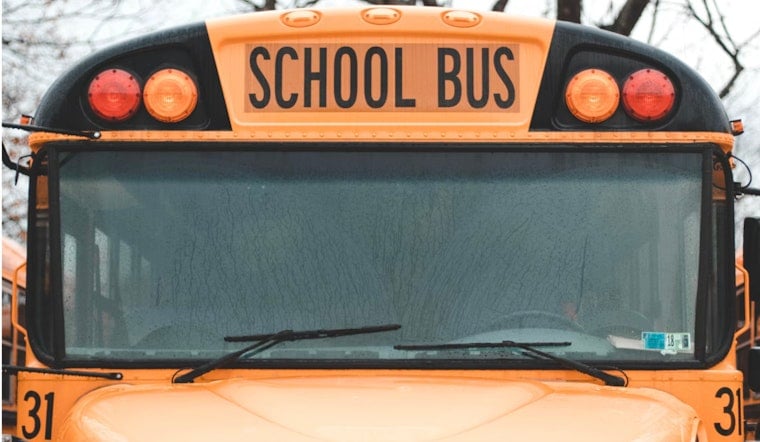
Dozens of new electric school buses are rolling into DeKalb County neighborhoods this month, part of a 75-bus fleet expected to carry about 40,000 children on a typical school day. The buses are being deployed in Stone Mountain, Tucker, and along Buford Highway, replacing diesel models that have long idled through some of the county's busiest residential corridors.
According to CBS Atlanta, DeKalb County School District received about $30 million from the EPA in 2024 to fund the 75 electric buses, and students are scheduled to begin riding them this month. The 40,000 students who will use the new buses represent roughly one-third of the district's total bused population, per the same report. DeKalb County School District is Georgia's third-largest school system, and its overall fleet needs about 700 active buses on a typical school day to move roughly 45,000 of its 91,000 enrolled students, according to 11Alive.
Bernando Brown, the district's director of student transportation, said the electric buses support clean air and the community, per CBS Atlanta's report. The district's bus fleet, which includes more than 1,000 vehicles, currently runs on a mix of diesel, propane, gas, and natural gas models — with 199 propane buses and one natural gas bus already in service, the station notes.
How the Fleet Was Built in Stages
The 75-bus deployment came together incrementally. The DeKalb County Board of Education approved a $9.4 million purchase for an initial 25 electric buses in January 2025, a step Hoodline covered in its earlier electric bus deployment story. The board then reviewed an $18.75 million contract for 50 additional Blue Bird buses in December 2025, according to planning documents cited by WSB-TV. Those same documents establish the East DeKalb Campus and the former site of Hooper Alexander Elementary School as designated maintenance and charging hubs for the electric fleet.
The price gap between fuel types is steep: an electric bus can cost up to $400,000, compared to about $170,000 for a standard diesel model, per CBS Atlanta. Federal grants have been essential to closing that gap. Georgia school districts shared $29.4 million in EPA Clean School Bus Rebate Program funds in a June 2024 round, part of a federal infrastructure law that designated $5 billion nationally over five years for clean school buses, WSB-TV reported at the time.
Manufacturing Ties Run Through Fort Valley
DeKalb's electric buses are made in Fort Valley, Georgia, where Blue Bird Corporation operates its manufacturing plant. The U.S. Department of Energy selected Blue Bird for an $80 million federal grant in July 2024 to convert a shuttered diesel motorhome plant into a 600,000-square-foot electric vehicle facility, according to the company, a move that retained 2,000 jobs and created more than 400 new positions while covering half of Blue Bird's $160 million plant conversion. The Georgia Chamber of Commerce named the Blue Bird Vision Electric School Bus its 2026 “Coolest Thing Made in Georgia” winner, noting more than 4,000 Blue Bird electric buses are now operating nationwide.
Georgia Power is supporting the addition of electric buses in DeKalb, building charging stations through its Make Ready initiative. The Georgia Public Service Commission approved a 2025 plan authorizing $52 million for that program and launched a Vehicle-to-Everything pilot equipping 10 public school districts with bidirectional charging infrastructure, according to School Bus Fleet. That bidirectional technology allows bus batteries to feed stored energy back to the grid during peak demand, the outlet reports.
Quieter Rides, Cleaner Air Along Key Corridors
Beyond emissions, the new buses offer practical upgrades for drivers and riders alike. Electric buses provide quieter operation and less engine noise, letting drivers focus more attention on students, and they feature a smoother ride, more responsive handling, and a better turning radius than diesel, propane, or gas models, per CBS Atlanta. The district plans to use the buses to lower emissions, improve air quality, and reduce noise across its routes.
The health stakes behind that shift are significant. About 95% of America's 480,000 school buses have historically run on diesel fuel, exposing children — whose developing lungs breathe at faster rates than adults — to fine particulate matter and carcinogens linked to asthma attacks and chronic inflammation, according to the American Lung Association. Asthma remains the most common long-term chronic disease affecting American school children, the organization notes.
There's a budget angle too. DeKalb projects each electric bus will save about $15 per day in fuel costs compared to diesel, according to the Dunwoody-Brookhaven Ledger, with officials planning to redirect those savings into classroom resources. Across a 75-bus fleet running a full 180-day school year, that daily figure adds up considerably. Nationally, the number of operational electric school buses jumped from 415 in 2020 to more than 5,100 by August 2025, now carrying over 265,000 students daily across 41 states, per the Southeast Energy Transition coalition — a trend DeKalb's rollout now plugs directly into as Georgia's largest electric school bus fleet to date.





