

























































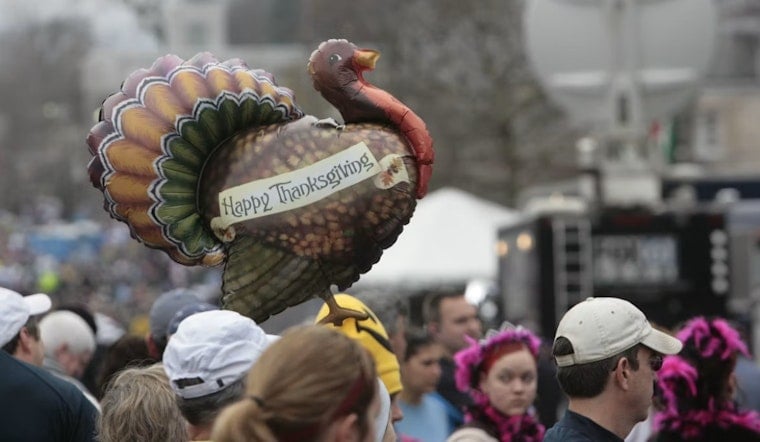
Detroit's WDIV Local 4 kicked off a 100-day countdown Tuesday to America's Thanksgiving Parade, marking 100 days until the beloved holiday tradition returns to the city's streets for its 100th year. The station says it will highlight one parade memory each day between now and Thanksgiving morning, building toward a centennial celebration for an event presented this year by Gardner White.
According to ClickOnDetroit, the countdown's first memory was shared Tuesday, and Local 4 plans to keep the daily tributes running all the way through the holiday. The station frames the milestone as a celebration of 100 years of America's Thanksgiving Parade, one of the city's signature civic traditions.
Detroit's parade actually debuted back in 1924, which would put this year's edition at its 102nd calendar anniversary. But as Hour Detroit Magazine explains, the parade was suspended in 1943 and 1944 because of World War II material shortages, then resumed in 1945 under J.L. Hudson Co. sponsorship — which is why 2026 is being marked as the 100th procession rather than the 102nd.
A Tradition Born From a Toronto Field Trip
The parade traces its origins to J.L. Hudson Co. display director Charles Wendel, who conceived the event in 1924 after observing Toronto's Eaton's Santa Claus Parade. That first Detroit parade featured horse-drawn nursery-rhyme floats, papier-mâché heads, and seven high school marching bands, according to the same Hour Detroit account.
Detroit's parade shares the title of second-oldest Thanksgiving parade in the country with New York City's Macy's Thanksgiving Day Parade — both launched on Thanksgiving Day in 1924 — trailing only Philadelphia's parade, which began in 1920, per Hour Detroit's reporting.
Big Heads, Business Clowns and a Three-Mile March
One of the parade's most recognizable traditions, the Big Head Corps, features more than 300 giant papier-mâché heads crafted by artists at The Parade Company. As CBS News Detroit reports, the tradition dates to 1924, when Wendel imported the original oversized heads from Viareggio, Italy; today's versions depict everyone from storybook characters to Michigan icons like Bob Seger and Rosa Parks.
Then there's the Distinguished Clown Corps, established in the early 1980s by Detroit corporate leaders and now featuring more than 200 business and civic executives who pay to dress as clowns and toss beads to spectators along Woodward Avenue. The corps was co-founded by Campbell-Ewald CEO Tom Adams and Detroit Edison CEO Walter McCarthy, according to Corp! Magazine's account of the tradition.
The march itself covers roughly 3 miles of historic Woodward Avenue, stepping off at Kirby Street in Midtown Detroit and finishing at Congress Street downtown — a route that takes about 90 minutes from start to finish, per CBS News.
A National Broadcast and a Historic First
The two-hour America's Thanksgiving Parade broadcast airs locally on WDIV Local 4 but is syndicated across more than 185 media markets, reaching over 84 million households nationwide, according to figures from The Parade Company. Local radio broadcasts also carry the parade on 760 WJR and WOMC.
This year's edition will also make history: Albany State University's Marching Rams Show Band is set to become the first Historically Black College and University marching band to perform in America's Thanksgiving Parade, per an EIN Presswire announcement. The Georgia-based band's appearance is scheduled specifically for the 100th anniversary procession in November.
A Nonprofit Still Searching for a Permanent Home
The celebration comes even as The Parade Company, the nonprofit that runs the event, faces uncertainty over its own headquarters. In July, the City of Detroit reopened development solicitations for the historic R. Thornton Brodhead Naval Armory after the company's long-planned $45 million armory redevelopment deal collapsed, as Hoodline previously reported. The Parade Company currently operates out of a studio facility on Mount Elliott Street.
The organization's structure traces back to 1979, when J.L. Hudson Co. dropped its sole financial sponsorship of the parade due to rising costs. Parade management was transferred in 1982 to the nonprofit Michigan Thanksgiving Parade Foundation, which established The Parade Company in 1990 to run day-to-day operations, according to the Detroit Historical Society. The foundation also produces Detroit's summer Ford Fireworks show.
For now, the countdown continues daily on WDIV, building toward Thanksgiving morning when a century of Woodward Avenue tradition — horse-drawn floats, giant papier-mâché heads, executive clowns and all — rolls through Detroit once more.




