

























































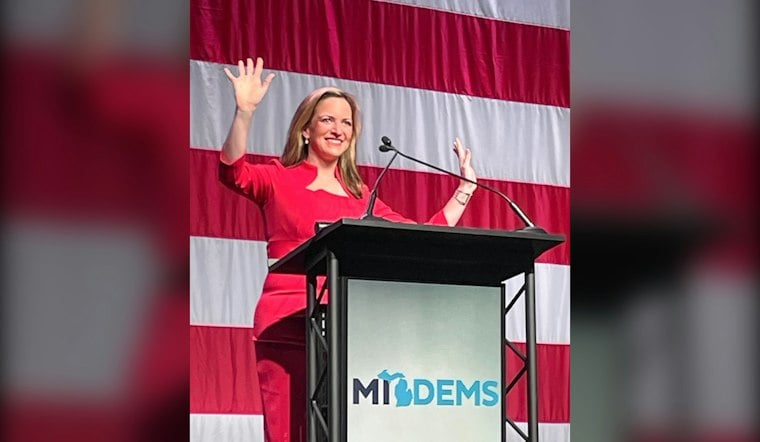
Gov.-elect Jocelyn Benson wants every Michigan teacher to start at a minimum salary of $60,000 a year, a figure that would exceed the state's current average starting pay by more than $16,000. The proposal, part of an education agenda Benson has called one of her biggest election promises, would also scale up additional compensation for more experienced educators and staff based on their experience. But the state's largest teachers union isn't fully on board yet.
Benson's plan would require starting teacher salaries of at least $60,000, then build in extra pay for veteran educators and staff commensurate with their experience, according to The Oakland Press. The move is aimed squarely at Michigan's ongoing teacher shortage, and it arrives as Benson prepares to lay out a first 100-days agenda that includes her broader education plans. Democratic strategist Abdul El-Sayed has also called for a $60,000 minimum teacher salary, putting Benson's number in company with other Michigan Democrats pushing the same figure.
Union Says Teachers Aren't the Only Ones Who Need Raises
The Michigan Education Association isn't rejecting the idea of higher pay, but it wants the conversation widened. According to the union, compensation increases should reach every school employee, not just teachers, including bus drivers and paraprofessionals, jobs the union's spokesperson, Doug Pratt, says Michigan is also short on. Pratt said the MEA is committed to working with the incoming governor and legislature, but cautioned that the plan is now moving into a different phase. “The details matter and now we're moving past the statements of values,” Pratt told Bridge Michigan.
Pratt also said compensation is about more than a paycheck. He pointed to healthcare costs, retirement options, class sizes and student behavior as issues that also need attention alongside any salary bump. MEA president Chandra Madafferi, who sits on Benson's 15-member transition team, also serves as vice chair of Launch Michigan, a coalition that champions a separate initiative called the Michigan Education Guarantee — a plan Benson's broader education agenda includes, aimed at establishing an evidence-based statewide graduation standard so diplomas signal real college or career readiness.
No Price Tag Yet, and No Word From Benson's Team
How much Benson's $60,000 minimum would actually cost the state, and where the money would come from, remains unclear. Benson's team did not comment on the proposal's cost or funding source. Michigan school districts currently rely on the state's per-pupil funding to cover employee wages and benefits, and pay, class sizes and other working conditions are typically set locally through negotiations between districts and their teachers unions.
Jason Burns, cited in the same Bridge Michigan report, said Michigan's average starting teacher salary is just over $43,000, and estimated separately that raising teacher pay to match public opinion on the issue would cost roughly $350 million to $400 million — though that figure was tied to public-opinion benchmarks, not an official cost estimate for Benson's specific plan. Burns also noted that a statewide minimum would likely lift pay for teachers who already have some experience, not just brand-new hires.
Critics Warn of State Overreach Into Local Bargaining
Not everyone is cheering the idea of Lansing setting a wage floor. Michael Van Beek, a vice president at the Mackinac Center, said a state-mandated minimum would introduce state policy into a matter that's traditionally been decided locally in Michigan schools, territory he said typically belongs to teachers unions during contract talks. Van Beek also warned that districts raising pay would be required to contribute more into the public retirement system, an added cost beyond the raises themselves.
The Michigan Association of School Boards has said that if the state is going to mandate teacher pay, it needs to make sure districts actually have the funds to comply. State leaders have already agreed to provide $150 million toward educator bonuses, though the actual bonus amounts any given teacher receives depend on district enrollment, the number of bonus-eligible educators, and local union negotiations.
Michigan's Teacher Pay Has Been Sliding for Years
The numbers help explain why the shortage is on Benson's radar. Michigan's average starting teacher salary rose 3.5%, from $41,645 in 2023-24 to $43,093 in 2024-25, according to the National Education Association. That still leaves Michigan ranked 45th nationally in starting teacher pay, well below the $48,112 national average, and down from 22nd in overall average teacher salary at $71,023 — a ranking that fell three places from the prior year. Purchasing power on that pay also varies across the state because cost of living differs by location.
The slide has been steep over time. Michigan's inflation-adjusted average teacher salary has fallen 29% since its 1995 peak, dropping from the equivalent of $100,064 to $71,023 in 2025 dollars, the largest such decline of any state, according to MSU Today. Michigan ranked 31st nationally in starting teacher pay back in 2017 but had fallen to 45th by 2025, per the same report.
Shortages Hit Hardest in Poorer and Rural Districts
Those falling wages have coincided with a persistent staffing problem. Michigan's supply of newly certified teachers is growing at record-high rates but is still barely keeping pace with teacher exits, according to the Education Policy Innovation Collaborative's 2026 report, which draws on newly available data from the 2024-25 school year. The shortages disproportionately affect Michigan's urban and rural areas, charter schools, high-poverty communities and students of color, and the state's growing special education population is intensifying shortages in an already high-demand field, the collaborative found.
Public opinion polling cited by Bridge Michigan found respondents favor a starting teacher salary of $54,600 and average pay of $71,445. Nearly 72% of respondents in a different poll supported increasing starting teacher salaries generally, while about 66.9% backed a statewide minimum teacher salary specifically.
What Other States Have Tried
Michigan wouldn't be the first state to set a wage floor. Tennessee schools are set to have a $50,000 minimum teacher salary next school year, up from the current $35,000. Arkansas raised its minimum from $36,000 to $50,000 in 2023, providing at least a $2,000 raise for every teacher in the state, and researchers found the increases significantly boosted pay and improved teacher retention in rural and high-poverty districts, though the same researchers cautioned those effects may fade over time because of inflation. The 2023 Arkansas law that raised teacher pay also created a voucher program. The National Education Association has separately warned that some minimum-salary laws around the country lack adequate district funding or include provisions that can hurt rather than help teachers, a caution that looms over how Michigan's own proposal might ultimately be written.



