

























































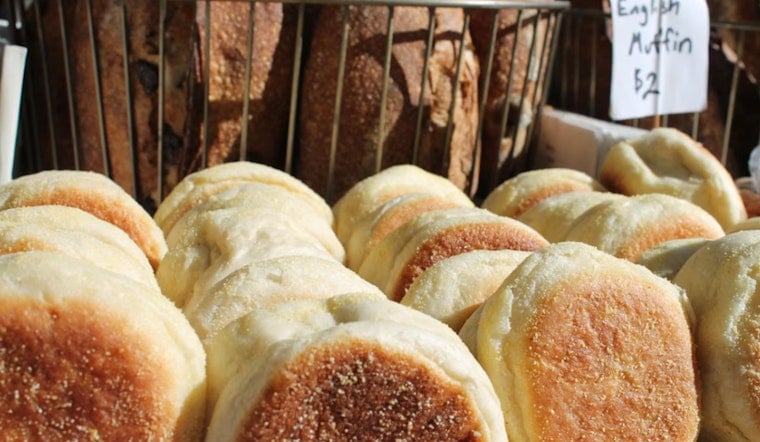
Stone & Skillet English Muffins, the Dorchester-based bakery that started with a stone countertop and a cast-iron skillet in a Boston apartment, has landed on shelves at 600 Target stores across the country. The company still bakes its muffins in Boston, and the expansion is expected to bring more jobs to Dorchester as the brand scales into one of the country's biggest retail chains.
As Caught In Dot reported, Target shoppers can now find Stone & Skillet's Original, Cinnamon Raisin, and seasonal Pumpkin Spice English Muffins in the bakery aisle. The brand was founded by brothers Cam, Kyle, and Nick Meekins, who started the company in 2013 out of a Boston apartment before growing it into a national consumer packaged goods label. Ahead of this rollout, Target priced the 12-ounce, four-count packages at $5.49, according to Target's own product listings — a premium tier compared to traditional mass-market English muffin brands.
From a Music Career to a Griddle
Before Stone & Skillet, co-founder and CEO Cam Meekins worked as a professional recording artist and hip-hop musician, a background he has said helped him build the brand's following. In a December 2025 interview with ASBN Small Business Network, Meekins described applying music-industry marketing techniques for building a fan base to growing a food business instead. That same interview traces the company's first major grocery breakthrough to a Whole Foods local forager who discovered the brand at farmers' markets and regional restaurant accounts, opening the door to wider distribution.
Stone & Skillet scaled its early commercial production through CommonWealth Kitchen, the nonprofit culinary incubator in Dorchester, before eventually building its own commercial manufacturing facility in the neighborhood, the ASBN interview noted. That local infrastructure gave the small bakery room to grow its output without leaving the neighborhood where it started.
Capital and a Fresh Look Ahead of the Big-Box Leap
The Target rollout follows a $5 million Series A financing round the company completed in May, led by venture firm BFG Partners with participation from Beliade Consumer Partners and Supernatural Ventures, according to Boston law firm Nutter, which represented the company in the deal. The funding was earmarked to support West Coast retail expansion. Nutter's reporting also noted that before entering Target, Stone & Skillet had already built a presence in more than 3,000 retail locations nationwide, including Whole Foods Market, Publix, Wegmans, Market Basket, Hannaford, and Fresh Thyme.
Ahead of the Target launch, the brand also rolled out its first major visual refresh in over 12 years. Food industry publication Nosh reported in April that the update introduced a new logo featuring a skillet illustration along with brighter, color-coded packaging designed to stand out on crowded mass-retail shelves.
A Growing Category, and a Local Bakery Boom
Stone & Skillet has also pushed into sustainable ingredient sourcing. In 2023, the company partnered with Upcycled Foods, Inc. to launch an Upcycled Certified Super Grains English Muffin made with ReGrained SuperGrain+, a repurposed brewing grain byproduct that adds 6 grams of fiber and 6 grams of protein per serving. The move plays into a broader industry shift: a June 2026 market report from Growth Market Reports projected the global protein and specialty English muffin market to reach $3.8 billion by 2034, growing at an annual rate of 8.2% as artisan brands compete against established names like Thomas' and Bays.
Boston's appetite for specialty English muffins has been building closer to home, too. North End cafe Sunny Girl expanded into South Boston and opened a dedicated production bake shop in mid-2026, Hoodline previously reported. For Dorchester, Stone & Skillet's leap from apartment kitchen to national retail chain marks a milestone for a neighborhood food business that has kept its baking operations local even as its distribution footprint has grown into one of the country's largest big-box chains.




