

























































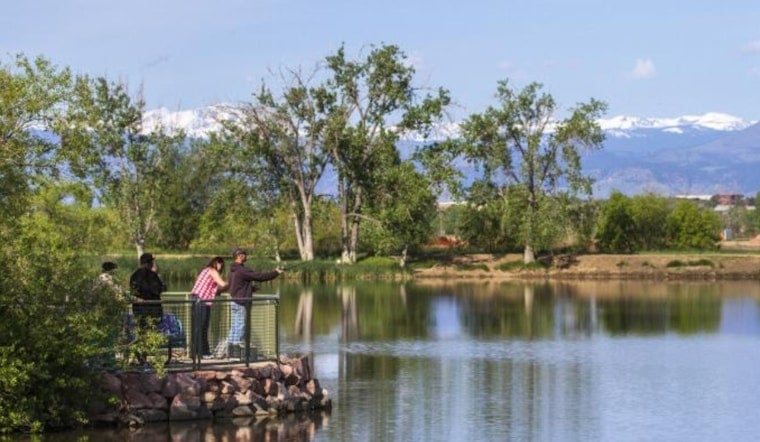
Roughly 30,000 fish have turned up dead at Saint Vrain State Park in Firestone, killed off by plunging water levels tied to Colorado's brutal 2026 drought. The die-off at the Weld County park adds another grim tally to a summer that has already forced wildlife officials to intervene at ponds and reservoirs across the state.
The scale of the loss at Saint Vrain was confirmed as drought conditions caused the mass fish kill, according to CBS News Colorado, which reported that low water levels were behind the deaths at the park. Saint Vrain State Park, formerly known as Barbour Ponds, sits along I-25 near Firestone and spans 604 acres of land with between 152 and 228 acres of water spread across multiple ponds and Blue Heron Reservoir, according to Uncover Colorado. Colorado Parks and Wildlife periodically stocks those ponds with rainbow trout, largemouth bass, channel catfish, crappie, bluegill, and perch, per the same source, meaning the die-off likely struck a mix of both warm-water and cold-water species popular with Front Range anglers.
Why the Water Turned Deadly So Fast
The mechanism behind mass fish kills like this one comes down to basic chemistry under stress. As water levels drop and temperatures climb during extreme summer drought, water holds significantly less dissolved oxygen, which can trigger rapid hypoxia and sudden die-offs in shallow ponds, according to The Pagosa Sun. Under agency guidelines, CPW may declare mandatory fishing closures or emergency salvages when daily maximum water temperatures exceed 71 degrees Fahrenheit or minimum dissolved oxygen levels drop below 6 parts per million, the outlet reported.
Those thresholds have been getting crossed all over the state this year. U.S. Drought Monitor data from August 2026 showed widespread severe to extreme drought conditions stretching across eastern Colorado and Weld County, making this one of the state's driest years in recent decades. It is not clear from available reporting whether CPW issued an emergency salvage order for Saint Vrain ahead of the die-off, the way it has at other Front Range waters this summer, or whether the fish kill happened before any such intervention could occur.
A Pattern Playing Out Across the Front Range
Saint Vrain is not an isolated case. Earlier this week, Hoodline reported on lifted bag limits at Banner Lakes State Wildlife Area, also in Weld County, after CPW issued an emergency public fish salvage order there due to rapid water loss and an impending fishery collapse. The agency issued a similar order the same month for McKay Lake Open Space in Westminster, according to CBS News, allowing anglers to harvest fish before they died off rather than let the losses go to waste.
As of mid-August, CPW had issued 48 drought-related closures and salvages statewide during the 2026 season, including seven emergency public fish salvages, per 9NEWS. Earlier in the summer, the agency instituted emergency fish salvages at Wahatoya State Wildlife Area, Mountain Home Reservoir, and Douglas Reservoir as irrigation demands and low snowpack forced extensive drawdowns, the station reported. Back in April, CPW had already authorized an emergency salvage at Antero Reservoir in Park County ahead of a planned drainage by Denver Water, threatening a fishery stocked with more than 5.4 million fish since 2020.
Drought's Reach Extends Beyond the Water
The stress on Colorado's aquatic life is mirroring what is happening on land. Drought conditions in 2026 severely reduced natural forage and water sources for wildlife statewide, leading CPW to record over 5,000 bear sightings and incident reports, nearly double the volume logged in 2025, according to CBS News. Together with the string of emergency fish salvages this year, the numbers point to a drought that has strained both managed sport fisheries and broader wildlife habitat across Colorado, with no clear end in sight as the dry season continues.





