

























































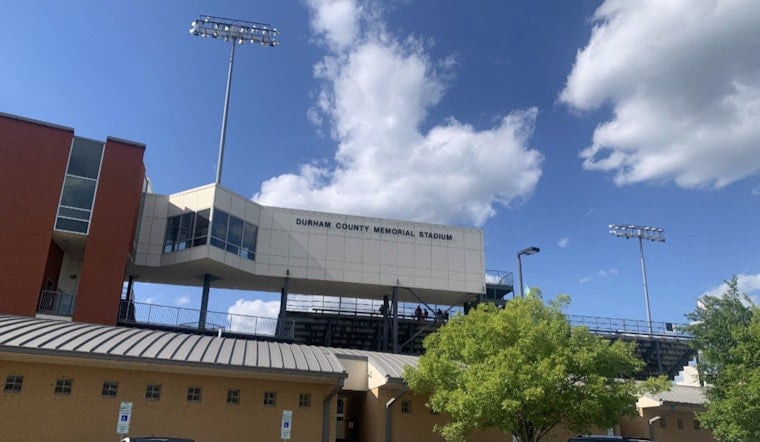
Durham County Memorial Stadium, the 8,500-seat venue at 750 Stadium Drive in northern Durham, is under review as county officials and tourism leaders decide whether to modernize or completely rebuild the aging facility. The stadium has hosted more than 30 major title events over the years, including the CIAA Football Championship and the NAIA Football National Championship, but it is currently being used below its full capacity even as demand for large-scale sports tourism events keeps climbing.
The study is being led by Gensler, the Raleigh-based architecture firm also managing the redevelopment of Lenovo Center in Raleigh, working alongside market advisory firm Victus Advisors, according to the Raleigh News & Observer. Gensler will present options for the stadium's redevelopment, and the process is being coordinated through Durham Next, which has partnered with the Durham Sports Commission and Durham County government on the effort. Durham Next plans to modernize the stadium and says it will ensure residents have a say in how that redevelopment unfolds.
A Venue Built On County Farmland
Durham County Memorial Stadium was built in 1958 and later expanded in 2010 and again in 2019, according to the News & Observer's reporting. Before the stadium existed, Durham County purchased the site back in 1881 and operated a county home and work farm there for elderly, indigent, and disabled residents, with the remaining farm buildings eventually replaced by Durham Regional Hospital in the early 1970s, per NCFootballNews.
The stadium currently serves as the home field for Shaw University's football and soccer teams, and it also hosts the Carolina Flyers and the Tobacco Road Football Club. It has hosted more than 20 NCHSAA state championships and the Conference Carolinas Women's Flag Football Championship, per the News & Observer. But its routine bookings shrank when Northern Durham High School, which had used the stadium as its primary home football venue for decades, opened its own campus stadium in 2023, according to NCFootballNews.
Losing Bids To Other Cities
Marcus Manning, executive director of the Durham Sports Commission, said the stadium can serve as a community asset that expands both sports and non-sports opportunities regionally and nationally. Tara Kenchen, executive director of Durham Next, said events at the stadium already contribute millions of dollars to the local economy each year, helping offset the tax burden for local residents while supporting local businesses and the workforce. Hosting the NAIA Football National Championship there for four consecutive years through December 2024 alone generated more than $1.7 million in cumulative local economic impact, according to the Durham Sports Commission.
Even so, Durham's Destination Master Plan has reported that the county is falling behind competitor cities in attracting top-tier, large-scale events. The stadium, as it stands, cannot fully capitalize on sports tourism, and local tourism leaders point to aging infrastructure as a factor in lost bids, according to the NCFootballNews report. The county did invest in some upgrades before now — in February 2022, the Durham County Board of Commissioners approved a $497,959 contract with Daktronics Inc. to install a new video scoreboard and sound system after complaints from event organizers and spectators about outdated equipment, per Durham County Government records.
Community Input Built Into The Process
Durham Next says it plans to use its community advisory council to shape an engagement plan for the study, and community feedback is expected to be a critical part of the redevelopment process. That approach echoes how Durham handled another historic sports property last year: in November 2025, the Durham City Council voted to preserve and restore the historic downtown Durham Athletic Park rather than replace the 1926 ballpark, rejecting two alternatives following a year-long study by architecture firm Perkins & Will, as INDY Week reported. A separate Durham study completed in 2025 had outlined three multi-million-dollar ideas for the old ballpark, ranging from preservation to transforming it into play areas and a central lawn, or redeveloping it entirely into a new space.
The stadium review is unfolding against the backdrop of a broader regional push. Durham's 20-year Destination Master Plan also calls for building a separate 250,000-square-foot indoor-outdoor multipurpose sports complex spanning 65 to 100 acres, projected to generate $35 million in annual economic impact, according to Durham Next. That ambition tracks with Durham County's broader tourism numbers: the county welcomed roughly 13.5 million visitors in 2025, generating more than $1 billion in direct local spending and over $80 million in state and local tax revenue, per Business North Carolina — a surge Hoodline previously reported was fueled in part by the Durham Sports Commission's event calendar.
Since Discover Durham founded the Durham Sports Commission in 2016, the commission has supported more than 270 athletic events generating over $115 million in direct economic impact for Durham, according to Discover Durham. Whether that track record translates into a full rebuild or targeted modernizations for Durham County Memorial Stadium remains an open question, one that Gensler's feasibility study is now tasked with answering as it weighs upgrade options against the cost and disruption of starting over.



