

























































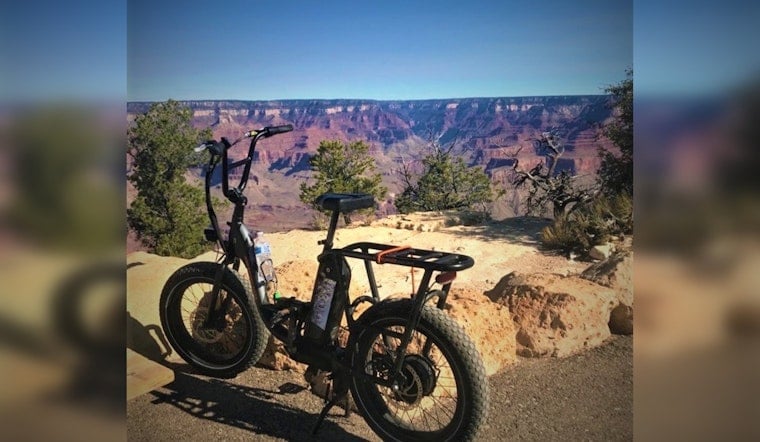
The National Park Service has announced a proposed rule that would expand e-bike and bicycle access across the national park system, and Georgia's collection of historic battlefields, trails, and coastal preserves could see changes if it's approved. The proposal aims to create what officials describe as a simpler, more consistent approach to bicycle access nationwide.
National Park Service chief Jessica Bowron said the changes would create a simpler and more consistent approach to bicycle and e-bike access across the park system, according to WSB-TV. “America's national parks should be easy to access and enjoy,” Bowron said, adding that the proposal would make it easier for visitors to reach park landscapes, history, and recreation opportunities. The rule would let the National Park Service strip out what it calls unnecessary reviews and requirements for bicycle use across the system, per the agency's own account.
The proposal is explicitly tied to President Donald Trump's executive order titled “Making America Beautiful Again by Improving Our National Parks,” along with other executive orders focused on removing regulations. The National Park Service's own announcement of the rule cites that order alongside Executive Order 14192, “Unleashing Prosperity Through Deregulation,” and Executive Order 14219 on government efficiency as the regulatory backbone of the changes, according to the National Park Service.
Which Georgia Parks Are In Play
Georgia is home to a dense cluster of national park units that would fall under the proposed rule, including Cumberland Island, the Appalachian Trail, Chattahoochee River National Recreation Area, Fort Frederica, Andersonville National Cemetery, Jimmy Carter National Historical Park, Ocmulgee Mounds National Historical Park, Kennesaw Mountain National Battlefield Park, Martin Luther King, Jr. National Historical Park, Fort Pulaski, Chickamauga & Chattanooga National Military Park, and the Trail of Tears National Historic Trail. Any changes at these sites would depend on how the rule is finalized and how individual park managers implement it.
The proposal is open for public review and comment for 60 days and is available online through Federal Register public inspection. It builds on a long and occasionally contentious regulatory history. In May 2022, a federal district judge ruled that the National Park Service had violated the National Environmental Policy Act by relying on a categorical exclusion when it implemented its 2020 e-bike rule, sending the matter back to the agency to complete a formal environmental assessment, according to Bicycle Retailer. That lawsuit was brought by Public Employees for Environmental Responsibility and a coalition of conservation groups.
How Federal E-Bike Rules Actually Work
The agency resolved that court fight by publishing a Finding of No Significant Impact in August 2024 following a nationwide programmatic environmental assessment, a step that formally closed out the court-mandated review while preserving individual park superintendents' authority to determine trail access. Under existing federal regulations codified at 36 CFR § 4.30, bicycles and e-bikes are already automatically permitted on public park roads and parking lots, but superintendents must complete written determinations or issue special regulations before opening administrative roads or non-motorized hiking trails, per the Electronic Code of Federal Regulations. The new proposal is designed to streamline exactly that layer of review.
Federal rules under 36 CFR § 1.4 define an e-bike as a two- or three-wheeled cycle with working pedals and a motor capped at 750 watts, split into three classes: Class 1 and Class 3 offer pedal assistance up to 20 mph and 28 mph respectively, while Class 2 includes throttle power up to 20 mph. Notably, the National Park Service separately finalized rules in August 2026 for “powered micromobility devices” like e-scooters and Segways that go the opposite direction — those devices remain prohibited nationwide across park units unless a superintendent specifically designates locations for their use, according to RV Miles.
Georgia's Two Very Different Approaches Already
Georgia's own park units show how differently this can play out on the ground. Chattahoochee River National Recreation Area updated its regulations in December 2024, taking effect the following January, to permit bicycles and e-bikes on 20.6 miles of trails after the park completed its Comprehensive Trails Management Plan and public review process. Cumberland Island National Seashore, by contrast, keeps a much tighter leash: Class 1 e-bikes under 750 watts are limited to main sandy roads and designated beach sectors, all island trail riding is banned, and ferry transport of private bicycles is capped at 15 per trip with a $10 transport fee, according to the National Park Service.
Watchdog groups aren't convinced streamlining is the right call. Public Employees for Environmental Responsibility and partner conservation groups have argued in public filings that expanding e-bike access without localized environmental reviews risks wildlife disturbance, accelerates trail erosion, increases conflicts with traditional hikers, and introduces lithium battery fire hazards in remote backcountry areas, per Public Employees for Environmental Responsibility. The group contends that faster approval processes cut down on public transparency and local impact analysis.
The park service proposal isn't happening in isolation. The U.S. Forest Service also proposed revisions in August 2026 to its Travel Management Rule to formally incorporate e-bikes and re-evaluate access across 380,000 miles of national forest roads and trails, with public comments running through late September 2026, according to the BlueRibbon Coalition. Together, the two proposals mark a broader federal push toward loosening e-bike restrictions on public lands even as local governments elsewhere move the opposite way — Hoodline has reported on cities like Berkley banning e-bikes citywide and Salt Lake County moving to restrict throttle e-bikes on dirt trails.
For now, nothing changes at Georgia's parks. The rule remains a proposal open for public comment, and how — or whether — it reshapes access at places like Kennesaw Mountain or the Trail of Tears will depend on what happens after that 60-day window closes.





