

























































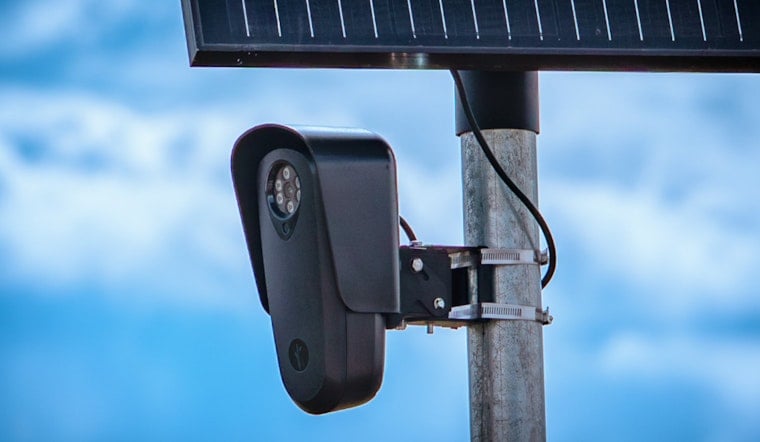
Easton police are shutting down their Flock Safety license plate reader program, with the department's contract set to lapse at the end of its contract year in October 2026. Chief Keith Boone made the call to terminate the agreement after weighing the technology's investigative value against mounting public unease over surveillance and privacy.
The two Flock cameras, installed on a trial basis in 2024 at Depot Street and Foundry Street, had become a fixture of Easton's policing toolkit. According to Boston 25 News, Boone said the cameras played a critical role in numerous investigations over the past two years, including cases involving a juvenile shooting, sexual assaults, and breaking and entering incidents.
Still, Boone said he monitored public sentiment and listened to residents' concerns about the technology before making his decision. He recognized the importance of maintaining public trust, according to the same report, even as he acknowledged the cameras' track record in supporting serious criminal cases.
Part of a Rapid Statewide Wave
Easton is far from alone. The town is one of many Massachusetts communities that have terminated their Flock contracts in recent weeks, joining at least 16 others including Auburn, Douglas, Hopkinton, East Bridgewater, Grafton, Salem, and New Bedford, per The 016. Several of those towns deactivated their systems after intense public debate over privacy concerns, mirroring the pressure Easton officials faced.
Hopkinton's exit, which Hoodline previously reported, came after a formal legal review found its Flock agreement violated state procurement laws, prompting town leaders to order all cameras removed by September 30. Salem took a different route, announcing plans to shift toward a municipal-controlled surveillance system that keeps license plate data local rather than routing it through a commercial nationwide lookup network, according to Salem Patch.
Officer Misconduct Scandals Fueled the Backlash
The statewide pushback against Flock Safety this month has been driven largely by a string of officer misconduct cases across Massachusetts. A Stow detective was criminally charged for allegedly tracking an ex-partner using the system, while two Lynn officers were placed on leave after an audit flagged anomalies in their camera searches, as reported by Boston 25 News. A New Bedford officer also remains under internal review, the station noted, with internal audits revealing significant oversight gaps in how departments controlled access to the readers.
Those revelations echo an earlier trust breach in Cambridge, which terminated its Flock agreement in December 2025 after discovering that company technicians had installed two unauthorized cameras without the city's knowledge following a deactivation order, according to the City of Cambridge. Cambridge subsequently deactivated its entire 16-camera network.
Vendor Response and Civil Liberties Concerns
Flock Safety announced major system-wide changes on August 13 in response to the national outcry, including cutting its default data retention period from 30 days to 7 days, requiring case-number prompts for searches, and launching an “Evidence Mode” for active investigations, per Al Jazeera. Privacy advocates noted that individual agencies can still opt to extend those retention periods on their own.
The ACLU of Massachusetts has amplified those concerns, releasing a “Get The FLOCK Out” advocacy toolkit in July that reported more than 80 Massachusetts police departments had contracted with Flock Safety. The organization said local driver location data was being shared into a national database accessible by more than 7,000 law enforcement agencies without warrants, and it has urged municipal leaders to block out-of-state and federal data access.
Police Leaders Push Back
Not everyone in law enforcement agrees the technology should be abandoned. The Massachusetts Chiefs of Police Association issued a statement on August 27 defending automated license plate readers as essential public safety tools, according to the Shrewsbury Post. The association emphasized that the technology must be paired with mandatory auditing, strict policy compliance, and designated agency oversight, with police leaders stressing that searches must remain strictly tied to legitimate criminal investigations.
That tension between investigative utility and public accountability sits at the heart of Easton's decision. Boone's own account credits the cameras with aiding serious cases while also acknowledging that trust with residents had to take priority.
A National Reckoning With License Plate Readers
The Massachusetts exodus is part of a much larger national trend. At least 56 cities and towns deactivated, rejected, or canceled Flock Safety contracts during the first eight months of 2026, according to surveillance tracking data compiled by DeFlock and reported by Newsweek. The Institute for Justice launched a public database on August 26 tracking these contract cancellations and misuse cases nationwide, cataloging both administrative policy decisions and officer misuse incidents.
Similar stories have played out well beyond Massachusetts, from Pflugerville, Texas ending its Flock deal after 1.6 million outside searches surfaced, to Sheboygan, Wisconsin bagging all 15 of its cameras over a trust breach. In Manvel, Texas, the mayor has pushed to exit a Flock agreement following privacy backlash, while Texas Governor Greg Abbott moved to halt state funding for Flock cameras following cop stalking cases in that state. For Easton, the decision means two cameras at Depot Street and Foundry Street will go dark once the contract year closes in October, ending a two-year experiment that its own police chief says delivered real results even as it fell victim to a statewide crisis of confidence.




.jpg)