

























































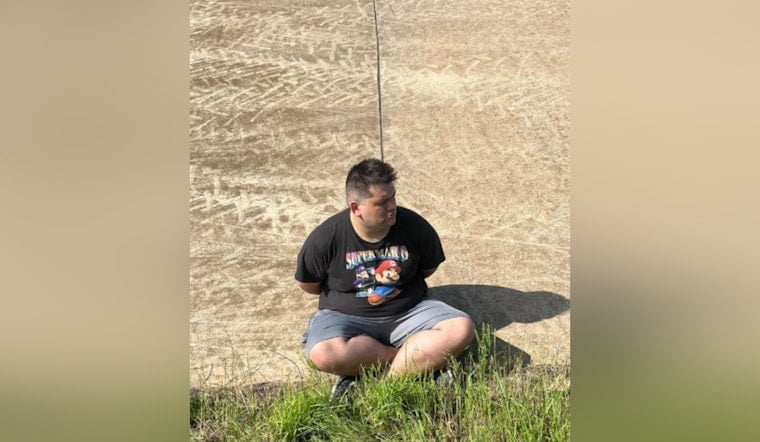
A man who spent nearly eight years walking free after strangling 19-year-old Kyli Molloy in her Edmond apartment will not get a chance at parole, an Oklahoma County judge ruled this week. Judge Cindy Truong denied Joseph Tyler Beck's request for possible future release, telling the court that granting parole would not be in the best interest of justice.
Molloy was found murdered in her Wayne Street apartment near the University of Central Oklahoma campus in October 2016, according to CBS News. She was just 19 and living in her first apartment. Edmond police canvassed the area and interviewed neighbors, but the case went cold because investigators exhausted every lead and suspect without ever identifying Beck, per KFOR.
Beck and Molloy had known each other since childhood and had worked together at an Edmond-area Subway before the killing, according to the same CBS News report. He went to her apartment in 2016 as a family friend, but prosecutors said he attempted to have sex with her, and he killed her after she denied his advances. Prosecutors described the case with a chilling phrase, telling the court it amounted to, “If I can't have you, no one can.”
A Roadside Confession Eight Years Later
The case sat unsolved until May 2024, when an Oklahoma Highway Patrol trooper responded to a call about a man sitting alone on the side of Interstate 40 near the Reno/Scott Street exit in Oklahoma City. That trooper, identified as Matt Snyder, was conducting what began as a routine welfare check, the CBS News report states. During that roadside conversation, authorities said, Beck confessed to killing Molloy.
Beck told the trooper, “I'm sorry for what I did. I turned myself in because it had haunted me every day,” according to KFOR's account of the case. He also said he vomited violently for 24 hours after the killing, the outlet reported. Edmond Police Department spokesperson Emily Ward said at the time that Beck appeared driven by a desire to relieve his conscience, offering details voluntarily and without holding back, according to True Crime News.
Edmond detectives did not take Beck's word alone. They corroborated his roadside confession by confirming he had disclosed non-public crime scene specifics that matched physical evidence from the 2016 case file, the CBS News report notes. Investigators had withheld those details for years specifically to filter out false confessions. Prosecutors also said Beck admitted to being obsessed with Molloy.
From Cold Case to Life Sentence
Kyli Molloy's father, Johnny Molloy, said in May 2024 that learning of Beck's sudden confession brought a mix of shock, anger and long-awaited relief after nearly eight years without answers, per the same CBS News account. Beck was arrested in Oklahoma City that same month, and he spent roughly a year in jail before entering a blind guilty plea to first-degree murder in June 2025, bypassing a trial entirely, according to True Crime News. A blind plea leaves the length of a sentence entirely up to a judge's discretion, with no pre-negotiated agreement from prosecutors.
After Beck's sentencing, Oklahoma County District Attorney Vicki Zemp Behenna publicly praised law enforcement for their persistence in pursuing justice for cold case victims, noting that while justice took nearly a decade, investigators never abandoned the case, per True Crime News. Beck has continued serving a life sentence in jail for Molloy's death.
Judge Rejects Bid for Future Release
At the parole hearing this week, Kyli Molloy's family asked the judge to deny Beck any chance for parole, and her loved ones argued against his request, according to KFOR. Judge Truong told the courtroom that if parole were eventually granted, Beck would be out of prison at age 67.
Truong ultimately denied Beck's motion, stating that granting the possibility of parole would not serve the best interest of justice. Under Oklahoma's 85 Percent Law, people convicted of serious violent offenses such as first-degree murder must serve at least 85 percent of their court-imposed sentence before they can even apply for parole, according to the Oklahoma Policy Institute. That statutory limit, combined with the judge's ruling, leaves Beck with no near-term path out of prison for a killing that went unsolved for the better part of a decade before he confessed it himself, sitting alone beside an Oklahoma City interstate.


