

























































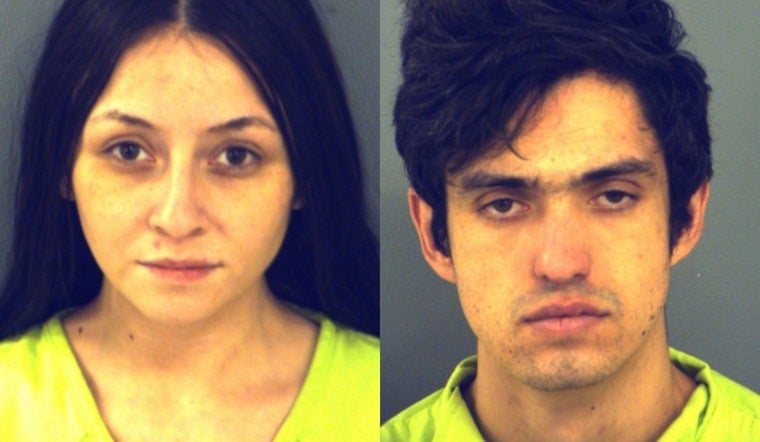
A 29-year-old El Paso man is facing a murder charge after investigators say his father's body sat concealed in a garage for days following a physical fight between the two, according to court documents. John Michael De Coste is accused of killing his father, David Edward De Coste, a retired El Paso police detective, in what affidavits describe as an escalating confrontation inside their West El Paso home.
The case became public Tuesday evening when El Paso police responded to a SWAT situation on the 6800 block of Villa Hermosa Drive, as reported by KDBC. Officers were called to the home after hearing a voice inside, prompting the department's SWAT team to move in. During a safety sweep of the property, officers found a body wrapped in plastic inside the garage. Idalia Nunez De La Torre, who lived at the residence, exited the home during the standoff, according to the outlet's reporting. That initial SWAT response was previously covered in Hoodline's earlier report before the identity of the victim, the cause of death, and the murder charges were laid out in court affidavits.
What the Affidavit Says Happened
According to the affidavit cited by the station, De Coste told investigators the confrontation with his father occurred sometime between August 4 and August 7. He said his father was highly intoxicated and moved toward the bedroom to retrieve a gun, and that he saw the victim and De La Torre kissing in a bedroom. De La Torre had begun living with De Coste and the victim on August 2, per the affidavit.
The murder affidavit alleges De Coste caused his father's death by pushing and assaulting him with his hands and feet, and that he slapped and kicked the victim several times. Investigators allege De Coste pushed his father, causing him to fall and strike his head. De Coste told police he found the victim lifeless the following morning, the affidavit states.
Preliminary autopsy findings listed the manner of death as homicide, and the autopsy found blunt-force trauma injuries along with a right subdural skull fracture, according to the affidavit. Under Texas Code of Criminal Procedure standards, formal cause and manner of death determinations in cases like this fall under the exclusive jurisdiction of the regional medical examiner's office to substantiate criminal homicide charges, a distinction the same office relied on in a separate Fort Worth case earlier this month, as per Hoodline.
Days of Concealment Before the SWAT Call
Investigators allege the victim's body remained inside De Coste's bedroom for approximately three to four days after his death. De Coste and De La Torre are then accused of placing the body inside a body bag and moving it to the garage. De Coste allegedly ordered the body bag from Amazon after his father had already been dead for several days, per the affidavit.
De Coste also told police he had considered burying his father's body in the desert. A neighbor reported that the garage door had been open for several days and that a strong foul odor was coming from the property, according to the affidavits obtained by the station. De La Torre is accused of using cleaning products on the area where the body had previously been located.
Two Different Accounts From Inside the House
De La Torre told investigators she and the victim had kissed on several occasions while De Coste was away, but said she did not witness the physical altercation and did not participate in assaulting the victim. The dossier does not indicate that investigators have resolved the discrepancy between her account and De Coste's version of events, and both statements are presented here as they were given to police.
De Coste surrendered and was taken into custody. He is charged with murder, tampering with or fabricating physical evidence involving a human corpse, and continuous violence against the family, along with a separate charge of assault causing bodily injury in family violence. De La Torre is charged with tampering with or fabricating physical evidence involving a human corpse.
Prior Records and Potential Penalties
De Coste previously faced charges of resisting arrest, driving while intoxicated, and possession of drug paraphernalia, all of which were dismissed, according to the affidavit. De La Torre previously faced charges of possession of a controlled substance and assault causing bodily injury to a family member, which were dismissed or otherwise disposed of.
Under Texas Penal Code § 19.02, murder is classified as a first-degree felony punishable by 5 to 99 years or life in prison and a fine of up to $10,000, according to FindLaw. Tampering with or concealing physical evidence is elevated from a third-degree felony to a second-degree felony when the item involved is a human corpse, carrying 2 to 20 years in prison and a fine up to $10,000 — the charge both defendants now face. Continuous violence against the family, De Coste's third charge, is a third-degree felony carrying 2 to 10 years in prison, defined under state law as committing two or more domestic assault offenses against a family or household member within 12 months.
A Retired Detective, and a Rare Case for a Safe City
David Edward De Coste was a retired El Paso police detective, according to his LinkedIn profile. The 6800 block of Villa Hermosa Drive falls under the El Paso Police Department's Westside Regional Command, and the same stretch of street previously drew a multi-agency SWAT response back in September 2020 after reported gunfire near Resler Drive.
El Paso continues to rank among the nation's safest large cities in national FBI crime data analyses, recording violent crime rates well below national averages for major U.S. municipalities, according to Security.org. The department's Crimes Against Persons unit, which is assigned all citywide homicide and suspicious death investigations, has historically maintained clearance rates between 87% and 90%, well above the national average near 60%. Residents with information can report tips anonymously through the department's Tip411 tool or local Crime Stoppers initiatives. Open questions remain about whether a grand jury will formally indict either defendant, what bond conditions may be set, and when the case might reach El Paso County district court.





