

























































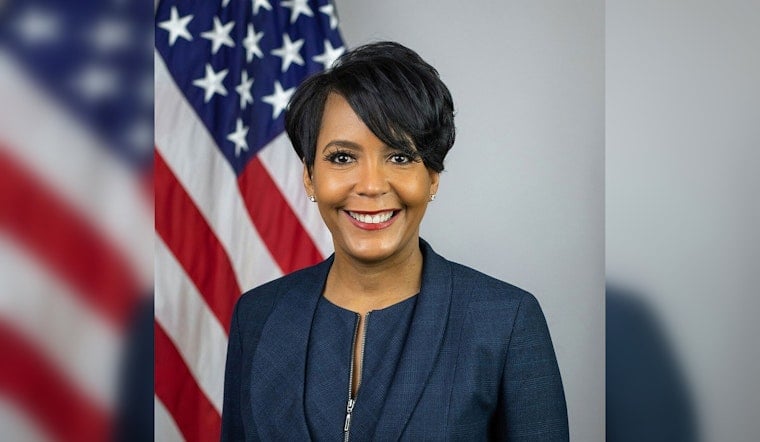
A redistricting fight stretching from Louisiana to Georgia has landed in the middle of the 2026 governor's race: Eric Holder, the nation's first Black attorney general, is backing former Atlanta Mayor Keisha Lance Bottoms. The endorsement arrives as Southern states revisit congressional maps after a Supreme Court ruling that reshaped the legal ground around race and district lines. For Georgia voters, the map debate is now sharing the stage with the November contest for governor.
Holder's National Democratic Redistricting Committee announced last Thursday that he was endorsing Bottoms, along with Democratic state House candidates Rasmus Jensen, Cathy Kott, Margaret Spear, Whitney Echenique and Quentin Postell. The committee described the candidates as part of its effort to defend voting rights and challenge partisan mapmaking in Georgia.
As reported by CBS News Atlanta, Holder said the 2026 midterms give Georgians a chance to elect leaders who will push back against partisan and racial gerrymandering. Bottoms, who won the Democratic nomination, is set to face Republican nominee Rick Jackson, a billionaire health care executive, in a race already drawing national attention.
Why Louisiana Put Georgia's Maps Back In Focus
In the Supreme Court's opinion in Louisiana v. Callais, the justices affirmed that Louisiana's map creating a second majority-Black congressional district was an unconstitutional racial gerrymander. The Court said compliance with Section 2 of the Voting Rights Act can, in some circumstances, justify race-conscious districting, but concluded that Louisiana's particular map did not meet constitutional requirements.
The decision has split the political response. Supporters say it reinforces the Constitution's equal-protection rules, while voting-rights advocates warn it could make it harder for minority communities to elect candidates of their choice and could reduce the legal room for race to be considered when maps are drawn.
Georgia's current congressional map will remain in place for the 2026 elections. Georgia Public Broadcasting reported that legislative leaders declined to redraw the state's congressional or legislative districts during a special session, saying any changes would not take effect until 2028 and that the process should not be rushed.
Georgia Waited While Other Southern States Moved
Georgia's decision to hold off contrasts with Louisiana, where lawmakers enacted a new congressional plan during the 2026 regular session, according to Louisiana's legislative redistricting site. CBS News Atlanta also reported that Alabama, Florida and Tennessee adopted new maps, while officials in Mississippi and South Carolina discussed whether further changes might be needed.
That broader map movement gives Holder's endorsement a distinctly Georgia angle. The NDRC is not simply backing a candidate in a conventional governor's race; it is tying the contest to who will influence future redistricting fights, voting rules and the political balance of the state.
A National Democratic Figure Enters Georgia's Governor Race
Holder's stature adds weight to the message. The White House archive identified him as the first African American to serve as U.S. attorney general, and the Justice Department lists him as the nation's 82nd attorney general.
For Bottoms, the endorsement reinforces a campaign built around voting rights, health care and economic equity, while placing her directly inside the South's intensifying battle over political maps. The race will now test whether redistricting and representation can break through the usual campaign arguments about cost of living, party control and the candidates' records.





