

























































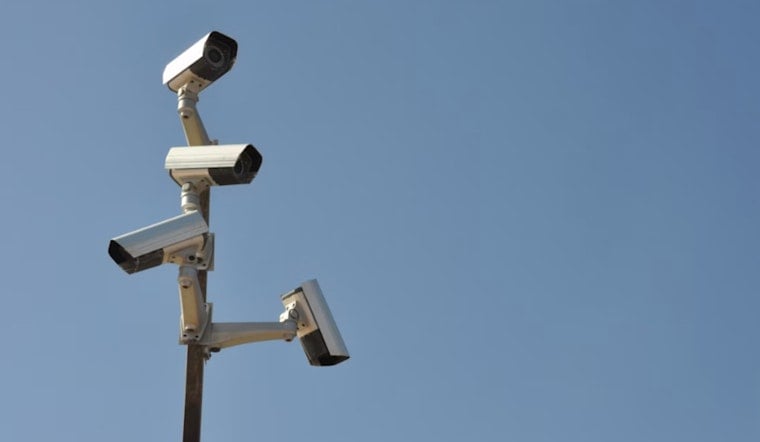
A former Katy Police Department officer is facing criminal charges after court documents revealed he allegedly used the city's Flock Safety license plate camera network to track a woman's movements for months, ultimately placing a tracking device on her vehicle. Sergio Rodriguez was indicted on April 6, 2026, in Fort Bend County on charges of stalking and misuse of official information, following an internal affairs probe into more than 2,300 unauthorized searches of the woman's license plate over an 11-month span.
According to court documents cited by ABC13 Houston, Rodriguez used Flock cameras to track the woman's location between November 2024 and April 2025, running her plate through the department's extensive camera network for at least five months. Charging documents show he also placed a tracking device on her vehicle. As reported by KHOU, internal affairs documents show Rodriguez acknowledged to investigators that the searches were a “dumb decision.” Katy PD terminated him on April 20, 2026. ABC13 says it is still working to confirm Rodriguez's relationship to the woman and whether he remains employed as a law enforcement officer.
A Regional Pattern of Camera Abuse
Rodriguez's case is not isolated. The Pasadena Police Department and the Baytown Police Department have both announced that officers were investigated for misusing Flock cameras, and a Deer Park officer was separately disciplined for alleged misuse, per the same ABC13 report. Former Pasadena Police Sergeant Michael Palitz surrendered his Texas peace officer license in August in lieu of prosecution after an internal probe into allegations he used the department's Flock system to track a female officer, according to the Houston Chronicle. Palitz had resigned in July after a city council member publicly disclosed the internal investigation.
Baytown Police Chief John Stringer launched parallel internal affairs and criminal investigations in late July after receiving allegations that an unnamed department officer had misused the city's Flock system, requesting help from the Harris County District Attorney's Office to handle the criminal side of the inquiry, Texas Scorecard reported. Meanwhile, a Fort Bend County Sheriff's Office lieutenant received only a two-day suspension after an internal probe found they had looked up two license plates for personal reasons — one 41 times and the other 148 times — starting in January 2022, according to ABC13's reporting. That investigation began after a local resident complained they feared for their family's safety.
Harris County Tightens Access Amid Wider Fallout
In August, the Harris County Sheriff's Office suspended three deputies' access to its 480-camera Flock network while rolling out mandatory case description entry rules and new automated auditing software, according to FOX 26 Houston's coverage of the crackdown, which followed Hoodline's earlier report on the deputy access suspensions. Harris County commissioners had renewed the county's $869,000 annual contract for Flock license plate readers and gunshot detection in May, before the suspensions were announced. Law enforcement officers are now required to enter a valid records code or criminal case number before running a Flock database search, a policy meant to make personal queries easier to trace.
The scale of the underlying network helps explain why abuse can go undetected for so long. Advocacy estimates place more than 10,000 Flock Safety cameras active across Texas as of August, including several thousand in the Houston metro area, supported by data-sharing partnerships between the Texas Department of Public Safety and more than 200 local agencies, according to The Texas Tribune. Fixed units photograph passing vehicles and upload plate numbers, models, and colors into a searchable database without requiring a warrant.
A National Trend, Not Just a Texas Problem
Cases of officers misusing Flock's license plate reading system have grown exponentially, and Rodriguez's alleged conduct fits a documented pattern. A national database compiled by the Institute for Justice in August identified roughly 50 cases nationwide where law enforcement personnel were accused or charged with misusing automated license plate readers, with more than half involving officers tracking wives, girlfriends, ex-partners, or romantic interests. Privacy researchers involved with the database note that because internal audit logs are rarely made public without media scrutiny or a victim complaint, the true number of abuse cases is likely higher.
Flock Safety CEO Garrett Langley publicly apologized in August for instances where officers abused the technology and announced platform changes, including shortening the default data retention period from 30 days to seven days and automatically locking out accounts that show suspicious query activity, according to CBS News. The company's built-in tool is designed to flag unusual or repeated searches before they escalate into cases like Rodriguez's. Flock technology is currently used by roughly 5,000 law enforcement agencies and 6,000 communities nationwide.
Legal Stakes and a Push for Federal Oversight
Under Texas Penal Code sections covering misuse of official information and breach of computer security, a public servant who knowingly accesses a government computer network without consent or uses nonpublic data for personal purposes can face charges ranging from Class B misdemeanors to state jail felonies punishable by up to two years, according to FindLaw's summary of the statutes. Unlawful access to a government-owned network can elevate a breach-of-computer-security charge to a state jail felony under Texas law.
The pattern has also drawn federal attention. U.S. Representative Keith Self of Texas introduced the PRIVACY Act, H.R. 9716, in July to require federal law enforcement agencies to obtain a search warrant before accessing or querying state and local automated license plate reader data, according to KSST Radio. The bill is aimed at preventing federal agencies from running dragnet queries on municipal camera networks without judicial oversight. Whether Katy PD's own internal auditing caught Rodriguez's searches, or whether the victim first brought the tracking to light, remains unclear.





