

























































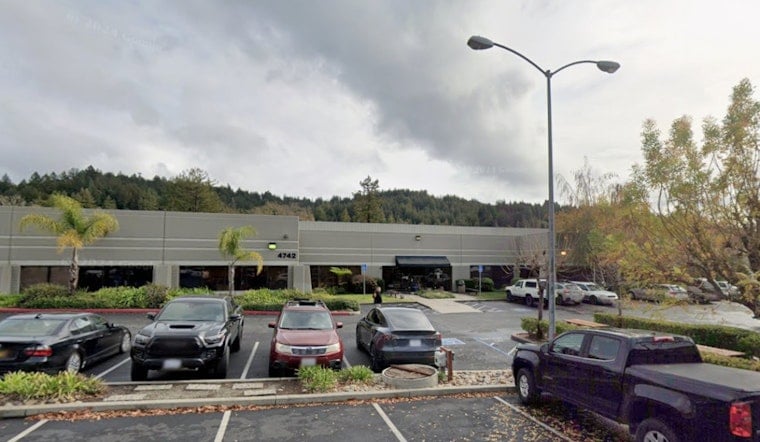
A former Tesla executive is turning a massive, empty warehouse about 30 minutes south of San Jose into a factory to build a new kind of electrical transformer for the nation's strained power grid. Heron Power, led by chief executive Drew Baglino, plans to invest $100 million to convert the 286,000-square-foot distribution warehouse into a production site for its flagship Heron Link system, a device designed to replace decades-old grid hardware with software-controlled, chip-based electronics.
According to Reuters, the factory will produce the Heron Link, a 5-megawatt medium-voltage power conversion system aimed at large-scale energy and data-center projects. Baglino spent 18 years at Tesla before this venture, eventually rising to Senior Vice President of Powertrain and Energy Engineering, where he oversaw the Megapack and Powerwall product lines, according to Teslarati. He resigned in April 2024 amid a company-wide restructuring and 10% global workforce reduction at Tesla.
Baglino founded Heron Power later that year in Scotts Valley, and the Santa Cruz County startup has moved fast since. It raised $38 million in a Series A round in May 2025, then followed with a $140 million Series B round in February 2026, backed by investors including Breakthrough Energy Ventures and Andreessen Horowitz, per Reuters and corroborated by a GlobeNewswire release.
Why the Grid Can't Wait
The urgency behind the factory traces back to a supply chain crunch that has left utilities and developers stuck. Reuters reports that most critical components for the U.S. grid are imported, and that a standard transformer now carries a procurement lag of up to four years. Baglino told the wire service there is a supply challenge for new equipment, and that the U.S. grid still relies on infrastructure engineered in the 1960s and 1970s.
Those delays are not exaggerated. A Wood Mackenzie supply chain survey released in mid-2025 found average U.S. delivery lead times reaching 128 weeks for power transformers and 144 weeks for generator step-up transformers, with prices climbing as much as 80% since 2019, according to IndustrialSage. Compounding the problem, U.S. Department of Energy data cited by Sands Capital shows more than 70% of large power transformers on the national grid are already over 25 years old, even as data centers are projected to drive roughly 55% of total U.S. electricity demand growth over the next five years.
A One-Step Conversion Built for AI Racks
What sets the Heron Link apart, according to Reuters, is Baglino's belief that software-controlled, chip-based transformers can compete with conventional units filled with steel and oil. He argued that any rapidly changing grid needs this type of electronics. Per Power Electronics News, the Heron Link converts 34.5 kV medium-voltage grid power directly into 800 V DC in a single step at over 98.5% efficiency, eliminating up to 70% of the traditional equipment a substation would otherwise need, including separate inverters, step-up transformers and switchgear.
That 800 V DC output is not arbitrary. The architecture is designed to match Nvidia's 800 V DC reference design for next-generation AI server racks arriving in 2027, addressing power usage spikes that can surge up to 50% above normal design capacity in split seconds, the Insurance Journal reported. It is a technical detail that explains why hyperscale data center operators, rather than cautious utilities, are moving first on this hardware.
Demand Already Outpacing the Factory
Reuters reports that Heron Power has received strong interest from electric utilities and data-center developers, though Baglino declined to name potential customers. Other reporting fills in some of that picture: by February 2026, Heron Power said it had accumulated 40 to 50 gigawatts in prospective customer demand across more than a dozen developers, including data center operator Crusoe and clean-energy developer Intersect Power, according to Canary Media.
The company's long-term ambition is to manufacture 40 gigawatts of medium-voltage power-conversion gear annually at automated U.S. facilities, and financial reports in April 2026 indicated Heron Power was pursuing new funding at a valuation of up to $1 billion, Axios reported. Mass production at the converted warehouse is not expected to begin until late 2027, per Reuters, meaning the startup still has to prove it can scale from prototype engineering to high-volume manufacturing on that timeline.
A Crowded Race for Grid Electronics
Heron Power is not alone in chasing this market. Clean-tech startups, including DG Matrix and Hyperscale Power, along with joint ventures like SolarEdge and Infineon, are concurrently developing modular 2-to-5 MW solid-state transformers aimed at the same AI data center power delivery problem, according to DG Matrix Insights reporting cited by DG Matrix. Reuters notes the broader stakes: the U.S. power grid faces rapid transformation driven by demand from data centers, electric vehicles and heat pumps, and the power industry is expected to spend $1 trillion over the next decade building power plants, renewable resources, battery charging facilities and high-voltage transmission lines.
Baglino's bet on hardware has not stopped at grid equipment. In June 2025, he quietly launched a second, Scotts Valley-based startup called Sadi Thermal Machines to build residential heat pumps, a product category Tesla had previously considered before shifting its focus toward robotics, according to Electrek. Whether either venture can outpace the grid's aging infrastructure remains to be seen, but for now, the converted warehouse south of San Jose stands as Heron Power's most concrete bet that chip-based transformers are ready to leave the lab.





