

























































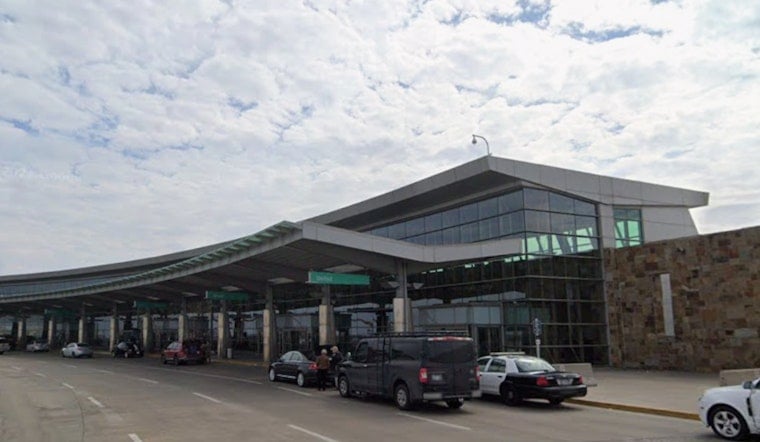
A routine bag scan at Will Rogers World Airport turned tense when a TSA officer spotted something unusual buried inside a passenger's checked fracking equipment: what looked like detonators. The officer called in backup, and within a short time, local law enforcement and the Oklahoma City Bomb Squad were on scene to sort out whether the items posed a real threat.
The officer who first flagged the bag, Faith Stonebraker, was screening checked luggage when she noticed a concerning X-ray image on her screen, according to NJ.com. Inside what appeared to be a hard-sided case, she saw multiple alarming items, the outlet reported. Stonebraker cleared two other alarms tied to the bag but flagged the suspected detonators and notified Supervisory TSA Officer Michael Tippie.
Tippie reviewed the X-ray himself and saw a mass inside a pipe-like object, per the same account. He said items that replicate an improvised explosive device or an IED component should not be allowed on an aircraft, and he reiterated that inert explosives and IED components are barred from planes altogether.
Why a Dummy Label Wasn't Enough to Clear the Bag
The items were later found inside fracking equipment, gear used to extract oil or natural gas from the ground. TSA Explosives Specialist Patrick McKee said oilfield equipment containing replica or inert explosive components is intercepted quite frequently at Will Rogers World Airport, a reflection of Oklahoma's prominent oil and gas industry, according to the Transportation Security Administration.
Although the replica detonators were marked DUMMY, McKee explained that the text was only partially visible on one device, making it impossible for screeners to verify whether the markings were genuine without calling in local law enforcement and the bomb squad. TSA officers cannot reliably determine whether such materials are inert just by looking at them, which is why the response escalated the way it did.
Bomb Squad Clears the Scene, but Keeps Gear Off the Plane
The Oklahoma City Bomb Squad safely removed the replica detonators from the fracking equipment on site. Officials ultimately ruled the items safe, but they were still prohibited from being loaded onto the aircraft under federal rules.
Federal regulations, specifically Title 49 CFR § 1540.111, ban realistic replicas of explosives from both carry-on and checked luggage on commercial passenger flights. The rule gives TSA screeners wide discretion to confiscate items that resemble explosive or incendiary devices, regardless of whether they turn out to be inert, according to the Federal Register.
TSA Federal Security Director for Oklahoma Mathew Ketchum publicly commended the Oklahoma City screening team for remaining focused and adhering to protocol, crediting officers for preventing an item resembling an explosive device from ever reaching an aircraft, per the agency's account.
A Recurring Headache Tied to Oklahoma's Oilfields
This is not an isolated case. Similar incidents involving replica explosives packed as training aids have surfaced at other U.S. airports, including a realistic PVC pipe bomb training kit found in checked luggage at Boise Airport in May 2025 and a replica pipe bomb intercepted at Ohio's Rickenbacker Airport in June, as reported by Paddle Your Own Kanoo. Travelers carrying industrial or training equipment often fail to realize such replicas are strictly banned from checked bags, the outlet noted.
Bringing realistic replicas of explosive devices through airport security can trigger federal civil penalties starting at $850 and reaching up to $4,250 per violation, along with potential criminal referrals, per the same report. It remains an open question whether the passenger involved in the Oklahoma City incident will face those civil fines or any employer disciplinary action, and whether energy companies operating in the state do enough to train field technicians on TSA luggage rules before they travel with industrial demo equipment.
Oklahoma's Energy Industry Keeps Screeners on Alert
Because Oklahoma is a major hub for hydraulic fracturing and energy exploration, TSA specialists in Oklahoma City routinely encounter specialized oilfield tools, including items tied to industrial perforating and explosive operations. Will Rogers World Airport also sees heavy morning traffic, with roughly 2,300 passengers moving through the terminal daily between 4 a.m. and 7 a.m., which is why officials continue to advise travelers to arrive two hours before departure, according to Visit Oklahoma City.
The agency has flagged prohibited items at Oklahoma checkpoints before. TSA officials previously reported intercepting 95 firearms at statewide airport security checkpoints in a single year, underscoring how often screeners across the state run into dangerous or restricted items, from guns in carry-ons to industrial explosive replicas packed away in checked bags.


