

























































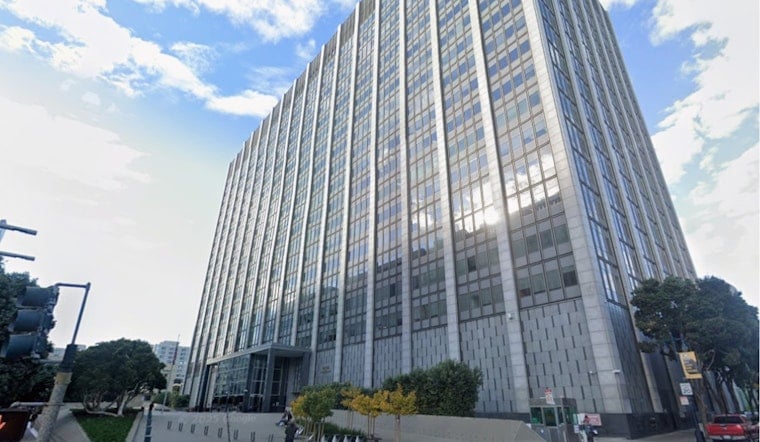
A federal judge in San Francisco has permanently blocked the Trump administration from banning San Francisco-based Anthropic's Claude chatbot from federal agencies, ruling in a 59-page decision that the Pentagon's supply-chain risk label amounted to unconstitutional retaliation against a company that refused to bend on its own safety rules. U.S. District Judge Rita F. Lin found the ban was not adequately justified and ordered the administration to lift it for good.
Judge Lin's ruling, issued yesterday, converts a preliminary injunction from March into a permanent order barring federal agencies from enforcing the ban, according to CBS News. The decision also throws out the Department of Defense's supply-chain risk designation against Anthropic, finding the administration violated the company's First Amendment rights and its due process protections under the Fifth Amendment. Bloomberg reports that Judge Lin sided with Anthropic in its challenge to the Pentagon, closing out a legal fight that began earlier this year.
In her decision, Judge Lin did not mince words about what she saw as the government's real motive. Per The Guardian, she wrote that the empty invocation of national security is not a blank check to punish and retaliate against government critics, concluding that officials wanted to make a public example of Anthropic rather than address any genuine concern about model sabotage. The court rejected the Pentagon's argument that its inability to trust Anthropic justified blacklisting the company.
A Blacklisting Tool Never Before Used on a US Company
The legal authority the Pentagon invoked, under 10 U.S.C. § 3252 and the Federal Acquisition Supply Chain Security Act, had never before been publicly applied to a domestic American corporation, according to Lawfare's reporting from March. Those designations were historically reserved for foreign adversary entities like Huawei, and they allow the government to exclude vendors from defense procurement over national security risks. Using that tool against a Silicon Valley AI firm was itself an unprecedented move.
The fight traces back to a July 2025 contract worth up to $200 million that the Pentagon's Chief Digital and Artificial Intelligence Office awarded to Anthropic, one of four frontier AI companies — alongside OpenAI, Google, and xAI — to win similar military deals that summer, per DefenseScoop. That contract broke down in early 2026 when Anthropic refused to strip out contractual guardrails barring Claude from being used for mass domestic surveillance or fully autonomous weapons.
Trump Called Anthropic Radical Left Before the Blacklist
On February 27, 2026, President Trump ordered all federal agencies to immediately stop using Anthropic's technology, setting a six-month phase-out and labeling the startup a radical left, woke company, Hoodline reported at the time. Defense Secretary Pete Hegseth formally declared Anthropic a supply-chain risk the same day, and The Guardian notes the order followed failed negotiations between Anthropic CEO Dario Amodei and Defense Department officials over so-called any-lawful-use contract clauses.
Hours after the administration targeted Anthropic, rival OpenAI struck its own agreement to deploy models on classified military networks, a move that triggered internal industry debate and led to high-profile resignations, including OpenAI's head of robotics, Caitlin Kalinowski, according to Axios. OpenAI has said its agreement included safeguards against domestic mass surveillance while keeping deployment cloud-only.
Collateral Damage Across the Defense Contracting World
The blacklist threatened to ripple well beyond Anthropic itself. It would have forced major government contractors — including Amazon Web Services, Microsoft, and Palantir — to certify they were not using Claude in any military-adjacent operations, since Anthropic had partnered with Palantir and AWS back in November 2024 to deploy Claude into classified intelligence and defense environments.
Anthropic did not fight the Pentagon on only one front. Alongside the Northern District of California lawsuit that Judge Lin decided, the company filed a separate, narrower challenge in the U.S. Court of Appeals for the District of Columbia Circuit, targeting a distinct administrative procurement rule that federal contracting officers had invoked against it, according to AP News. That D.C. Circuit case remains pending even after yesterday's win in San Francisco.
The Judge and the Bigger Picture
Judge Lin, who issued the ruling in San Francisco, was appointed to the Northern District of California bench by President Biden in 2023 and is the first Chinese American female Article III judge in the district's nearly 175-year history, according to biographical records from NAPABA. She previously served as a California state court judge and as an Assistant U.S. Attorney in San Francisco.
Anthropic has kept expanding its commercial footprint even as the legal fight dragged on. In July, the company struck a deal with AMD, tying up to 2 gigawatts of GPU compute to a $5 billion equity commitment, one of the largest private infrastructure buildouts in the tech industry, as Hoodline detailed in its own coverage of the AMD partnership. The federal government is expected to appeal Judge Lin's ruling, and with the D.C. Circuit case still open and the broader question of ethical limits on military AI contracts unresolved, the fight between Washington and Silicon Valley's AI developers is far from finished.





