

























































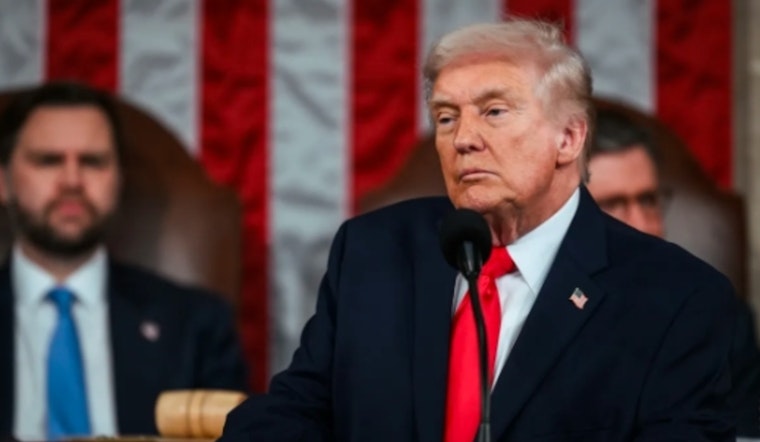
President Trump on Friday ordered every federal agency to cut off use of technology from San Francisco AI firm Anthropic, while the Pentagon moved to tag the company as a supply-chain risk to national security. The one-two punch caps a tense weeklong standoff between Anthropic and Defense Department officials over guardrails the company put on its Claude models. Anthropic says it will fight any such designation in court and is warning that blacklisting an American company this way would be unprecedented.
Trump orders agencies to cut ties
In a social media post, Trump announced that federal agencies “WILL IMMEDIATELY CEASE all use of Anthropic’s technology,” with a six-month phase-out for some departments, according to The Washington Post. The order landed just hours after the Pentagon gave Anthropic a deadline to lift restrictions that block Claude from being used for mass domestic surveillance and fully autonomous weapons. Inside the federal bureaucracy, the announcement has already triggered a scramble to figure out exactly where Claude is running and how fast it can be swapped out.
Pentagon moves to brand Anthropic a supply-chain risk
Defense Secretary Pete Hegseth said the department will deem Anthropic a “supply-chain risk to national security,” warning that any contractors doing business with the military will have to cut their commercial ties with the firm, as reported by AP. Hegseth’s declaration follows months of negotiations in which the Defense Department pressed Anthropic for broader access to its models for what officials described as “all lawful” uses. A formal risk label could freeze Anthropic out of future Pentagon deals and force major defense contractors to certify they are no longer relying on Claude anywhere in their stacks.
Anthropic pushes back
Anthropic responded on its website that it “cannot in good conscience” strip away safeguards that block mass domestic surveillance and fully autonomous weapons, and it vowed to sue if the government finalizes the supply-chain designation, as outlined by Anthropic. The company argued that such a label would be “legally unsound” and warned it would set a dangerous precedent if applied to a U.S. firm. At the same time, Anthropic said it would cooperate on a smooth transition for Defense Department customers if the Pentagon ultimately off-boards Claude.
Industry reacts and realigns
Across Silicon Valley and the wider AI world, top executives and researchers weighed in quickly, with some praising Anthropic’s hard line, even as OpenAI jumped to line up its own deal with the Defense Department, according to KPBS. OpenAI CEO Sam Altman has said he shares some of Anthropic’s “red lines” while he negotiates terms for classified use, and rival vendors are already jockeying to fill any gap left by Claude inside government systems. The dust-up is putting a spotlight on how AI companies and the Pentagon are trying to juggle operational demands with safety limits that play well in the court of public opinion.
What it means for contractors and operations
The Pentagon has begun asking major defense suppliers to detail how much they rely on Anthropic’s tools, an early step toward a formal blacklist and toward planning any transition away from Claude, as reported by Axios. Agencies will have as long as six months to wind down some uses of Claude, officials said, which creates a tight window to plug new providers into sensitive programs without breaking anything important. In San Francisco’s tech scene, the public showdown is feeding a blunt question that has been simmering for months: can American AI firms hold the line on safety-focused limits and still land the most lucrative national security work?
Legal fight ahead
Legal experts note that the reach and enforceability of such a supply-chain designation are untested and could spark a lengthy court battle, with some analysts calling the broad label for a U.S. startup unprecedented, according to Financial Times. Anthropic’s pledge to sue sets up a collision over executive power, procurement rules and national security discretion that appears destined for federal court. That fight, along with the scramble to rehost classified work, is likely to determine whether this episode rewrites the playbook for how AI companies negotiate safety guardrails with Washington.





