

























































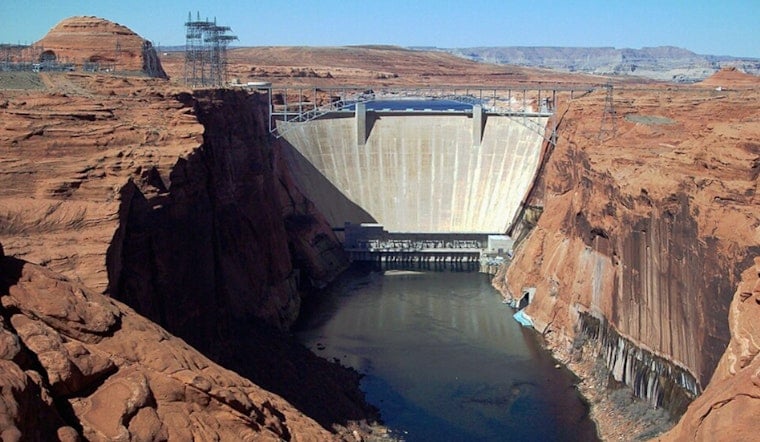
Federal officials have decided not to release cool water from Glen Canyon Dam this year to protect a threatened native fish, a move they say was driven by strained hydropower conditions rather than a lack of concern for the species. The river downstream of the dam has been running at about 69 degrees Fahrenheit, well above the threshold that triggers concern about invasive smallmouth bass spawning in the Grand Canyon.
According to the Denver7 report from the Associated Press, the Bureau of Reclamation notified various groups by email that cool water would not be released from Lake Powell this year. The bureau attributed the decision to significant hydropower generation concerns under already strained system conditions, per that email. Federal officials said the release would have protected the threatened humpback chub downstream, but also acknowledged it would have strained hydropower production at a moment when the whole system is under pressure.
How Cool Mix Flows Work — and Why They Cost So Much
Cool mix releases work by discharging water through Glen Canyon Dam's four steel River Outlet Works bypass tubes, located roughly 100 feet below the dam's electrical penstocks, mixing deep cold reservoir water with warmer surface water while bypassing the dam's 1,320-megawatt turbines entirely, according to the Bureau of Reclamation. That bypass keeps the river cold enough to stop smallmouth bass from spawning, but it also means less water flows through the dam's power-generating turbines. The Bureau of Reclamation considers recommending cold-water releases when the downstream average daily temperature exceeds about 60 degrees Fahrenheit for three consecutive days, and this year that threshold was exceeded regularly for more than a month, per the Denver7 report.
The financial toll of prior releases has been steep. The Western Area Power Administration spent $18.9 million in 2024 and $6.5 million in 2025 on market-rate replacement power specifically because cool mix bypasses reduced Glen Canyon Dam's output, according to Renewable Energy World. Utilities that buy Glen Canyon Dam hydropower said cool water releases would require millions of dollars for alternative energy, and that alternative energy is more costly and less likely to be renewable than the dam's hydropower, per the Denver7 account. Andy Colosimo, executive director of the Colorado River Energy Distributors Association — a group representing about 155 customers that buy federal hydropower generated from the Colorado River — supported the decision not to release cool water, saying it was the right call given the conditions facing the river.
A Fish on the Rebound, but Still at Risk
The stakes for the humpback chub are real even as the species shows signs of recovery. A U.S. Geological Survey study released in July found that adult humpback chub in the western Grand Canyon increased roughly 160-fold between 2010 and 2024, even as invasive predators continue to pose risks, per the U.S. Geological Survey. The U.S. Fish and Wildlife Service reclassified the chub from endangered to threatened in October 2021, citing population stability and successful multi-agency recovery programs, after the fish was first listed as endangered in 1967 following the alteration of native river conditions by mainstem dams.
Smallmouth bass were introduced into Lake Powell in the 1980s and live in the reservoir's warm surface water, passing through hydropower generators into the river below when conditions allow, and they can spawn once the water is warm enough. Cool water releases from Lake Powell prevented smallmouth bass spawning in both 2024 and 2025, per the Denver7 report, but this year the bass threaten the humpback chub and other federally protected fish without that intervention. Matt Rice, director for the Southwest region of American Rivers, said cool mix flows are the most effective way to mitigate the smallmouth bass invasion in the Grand Canyon, and that elevated temperatures are also life-threatening for the nearby rainbow trout fishery. Rice said the decision was not unexpected but was disappointing.
A System Already Stretched Thin
The choice reflects a broader financial squeeze on the program that funds both dam operations and endangered species recovery. High replacement power costs and reduced generation previously depleted the Upper Colorado River Basin Fund, which pays for dam operations, maintenance, and environmental programs, dropping its balance from $146 million in January 2021 to $74 million by late that year, according to Circle of Blue. That strain fed into legislative pushback: in March 2025, U.S. Senators Mike Lee and John Curtis introduced the Basin Fund Preservation Act, aiming to require federal agencies to enter agreements that sustain Glen Canyon Dam hydropower generation while still carrying out Endangered Species Act protections, with support from public power organizations and CREDA.
The dam's physical limits add another layer of risk. The four steel River Outlet Works tubes suffered severe cavitation erosion damage during low-reservoir releases in 2023, prompting an $8.9 million relining project the Bureau of Reclamation began in April 2024 using Bipartisan Infrastructure Law funding. Lake Powell has declined after decades of overuse and water evaporation, and is now about 23% full, per the Denver7 report. In April, the Department of the Interior ordered the release of up to 1 million acre-feet of water from Flaming Gorge Reservoir to raise Lake Powell by roughly 54 feet and keep Glen Canyon Dam from dropping below its minimum power pool elevation — a scenario detailed in Hoodline's Flaming Gorge floodgates story.
A River Stretched Across Seven States
The Colorado River serves seven U.S. states, tribal nations and Mexico, supporting farmers, industries, wildlife, hydropower and more than 40 million people. The river is shrinking because of overuse and climate change, and now carries warmer average temperatures for the same reason, according to the Denver7 account. The Colorado River Basin experienced its worst snowpack on record, officials said, and California, Colorado, Arizona, Nevada, New Mexico, Wyoming and Utah have failed to reach a long-term agreement on sharing the dwindling resource, though California, Nevada and Arizona will share upcoming water cuts.
Officials described the situation as a choice between conserving the threatened humpback chub and managing electricity costs for ratepayers, since alternative energy purchases could raise bills for utility customers. Wayne G. Pullan wrote that efforts would instead focus on expanded rapid response removal actions, additional backwater modifications, and innovative tools and durable structural solutions to manage the bass threat without the cool water release. American Rivers said it hopes for collaborative and innovative future solutions that balance environmental protection with the river's power needs, even as this year's decision leaves the humpback chub without the cold-water buffer that worked in the two years prior.





