

























































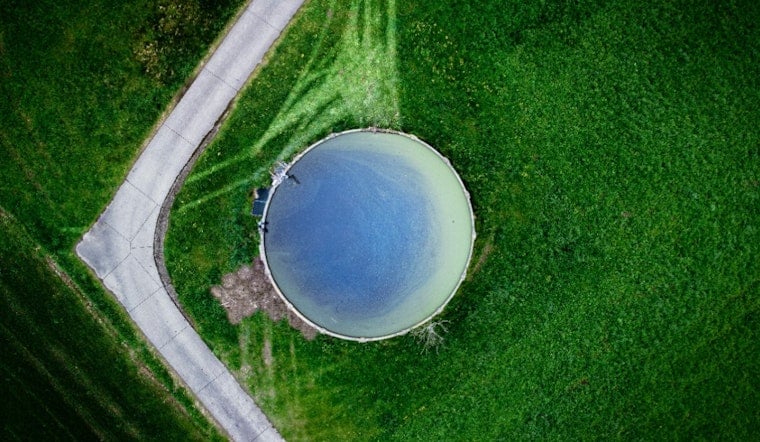
The U.S. Department of Justice and the New Jersey Attorney General’s Office have sued the Passaic Valley Water Commission, accusing the utility of leaving three drinking water reservoirs uncovered for nearly two decades in violation of the Safe Drinking Water Act. The Great Notch, Levine, and New Street reservoirs supply water to about 800,000 people across northern New Jersey, and federal and state authorities say the commission has failed to fully fix the problem since early 2009.
According to New Jersey Monitor, the lawsuit seeks a judge’s order requiring the commission to either cover the reservoirs or treat the water, along with public notification of the problem, unspecified public health protections, and financial penalties for every day the utility remains out of compliance. The commission distributes finished water treated at its Little Falls Water Treatment Plant to the three downstream reservoirs before it reaches customers in Paterson, Clifton, Passaic, Prospect Park, Lodi, North Arlington, and Woodland Park, as well as 22 wholesale customers spanning Passaic, Bergen, Essex, Hudson, and Morris counties. The Passaic Valley Water Commission did not respond to the outlet’s requests for comment.
Uncovered reservoirs can be tainted by stormwater runoff, animal waste, and other contaminants, exposing people to viruses and parasites including Cryptosporidium and Giardia lamblia, which can cause diarrhea and other gut illnesses, the New Jersey Monitor reports. The outlet also notes that uncovered reservoirs have caused periodic stormwater contamination and elevated lead levels, and that Hurricane Ida flooding in 2021 led to a six-week water advisory for the system.
A Regulatory Problem Older Than the Lawsuit
The legal action, filed August 12 in the U.S. District Court for the District of New Jersey, requires PVWC to pay a $132,500 civil penalty, according to the Federal Register. The commission also previously entered into a consent order with the New Jersey Department of Environmental Protection that established a phased schedule for compliance, per the same account from the New Jersey Monitor, though the reservoirs remain uncovered despite that enforcement order.
The underlying issue predates the current case. PVWC’s three reservoirs are open-air reservoirs. According to the U.S. Environmental Protection Agency, the Long Term 2 Enhanced Surface Water Treatment Rule includes provisions intended to reduce risks from uncovered finished-water reservoirs and ensure that systems maintain microbial protection. The U.S. Environmental Protection Agency says the rule requires all new finished-water reservoirs to be covered.
Why Covering the Reservoirs Also Means Fighting Lead
Lead contamination is another concern for homes with older plumbing. A New Jersey Department of Environmental Protection environmental infrastructure financing report dated May 12, 2022, lists Passaic Valley Water Commission’s main-system lead service-line replacement project at $72,000,000.
Progress on fixing the problem has been uneven. Ground broke in June 2025 on a $42 million project to replace the 20-million-gallon open-air Levine Reservoir in Paterson with two enclosed 2.5-million-gallon pre-stressed concrete tanks, with completion scheduled for May 2027. That project includes stormwater detention basins and environmental site restoration, per PVWC.
A 140-Year-Old Reservoir Tangled in Historic Preservation
Part of the delay traces to the Levine Reservoir. The reservoir is being addressed through a replacement project, with PVWC planning to replace it with enclosed tanks.
Great Notch and New Street reservoirs are part of the system. PVWC’s plans for those two sites are not detailed here. Replacing and overhauling all three open-air reservoirs remains a major capital undertaking. The reservoirs serve surrounding municipalities, including Woodland Park, according to the Borough of Woodland Park.
What Happens Next
The lawsuit has been filed, but the timeline for full physical remediation across all three reservoirs remains uncertain, leaving residents served by the system to wait for the uncovered reservoirs to finally be sealed off or treated.





