

























































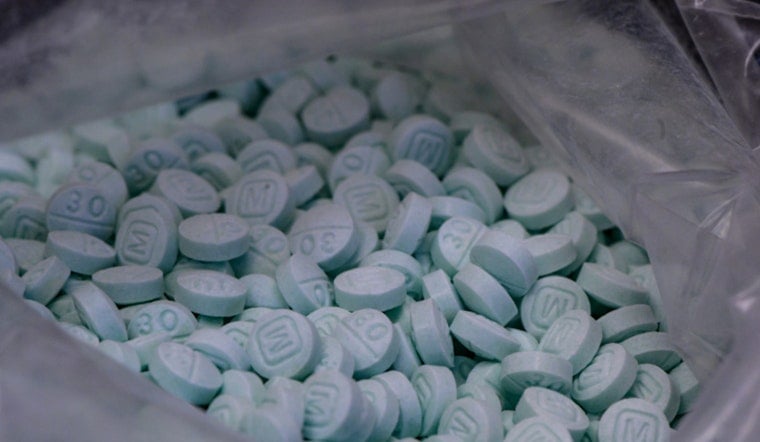
A federal judge in Minneapolis has closed the book on a fentanyl trafficking ring that funneled nearly 30 kilograms of counterfeit pills from Arizona into Minnesota, sentencing the sixth and final defendant, 38-year-old Amanda Jennifer Freeman of St. Paul, to time served and two years of supervised release. Freeman had driven a shipment of fentanyl pills from Arizona to the Twin Cities in early February 2024 and stored pills at a rental property in St. Paul that law enforcement later searched.
The case, formally titled United States v. Shiloe Devanglo Nixon et al., wrapped up with all six defendants sentenced to a combined 540 months, or 45 years, in federal prison, according to the Department of Justice. The ring, which operated between September 2023 and March 2024, sourced fentanyl pills in Arizona and redistributed them into Minnesota, per 5 EYEWITNESS NEWS.
Brothers Behind the Pipeline Draw the Longest Terms
Ringleaders Shiloe Devanglo Nixon, 37, and Malik Deronte Nixon, 30, both of Woodbury, received the harshest sentences: 180 months in prison and five years of supervised release each. Federal court filings show that between January 2022 and January 2024, Shiloe Nixon purchased more than 100 one-way airline tickets and Malik Nixon purchased over 30 one-way tickets between Minneapolis, Phoenix, Los Angeles, and Las Vegas, most booked late at night or on the day of travel, according to GovInfo court records.
The brothers were ultimately caught during the final interdiction, when Minnesota State Patrol troopers stopped them driving from Phoenix back to Minnesota and found nearly 10 kilograms of fentanyl pills split into separate bags inside their vehicle. Investigators say the pills were divided among nine clear plastic bags hidden inside a backpack. Both men carried extensive violent criminal records that factored into their sentences: Shiloe Nixon had prior convictions for first-degree aggravated robbery in 2009 and 2014 and third-degree burglary in 2013, while Malik Nixon had prior convictions for second-degree aggravated robbery in 2017 and third-degree assault in 2016.
A Cross-Country Supply Line Intercepted Twice
The pipeline stretched far beyond Minnesota's borders. In March 2024, New Mexico State Police intercepted 25-year-old Zakiya Niajoneu Whitney of San Tan Valley, Arizona, on Interstate 40, seizing about 10 kilograms of fentanyl pills concealed inside her vehicle during a cross-country run toward Minnesota, as reported by FOX 9. Whitney was later sentenced to time served and two years of supervised release.
Weeks earlier, on February 6, 2024, law enforcement searched a St. Paul residence and seized nearly 10 kilograms of fentanyl pills there as well, tying that stash to Freeman's early-February shipment and storage of pills at the rental property. Two other men rounded out the conspiracy's local footprint. Ernesto Alexis Seals, 28, of Welch, sold fentanyl in late 2023 and was sentenced to 120 months in prison and five years of supervised release; officers recovered a .40-caliber semiautomatic pistol during a November 2023 search of his home. Justin Keith Banks, 37, of Rush City, received 60 months in prison and four years of supervised release, a sentence that court filings tie to his own prior felony convictions.
Officials Call the Seizure an Extraordinary Threat
Michael McCarthy, special agent in charge of Homeland Security Investigations St. Paul, said the nearly 30 kilograms of fentanyl pills recovered from the ring represents an extraordinary threat to public safety. The scale of that number becomes clearer next to local enforcement figures: the West Metro Drug Task Force seized just 2.04 kilograms of fentanyl across all of Hennepin County during 2024, meaning the Nixon ring's haul was nearly 15 times the entire annual seizure volume of a major local task force, as Hoodline previously reported.
The prosecution also reflects the unforgiving math of federal drug law. Under 21 U.S.C. § 841, trafficking 400 grams or more of fentanyl triggers a mandatory minimum sentence of 10 years in federal prison, the lowest quantity threshold among major illegal narcotics, according to the Spodek Law Group. Nationally, fentanyl trafficking accounted for 22 percent of all federal drug prosecutions in fiscal year 2025, or 3,605 cases, with 27 percent of convicted defendants receiving sentences of 10 years or longer, per the U.S. Sentencing Commission.
The Public Health Backdrop in Minnesota
The case closes against a grim statewide backdrop. Minnesota recorded 994 provisional and confirmed drug overdose fatalities in 2025, a plateau following a two-year decline, with synthetic opioids involved in 86 percent of Twin Cities opioid deaths, Hoodline has reported. Health officials have also warned that the veterinary sedative medetomidine, known as rhino tranq, has begun contaminating the local fentanyl pill supply, causing deep sedation that does not respond to naloxone alone.
While the federal case against the Nixon ring is now formally closed with all six defendants sentenced, public health agencies remain concerned that new adulterants could fill the market void left by the dismantled pipeline. The sentencing follows a string of related federal and state fentanyl cases across the Twin Cities in recent months, underscoring how deeply the synthetic opioid crisis continues to shape law enforcement priorities in Minnesota.



