

























































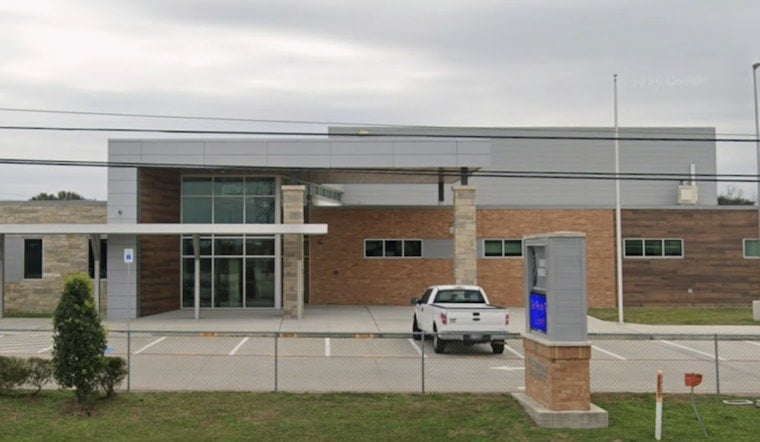
A former special education aide at Klein Independent School District has been fired and charged with a felony after allegedly injuring a student at the district's Therapeutic and Readiness Center in Spring. District police identified the man as James Broussard, who worked as a behavior technician assistant at the specialized campus before his arrest.
Broussard was charged with felony injury to a child under 15, according to FOX 26 Houston, which first reported the case and identified his precise role at the center. The alleged incident raised a red flag for the parent of another student in the same classroom, per the outlet's reporting. The Klein Therapeutic and Readiness Center opened in 2022 to provide intensive adaptive behavior support and specialized instruction for students in prekindergarten through grade 12.
Special Education Camera Law Sparks Parent Confusion
The case has drawn attention to a Texas rule that concerns parents of special education students statewide: the assumption that self-contained special education classrooms are always recorded. Under Texas Education Code § 29.022, enacted through Senate Bill 507 in 2015, districts must install video and audio surveillance in these classrooms, but the cameras are not automatically active. According to the Texas Association of School Boards, activation requires an annual written request from a parent, staff member, or board trustee, a structure intended to protect nonverbal or vulnerable students who cannot easily report mistreatment.
Even when a request is filed, cameras don't switch on immediately. Per FindLaw, districts must have operational cameras running no later than the 10th school day of the semester or 45 school business days after the request is submitted, whichever comes later, though districts can seek extensions from the Texas Education Agency for technical delays. The same statute keeps recorded footage confidential, bars live or continuous monitoring, and requires retention for at least six months, a window that extends automatically once a formal incident report or viewing request is filed until investigations and appeals conclude.
What Happens When a Parent Files a Report
Texas law also lays out what comes next once a parent formally reports suspected abuse in a monitored classroom. Guidance published by Leander ISD notes that campus administrators must respond within 10 district business days to confirm whether the event was captured on video and to notify the parent of their right to inspect redacted footage involving their own child, with unrelated students blurred out before any review.
Under Texas Penal Code § 22.04, injury to a child aged 14 or younger is a third-degree felony when the injury is intentional or knowing, carrying a punishment range of 2 to 10 years in prison and fines up to $10,000. The statute escalates to a first-degree felony if the injury is classified as serious bodily harm, per FindLaw's breakdown of the law.
Not the District's First Aide Arrest
This isn't the first time a Klein ISD instructional aide has faced criminal charges. In March 2017, an aide assigned to the Klein Alternative Education Center was arrested and charged with felony indecent contact with a child, according to KHOU; district officials said at the time that no Klein ISD students were involved in that case.
The Broussard arrest also lands amid other recent scrutiny of the district's special education oversight. Klein ISD is currently facing federal litigation from a former special education teacher who alleges the district retaliated against her after she reported child exploitation involving a colleague, a case Hoodline has kept Klein ISD on the hook in covering; a federal judge denied the district's motion to dismiss the lawsuit in late 2025.
The district, which serves more than 53,000 students across 54 campuses in northern Harris County, recently projected a $20 million operational budget surplus for the 2025–2026 school year after reversing a previous $21 million deficit, as Hoodline has reported. Broader questions remain unresolved about how consistently Texas districts inform parents of their annual right to request classroom cameras, and whether current notification procedures are transparent enough to close the gap families discover only after an incident occurs.





