

























































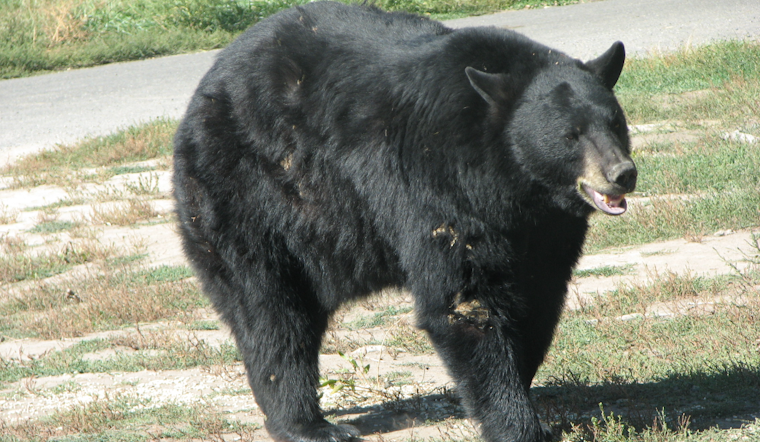
Florida is preparing to open its 2026 black bear hunt with more permits on the table than last year and, for the first time, tags set aside exclusively for large private landowners. The state will offer up to 215 permits this season, compared with 172 in 2025, with hunting set to run from December 5 through December 27 across four regions of the state.
The expansion comes a year after Florida held its first state-sanctioned bear hunt since 2015, an event that drew over 163,000 permit applications from nearly 15,000 individuals, according to CBS News. That 2025 hunt resulted in 52 bears killed over 23 days out of 172 issued permits, hunting regions that held an estimated 3,609 bears. Nearly all of those animals were killed with rifles, with the outlet noting all but three, plus a small number taken by shotgun and bow.
Private Landowners Get Their Own Tags
New for 2026, private landowners can now qualify for dedicated permits if their property spans at least 5,000 contiguous acres, according to the Tampa Bay Times. Eligible landowners must maintain an approved bear habitat plan developed by a certified wildlife biologist and carry out at least four annual conservation initiatives, such as prescribed burns or wetland restoration. The Florida Fish and Wildlife Conservation Commission reserved 22 total permits across the four hunting zones specifically for qualifying private properties, with larger tracts eligible for two permits once they document at least ten bears, or three permits with at least fifteen documented bears, while smaller qualifying properties need only five documented bears to receive one tag.
The heavy reliance on private land isn't new. State data from the 2025 hunt showed 86% of the 52 bears killed were harvested on private lands, with 54% male and 46% female, per the same fact sheet cited by the Tampa Bay Times. Private-landowner hunting under the new program begins October 1 and continues through the end of the year, running well beyond the general hunt's December 5-27 window.
How the 2026 Hunt Is Structured
The 2026 hunt spans four regions: the North Zone along the Florida-Georgia state line, which includes Hamilton, Suwannee, Columbia, Union, and Baker counties and the Osceola Wildlife Management Area with 31 permits; the Central Zone covering Sumter, Marion, Alachua, Bradford, Clay, Putnam, Lake, Orange, Seminole, Volusia, Flagler, and St. Johns counties, home to the Ocala Wildlife Management Area, with 21 permits; the East Panhandle region, which includes the Apalachicola Wildlife Management Area and covers Bay, Washington, Jackson, Calhoun, Gulf, Franklin, Liberty, Gadsden, Leon, Wakulla, and Jefferson counties, with 78 permits; and the South Zone, covering Lee, Hendry, and Collier counties while excluding the Big Cypress Wildlife Management Area, with 63 permits.
Florida residents will pay $100 for a permit while non-residents pay $300, with non-resident participation capped at 10 percent of total permits. Permits are non-transferable. Bidding for the 193 permits made available runs from September 11 at a $5 entry price, with the application window open September 11 through September 21. Drawn applicants have from September 25 through October 5 to pay for their permits; unclaimed permits will be redrawn between October 9 and October 19, and a third round for any remaining unclaimed permits will run from October 23 through November 2.
The Shadow of 2015 Still Looms
Florida's bear-hunting history informs much of the current caution around quotas. The state's first hunt in 21 years, held in October 2015, was scheduled to last a full week but was halted after just two days once hunters killed 304 bears, nearly filling the 320-bear quota, according to WUFT News. The rapid overharvest, which included lactating females, triggered a decade-long hiatus in state-sanctioned bear hunting and public backlash that still shapes how the FWC structures permit numbers today.
Florida's black bear was listed as a state-threatened species from 1974 until 2012, when the FWC removed it from the list after estimating the statewide population had recovered to over 4,000 animals, per the U.S. Fish and Wildlife Service. Despite that overall recovery, major bear subpopulations remain heavily concentrated in the Central, South, and East Panhandle regions. In 2024, Florida voters enshrined hunting and fishing rights in the state constitution, a change that has further cemented hunting's legal footing even as opposition to bear hunts specifically has continued.
Activists' Buyback Campaign and Its Fallout
Much of the current permit expansion traces back to tactics used by hunt opponents in 2025. Florida bear-hunt opponents secured numerous permits to reduce the number of bears killed, and conservation group Bear Warriors United, along with anonymous donors, offered lottery permit holders $2,000 each in cash if they agreed not to use their tags, according to Outdoor Life. Anti-hunt activists claimed to have acquired around 40 lottery permits directly through the public drawing that year. Opponents have argued the state should rely on non-lethal options to manage bear populations rather than hunting.
FWC officials warned last year that reducing the kill count through buyback tactics could lead to higher quotas in subsequent seasons, and the jump from 172 permits in 2025 to as many as 215 in 2026 reflects that warning playing out. Under existing FWC rules, the agency's executive director holds administrative authority to adjust annual bear harvest quotas and permit numbers without a formal vote or public hearing by the full board of commissioners, according to Speak Up For Wildlife. Sierra Club Florida has criticized the private landowner program specifically, describing the new rule as an exclusive, privatized trophy hunt system, and the organization has said it will work to spare more bears while hoping others will join the effort.
Vehicle Strikes Still Dwarf Hunting Deaths
Even with permit numbers climbing, hunting remains a small fraction of overall bear mortality in Florida. Vehicle collisions account for roughly 90% of documented bear deaths statewide, and 2023 saw a 20-year high of 318 vehicle-related bear fatalities, according to Sierra Club Florida. That gap between traffic deaths and hunting harvests has become a recurring point in the debate over whether regulated hunts meaningfully address population pressures or simply add another source of mortality on top of the dominant one.
Looking further ahead, FWC rules approved for future seasons will permit hunters starting in 2027 to set out bait traps and use up to six hunting dogs per permit to chase and tree bears, as reported by Oviedo Community News. Supporters of that change argue hounds let hunters confirm a bear's sex before shooting, while opponents call the practice inhumane. That prospective 2027 rule arrives against a backdrop of scrutiny over FWC's own conduct: Hoodline previously reported that FWC law enforcement staff pulled personal driving records on at least a dozen vocal bear-hunt critics under logged criminal-investigation reasons despite no active investigations existing, with Bear Warriors United founder Katrina Shadix among those whose records were queried repeatedly between 2023 and 2025.





