

























































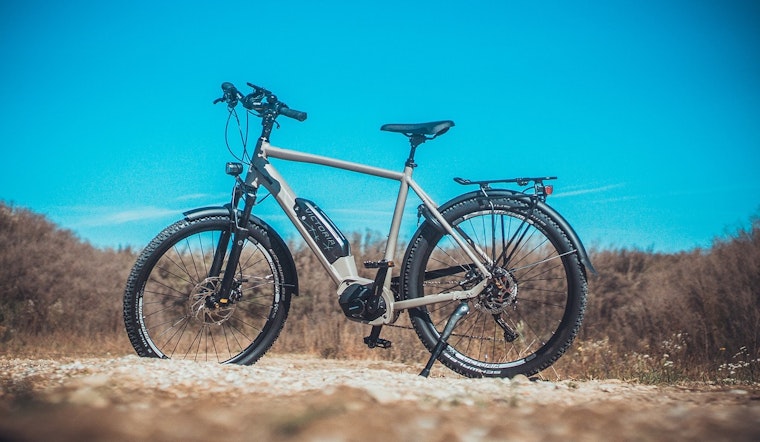
Fort Atkinson police are pushing to overhaul the city's decades-old bicycle ordinance to catch up with a boom in e-bikes, proposing new citation fines and a provision that would let officers ticket either a parent or a child for violations. The Fort Atkinson City Council gave the changes a first reading on a voice vote earlier this month, with a second reading scheduled for August 18.
Police Chief Adrian Bump brought the proposed changes to the council, explaining that the department updated the ordinance's e-bike class definitions to match state law and reviewed how other jurisdictions outside Wisconsin handle similar regulations, according to the Daily Jefferson County Union. Bump said the department's research showed more violations tied to off-highway motorcycles, e-bikes and bicycles, prompting the push for updated enforcement tools.
Under the proposal, a first offense would carry a $10 citation, while a second offense jumps to $50 plus court costs, according to Alderperson Rebecca Houseman, who clarified the fee structure for the council. With court fees included, a first-offense citation totals $77.30. The ordinance would also add parental responsibility provisions, allowing a citation to be issued to either a parent or a child.
Why Fort Atkinson Is Rewriting Its E-Bike Rules Now
Wisconsin's 2019 overhaul of its bicycle statutes created three tiers of e-bikes based on assist type and top speed, all capped at 750 watts, according to the Wisconsin State Legislature. Fort Atkinson's ordinance had not kept pace with those definitions, which is part of what prompted the update. Class 3 e-bikes, which offer pedal-assist speeds up to 28 mph, come with a built-in statewide restriction: riders under 16 are barred from operating them, though they may ride as passengers on models designed to carry one, per Wisconsin Statute § 346.806(4) as cited by Justia Law. Bump said people under 16 without a valid driver's license or road experience probably should not be operating those faster Class 3 bikes.
The stakes behind that concern have grown sharply. Madison hospitals reported a 700% increase in e-bike accident injuries between 2024 and 2025, per figures cited in the Daily Jefferson County Union's reporting. Statewide, preliminary numbers from the Wisconsin State Patrol counted 64 electric bicycles and scooters involved in traffic crashes across Wisconsin during 2025, according to the Wisconsin Department of Transportation.
No Helmet Mandate, No Licensing Requirement
Despite the safety concerns, the amended ordinance will not include a helmet requirement. Wisconsin is not a mandatory helmet state for bicycles or motorcycles, and state law does not require driver's licenses, motor vehicle registration, or liability insurance to operate e-bikes at any age, according to Ariel Rider Ebikes. That statutory backdrop helps explain why Fort Atkinson's approach leans on escalating fines and parental accountability rather than licensing mandates.
Separately, the city has long run a voluntary bicycle, e-bike and e-scooter licensing program, charging a $5 fee per unit to help officers return lost or stolen property to owners, as described on the City of Fort Atkinson's website. The city's bicycle ordinance requires residents to license their bicycles but does not require visitors to do so, and the licensing program has continued for 50 years or more. Bicycle licenses remain available to residents and visitors at the police department.
Trails, Throttles, and the Off-Highway Motorcycle Problem
State law requires e-bikes to be treated like normal bicycles on trails and prohibits municipalities from restricting e-bike use on bike trails, which limits how far Fort Atkinson can go in banning devices outright. That leaves enforcement, rather than trail bans, as the city's main lever for increasing safety around e-bike use, bike-trail traffic and compliance with street signs.
Fort Atkinson sits along the 52-mile Glacial River Trail system, which includes nearly 16 miles of paved off-road trail through Jefferson County and passes through municipal parks including Lions Park and Klement Park, according to Travel Wisconsin. That heavy trail traffic through town is part of why local officials are trying to draw a sharper line between legal e-bikes and faster, unclassed machines. Fort Atkinson's Public Works Commission has noted that electric two-wheelers capable of exceeding 30 mph are legally classified as off-highway motorcycles rather than e-bikes and are barred from non-motorized public trails, a distinction detailed in commission guidance obtained via a Watertown meeting packet.
Nearby jurisdictions have taken a different tack to the same problem. In Waukesha County, trail managers restricted shared-use path traffic strictly to Class 1 e-bikes after persistent complaints about high speeds on county trails, according to a Jefferson County parks committee packet. Fort Atkinson's proposal does not go that far, instead relying on its fine structure and parental liability clause to address the same underlying concern about speed and enforcement on local paths.
Fort Atkinson is not alone in scrambling to catch up with the e-bike boom. Cedarburg's council is drafting similar e-bike and scooter rules to align local code with the state's class definitions. The Fort Atkinson City Council is set to take up the ordinance's second reading on August 18.





