

























































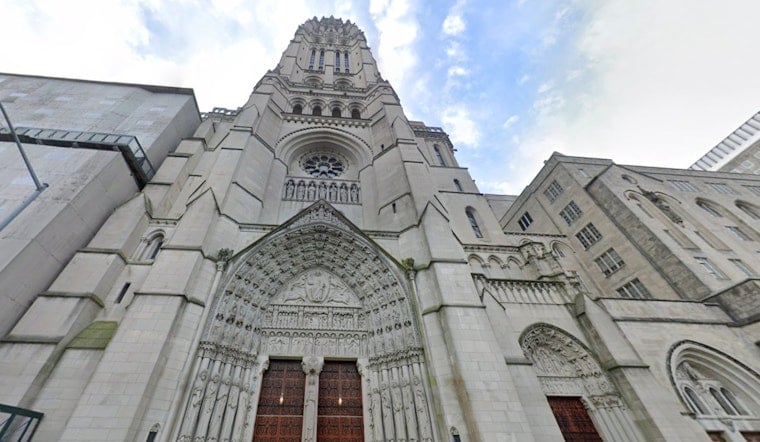
Free health screenings, disease education, and complimentary meals will fill The Riverside Church in Harlem Thursday, as the Black Health Matters Harlem Week Health Summit & Expo returns for a sixth straight year with a lineup that includes an Emmy-winning journalist, a Grammy winner, and a Central Harlem life expectancy gap organizers are determined to close.
The 2026 summit runs from 8 a.m. to 5 p.m. at the church, located at 490 Riverside Drive, offering both in-person and virtual access to health panels and screenings, according to PIX11. This year's event marks the sixth consecutive year Black Health Matters has brought its free health and wellness expo to Harlem Week, per City Guide New York.
The summit will feature co-hosts ABC7's Sandra Bookman, Emmy-winning journalist Elijah Westbrook, actor Lamman Rucker, and Grammy winner Roxanne Shanté, alongside a roster of health experts leading panels throughout the day, per the same PIX11 report.
Confronting a Decade-Long Life Expectancy Gap
The event lands against a backdrop of stark local health disparities that have persisted for years in Harlem. New York City Department of Health and Mental Hygiene data shows Central Harlem residents have an average life expectancy of just 75.1 years, compared to more than 85 years for residents of affluent lower Manhattan neighborhoods — a gap the health department has tied to how it allocates public health resources across community districts.
The racial mortality divide extends citywide. According to New York State Department of Health data reported by the Medical Society of the State of New York, the 2022 age-adjusted mortality rate in NYC stood at 822.6 deaths per 100,000 for Black residents compared to 588.9 per 100,000 for white residents — a surplus of roughly 233 Black deaths per 100,000 annually that the society attributes in part to structural inequities and delayed diagnoses.
Maternal Health and Chronic Disease Take Center Stage
Maternal health remains a particular focus for advocates. NYC Department of Health data published in 2024 and 2025 indicates that over 70% of pregnancy-related deaths in the city are preventable, and that Black women face significantly higher risks of maternal mortality and severe morbidity regardless of income or educational attainment.
Chronic disease screenings are also central to Thursday's programming. U.S. Office of Minority Health statistics cited by Black Health Matters, as reported by Formidable Woman Magazine, show Black American adults are 60% more likely than non-Hispanic white adults to be diagnosed with diabetes and 40% more likely to have high blood pressure. National Kidney Foundation data adds that Black Americans are four times more likely to develop kidney failure than white Americans, which is why the foundation says kidney health has become a featured topic across the organization's regional summits.
National public health organization Allergy & Asthma Network announced its Trusted Messengers program will join Thursday's summit, offering free respiratory health education, interactive workshops, and co-tabling with the COPD Action Alliance, according to a release distributed via PR Newswire.
A Health Advocacy Platform Born From the Affordable Care Act
Black Health Matters was launched in 2012 by former broadcast and publishing executive Roslyn Young-Daniels following passage of the Affordable Care Act, with a mission to increase health literacy and combat racial health disparities, according to Authority Magazine. Young-Daniels later expanded the organization to include multi-city live and virtual health summits starting in 2018, and the platform now conducts similar events across multiple major U.S. cities throughout the year.
Thursday's summit falls within the 52nd annual Harlem Week festival, running August 1 through 16 under the theme Honoring Our Legacy, per the Amsterdam News. The celebration traces back to 1974, when it began as a single Harlem Day created by Manhattan Borough President Percy Sutton and local civic leaders, and has since grown into a 16-day festival drawing roughly one million attendees annually. Hoodline has covered Harlem Week's revived festival and reported on the crowds swamping Harlem Summer Nights earlier this month.





