

























































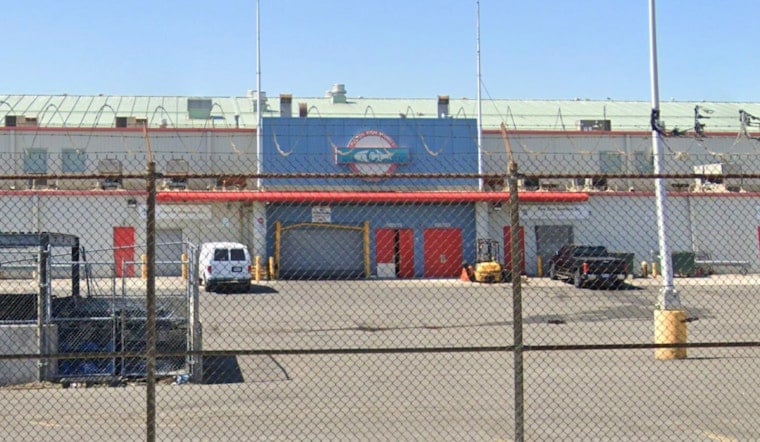
The Fulton Fish Market, the country's largest wholesale seafood market and a 204-year-old institution now based in Hunts Point, is set to receive a major infusion of city money aimed at modernizing its facility and pulling back the curtain for the neighborhood around it. City Council leaders say the new funding will upgrade the market's infrastructure, and investment plans include creating a demonstration kitchen for community classes and opening the market for public tours.
The $25 million allocation was secured by District 17 City Council Member Justin Sanchez as part of New York City's $125.8 billion Fiscal Year 2027 budget, passed in July, according to SeafoodSource. The market is home to a cooperative of 23 wholesale seafood vendors led by CEO Nicole Ackerina, and the outlet reports the co-op supplies roughly 45 percent of New York City's total seafood demand, moving between 1 million and 2 million pounds of fish through its doors each night. As News12 | Bronx reports, roughly half of that fish and seafood stays right in New York City, and many of the businesses inside the cooperative are family-run across several generations.
From South Street Seaport to the South Bronx
The market's history stretches back to 1822, when it opened at Lower Manhattan's South Street Seaport. It operated along the East River there for about 180 years before relocating to its current Bronx facility in November 2005, according to the same account. Today the New Fulton Fish Market occupies a 430,000-square-foot refrigerated facility spread across a 36-acre campus, generating approximately $1 billion in annual revenue, according to a NYSERDA report.
City Council leaders said the new funding will upgrade the market's infrastructure with systems designed to reduce carbon emissions, limit product loss, reuse excess heat, and better detect leaks, per News12's reporting. Officials said the improvements could also lower operating costs for the businesses that operate inside the facility. Community leaders separately said the investment could support small businesses inside the market and address environmental concerns long raised by nearby residents.
A Demonstration Kitchen and an Open-Door Policy
Beyond the infrastructure work, the investment plans call for a demonstration kitchen that will offer classes for community members, along with opening the market to public tours for the first time. City officials framed the moves as an effort to build stronger ties with the surrounding community and make the facility more accessible to Hunts Point residents, who have historically lived alongside the market's industrial operations without much access to what happens inside.
The fish market sits inside a much larger food hub. It's one of three major wholesale operations, alongside produce and meat, within the 329-acre Hunts Point Food Distribution Center, which collectively processes 4.5 billion pounds of food annually valued at more than $3 billion, according to the New York City Economic Development Corporation. The fish market's $25 million grant arrives as the neighboring Hunts Point Produce Market undergoes its own overhaul, with the city selecting design-build firm Aurora-Primus in December for a redevelopment backed by hundreds of millions in city, state, and federal funding, according to the City of New York.
Cleaner Trucks and Highways Already in Motion
The fish market's environmental upgrades are landing on top of several other clean-transportation efforts already underway at Hunts Point. Last July, the cooperative received four medium-duty Mack MD electric vehicles as part of the “Bronx is Breathing” initiative, moving distribution operations toward zero tailpipe emissions, per Heavy Duty Trucking. That same month, NYCEDC and Con Agg Global announced plans for a marine “Blue Highways” trans-loading hub adjacent to the fish market, aiming to eliminate roughly 1,000 truck trips a month from South Bronx roads, according to New York YIMBY.
In November, New York State completed the $1.7 billion Hunts Point Access Improvement Project, building dedicated highway corridors meant to reroute heavy market truck traffic away from residential streets, the Office of Governor Kathy Hochul announced. And in April, city leaders directed $15 million in congestion pricing revenue toward replacing diesel transport refrigeration units with electric systems across Hunts Point facilities while also expanding local asthma care, as Hoodline reported at the time. Together, the projects reflect a broader push by city and state agencies to modernize the entire 329-acre Hunts Point peninsula while addressing its long-standing environmental toll on the surrounding South Bronx community.
Exactly when construction on the fish market's demonstration kitchen and tour program will begin, and how individual cooperative vendors will absorb any transition costs, remains unclear. It's also not yet known whether Hunts Point residents will see measurable improvements in local air quality alongside the market's expanded public access. For now, the $25 million commitment marks a significant new chapter for a market that has fed New Yorkers for more than two centuries, and one that Council Member Sanchez helped steer into this year's city budget.




