

























































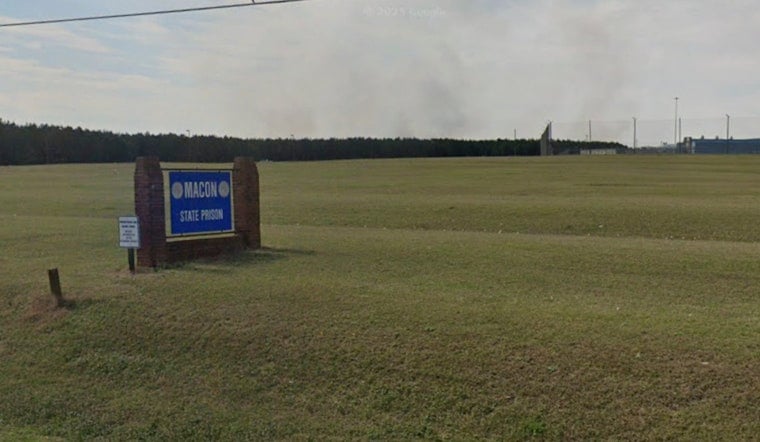
A Georgia prison inmate is accused of running a hunting lease scam that reached across 15 Florida counties, posting fake property listings and collecting deposit money from hunters who never got access to the land they thought they'd paid for. Rodney Edward Smith allegedly pulled it off using a smuggled cell phone while locked up at Macon State Prison in Oglethorpe, Georgia.
According to the CBS News report, Smith posted fake hunting lease advertisements using social media profiles and multiple online aliases, then negotiated lease terms with victims as though he actually owned or controlled the properties. He did not, according to the Florida Fish and Wildlife Conservation Commission. Investigators say he used dozens of phone numbers to keep the operation running while incarcerated on unrelated false imprisonment and other charges.
A hunting lease is a common arrangement in Florida, allowing a hunter to pay a landowner for access to private land. Smith allegedly exploited that trust, collecting deposits from victims across the 15 counties starting around July 2025, according to the same report. Randy Bowlin, FWC deputy director of law enforcement over investigations and intelligence, said the scheme did more than empty wallets.
How the Charges Stack Up
FWC investigators filed four felony charges against Smith in Gilchrist County on May 7, 2026. The most serious is a first-degree felony count of fraudulently offering property for sale or lease, a charge that under Florida Statute § 775.082 carries a maximum penalty of up to 30 years in state prison, according to The Florida Senate.
Smith also faces three third-degree felony counts: a scheme-to-defraud charge involving less than $20,000, illegal use of a two-way communication device, and cheating. The communication device charge stems directly from his alleged use of contraband phones and carries up to five years in prison under Florida Statute § 934.215. The cheating charge, defined under Florida Statute § 817.29 as gross fraud or cheat at common law, is a lesser-used provision that also carries up to five years.
“Fraudulent hunting leases not only steal from Florida people, they damage the trust between hunters and landowners that keeps our hunting heritage strong,” Bowlin said, according to CBS News. Smith is being held on a $700,000 bond, and his case is now pending in Gilchrist County.
Extradition From a Georgia Prison
Smith was extradited to Florida on August 16 from Macon State Prison, ending months of investigation that required coordination across state lines. Moving an active state prisoner like Smith requires executive warrants and formal law enforcement coordination, a process the FWC carried out alongside the Georgia Department of Corrections, the Dalton Police Department, and the Florida Attorney General's Office of Statewide Prosecution, all of which assisted in the case.
Macon State Prison is a close-security facility in Oglethorpe built to house offenders classified as high security risks, with capacity for 1,762 male inmates, according to the Georgia Department of Corrections. The prison came under new leadership in January when the department appointed Delvin Peoples as warden, succeeding Gregory Sampson, who moved on to lead Georgia's Metro Reentry Facility.
A Wider Pattern of Prison Phone Crime
Smith's alleged scheme fits into a much larger and troubling pattern of contraband cell phones fueling crime from inside Georgia's prisons. State correctional officers seized 5,482 illegal mobile devices in 2024 alone, according to the Office of the Attorney General of Georgia, which has pushed for cell-jamming technology to curb the problem.
The same facility where Smith was housed has been linked to far more dangerous schemes. In April, a federal judge accepted guilty pleas from a Macon State Prison inmate and an outside partner who used encrypted messaging on a contraband phone to direct a fentanyl trafficking pipeline connecting China to Georgia, one inmate managing suppliers while his outside partner handled distribution. In January, two inmates at Calhoun State Prison were convicted in federal court for running a nationwide jury-duty phone scam that threatened victims with arrest over missed jury service, per the U.S. Department of Justice. And in May, South Carolina's Richland County Sheriff's Department linked nine Georgia inmates to an extortion scheme that impersonated law enforcement and extracted up to $25,000 per victim using public arrest records to deceive targets.
Several questions about Smith's case remain unresolved. It is not yet clear how many total victims were affected, exactly how much money was stolen, or whether Smith had outside accomplices helping move or launder victim deposits, according to CBS News. For now, the case sits with prosecutors in Gilchrist County as Florida authorities work to untangle a scheme allegedly built phone call by phone call from inside a Georgia prison cell.





