

























































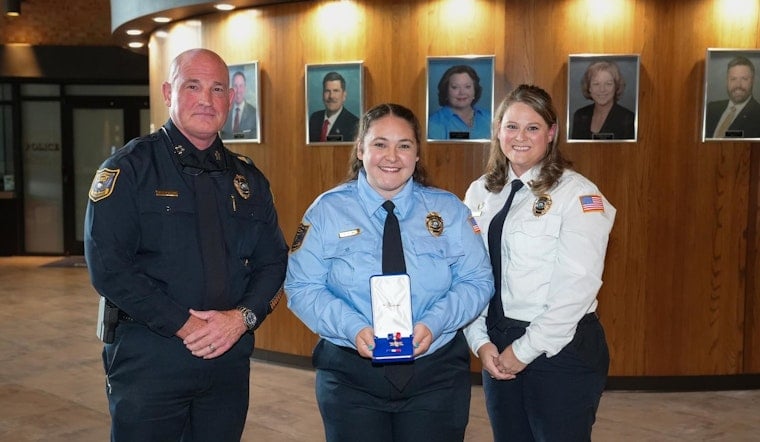
When a frantic call came into Germantown's dispatch center on May 31 about a 10-year-old boy pulled unresponsive from a swimming pool, dispatcher Kimberly “Hope” Brown heard something in the background that most people would have mistaken for a good sign: what sounded like snoring. Brown recognized it instead as agonal gasping, a telltale sign of cardiac distress, and immediately instructed the boy's family to begin CPR before first responders could reach the scene.
The city of Germantown detailed the sequence of the emergency call in a statement, noting that Brown answered the 911 call at approximately 12:23 p.m. and quickly identified the boy's breathing pattern as a critical warning sign rather than a benign one, according to the City of Germantown. Agonal breathing, characterized by irregular gasping that can sound like snoring or snorting, is frequently mistaken for normal breathing during cardiac and drowning emergencies, which makes catching it over the phone especially difficult and especially valuable.
Brown's instructions kept the family performing CPR until Germantown Fire and EMS personnel arrived and took over care. On-duty Fire Battalion Chief Keith Bartozzi and EMS Chief Jerome Cole credited her guidance with directly enabling the boy's survival, noting that he was conscious and alert by the time he reached Methodist Le Bonheur Children's Hospital, the city said. That outcome reflects what emergency medicine researchers have long documented about the critical minutes before paramedics arrive.
A State Mandate Built Around Moments Like This
Brown's actions weren't improvised bravado; they were the product of a training pipeline Tennessee has required of every 911 telecommunicator in the state since 2021. Under Tennessee Code § 7-86-205 and related administrative rules, telecommunicators must complete Telecommunicator CPR training and give telephone CPR instructions any time cardiac arrest or respiratory distress is identified on a call, per rules published on TN.gov. Separate state regulations also require every Tennessee Emergency Communications District to run a formal quality-assurance program that tracks metrics such as time to cardiac arrest recognition and includes monthly audio reviews of dispatchers, meaning Brown's call is likely to undergo the same kind of clinical review as a matter of routine oversight.
The stakes behind that mandate are well documented. Dispatcher-assisted telephone CPR can double or triple a patient's odds of surviving an out-of-hospital cardiac arrest and accounts for up to half of all bystander CPR performed in communities with active T-CPR programs, according to the American Heart Association. Without immediate bystander intervention, survival rates for out-of-hospital cardiac arrest average only around 10% nationally, underscoring just how much weight rested on Brown's ability to catch the warning signs in those first seconds of the call.
Recognition at City Hall
Germantown's Board of Mayor and Aldermen presented Brown with the Germantown Police Department Dispatch Life Saving Award earlier this week, on August 25, citing her professionalism, skill and dedication to the community. It's not the first honor for Brown, who joined the Germantown Police Department in 2021 and was previously named the department's 2024 Dispatcher of the Year, a distinction Hoodline covered last year alongside her background and path into law enforcement. According to the city, Brown began her law enforcement training at age 12 through an explorer program and now holds APCO Certified Training Officer credentials.
The city's Facebook account also shared footage of the recognition, framing Brown's calm handling of the call as central to the boy's survival, according to the City of Germantown, Tennessee Government.
A Pool Emergency Inside a Larger Public Health Pattern
The near-tragedy also lands within a sobering national pattern. Drowning is the second leading cause of unintentional injury death among U.S. children ages 5 to 14, trailing only motor vehicle crashes, according to the Centers for Disease Control and Prevention. The CDC's data reflects an ongoing average of roughly 4,000 fatal drownings annually in the United States, a reminder that pediatric water emergencies remain a persistent threat even amid otherwise routine summer pool days.
Germantown's dispatch team continues to field these kinds of calls out of a City Hall dispatch room with a staff of roughly 24 public safety dispatchers, an arrangement Hoodline detailed after county funding for a standalone hub stalled earlier this year. Local officials have maintained backup consoles at Fire Station 4 while pursuing longer-term call center capacity solutions. Regionally, the Shelby County 911 Emergency Communications District reported handling 611,002 emergency 911 calls and more than 1.78 million total calls across all municipal public safety answering points through August 21, underscoring the sheer volume of calls dispatchers across the county manage day to day.
Germantown dispatchers also rely on Next Generation 911 location technology, including RapidSOS, which lets telecommunicators pinpoint device locations and cross-reference real-time data during critical calls. It's the kind of technological backbone that, paired with rigorous state-mandated training, turned a single well-recognized sound over the phone line into a full recovery for a 10-year-old boy who is now expected to be fine.




