

























































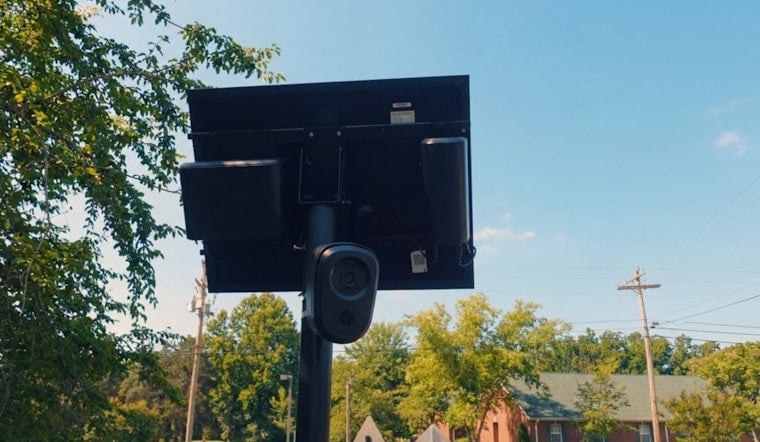
A Flock Safety license plate camera at the intersection of Bloomingdale and Armitage in Glen Ellyn was cut down completely, its video cords sliced and its housing spray-painted, according to a report from NBC 5 Chicago. The vandalism lands squarely in the middle of a suburban Chicago debate over the automated license plate readers, with the Will County Board set to vote Thursday on seven separate agreements to install the cameras on county property.
Glen Ellyn currently has two Flock cameras at that intersection, and NBC 5 Chicago reports that the network's data feeds into a searchable database used both by law enforcement and by private neighborhoods. The cameras themselves record license plates along with a vehicle's make, model, color, dents, and even bumper stickers on public roads. Police departments across the region are increasingly turning to the technology as a crime-fighting tool, even as the backlash against it grows nationwide.
The proposed Will County agreements would allow license plate reader cameras on county highways for Mokena, Crete, Manhattan, Beecher, Frankfort, Naperville, and Wilmington, per the station's report. Not everyone on the board is on board. Will County attorney Alonte Holiday said he is not a huge fan of Flock cameras, telling the outlet the technology intrudes too far on privacy. Romeoville representative Destinee Ortiz said the growing, searchable camera network changes what government can know about where people travel, and she plans to vote against the proposals.
A Company Under Pressure Nationwide
Flock itself is making changes amid greater scrutiny. Flock spokesperson Paris Lewbel said the company aims to help communities solve and prevent crime while respecting privacy and transparency, per the same account. On August 13, the Atlanta-based company announced sweeping policy changes across its nationwide network, cutting its default data retention recommendation from 30 days down to seven, requiring mandatory criminal case numbers for searches, and rolling out automated audits to flag abnormal search activity, according to Poynter.
Those changes follow an investigation by The Washington Post that found at least 50 law enforcement officers nationwide had been accused, charged, or convicted of misusing Flock and other license plate reader systems to track romantic partners, ex-spouses, and personal acquaintances. The seed story likewise notes that current and former police officers have been accused of abusing Flock systems to stalk ex-wives and girlfriends, a pattern that has already reached the Chicago suburbs. In McHenry County, prosecutors charged former Holiday Hills Police Chief William Copp with felony official misconduct in June, alleging he used Flock license plate readers hundreds of times to track women he dated and their associates, as reported by Shaw Local.
Suburbs Split as Some Pull Back
The Glen Ellyn vandalism is not an isolated act. Civil liberties group DeFlock has tracked more than 50 U.S. municipalities that have canceled or suspended Flock contracts since early 2026, amid camera vandalism reported in multiple states, including a July case in West Virginia where a suspect charged with cutting down Flock poles gained viral online support, according to a Washington Post account cited by My Edmonds News.
Closer to home, the Oak Park Village Board voted 5-2 in August 2025 to terminate its eight-camera Flock contract over privacy and data sharing concerns, joining Evanston in ending its partnership with the company. Ahead of Thursday's vote, the Will County Board's Public Works and Transportation Committee had already raised privacy concerns, noting that Homer Glen voters previously rejected a camera referendum outright and discussing potential resolutions to prohibit ALPRs in unincorporated areas, per Farmers Weekly Review. That same committee delayed votes on five municipal agreements back in May 2026 so board members could review vendor privacy policies after the ACLU of Illinois warned about a lack of statutory accountability for private surveillance vendors, according to Frankfort Local.
Not Everyone Wants the Cameras Gone
Other officials see the cameras differently. Dale Mitchell said Flock cameras help law enforcement act proactively, prevent crime, and respond faster to emergencies. Harvey installed a Flock-based system as part of a citywide safety initiative and will retain ownership of all data its new system generates, according to the report. Suburban DuPage County police have also used perimeter Flock cameras to help solve local car thefts, as Hoodline previously detailed in a Warrenville jeep heist.
Illinois has been building out its own public ALPR infrastructure for years. The Tamara Clayton Expressway Camera Act, enacted in January 2020 and expanded in June 2022, provided more than $20 million in state funding to install hundreds of cameras across Chicagoland expressways and 21 Illinois counties, named for the postal worker killed in a 2019 highway shooting, according to WTTW. That statewide network is now facing its own legal test: two Cook County drivers filed a federal civil rights lawsuit, Scholl v. Illinois State Police, arguing that the state's more than 600 highway ALPR cameras capture hundreds of millions of monthly vehicle detections in violation of Fourth Amendment protections, according to the Liberty Justice Center.
State Steps In on Data Sharing
State officials have also moved to limit how far Illinois plate data can travel. In June 2025, Illinois Secretary of State Alexi Giannoulias directed Flock Safety to block out-of-state law enforcement agencies from accessing Illinois license plate data, after concerns surfaced that local ALPR networks were being queried by out-of-state officials to track people seeking reproductive health care or for immigration enforcement, per the Daily Herald.
The debate over license plate readers and surveillance cameras is expected to intensify as more departments seek safety improvements while also trying to cut costs, according to the seed report. Thursday's vote in Will County will determine whether Mokena, Crete, Manhattan, Beecher, Frankfort, Naperville, and Wilmington join the growing list of Chicago-area communities hosting the cameras, even as officials like Holiday and Ortiz push back and vandals in Glen Ellyn make their objections known with wire cutters and spray paint.



