

























































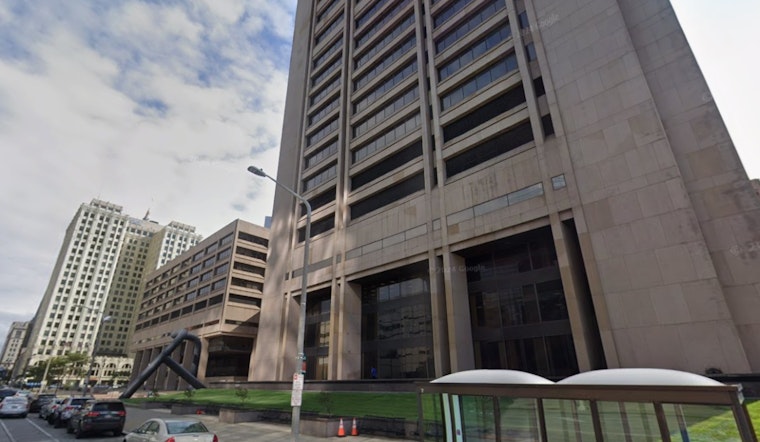
A Cleveland family says a relative experiencing a mental health crisis was left without help after Fifth District police failed to pick him up following a pink-slip order — and just over a week later, he was allegedly jumped by a group outside a Glenville senior apartment building. The family shared the account, along with photos, in a post seeking help identifying those involved.
According to a post from The Cleveland, Ohio Remembrance Page on Facebook, the man's sibling messaged the page saying their brother has mental health issues and needed emergency mental health care on July 30. The sender said Fifth District police failed to pick him up after he had been pink-slipped for hospital transport following the crisis, and that the district's fax machine was down at the time, according to the same post.
Under Ohio law, a pink slip — formally an emergency admission application under Ohio Revised Code Section 5122.10 — allows officers, sheriffs, or licensed healthcare professionals to involuntarily transport someone in crisis to a hospital if they pose a substantial risk of harm to themselves or others. The statute requires a psychiatric examination within 24 hours of arrival and permits detention for up to three court days, per the Ohio Revised Code. The Fifth District, headquartered at 881 East 152nd Street, patrols East Side neighborhoods including Glenville, Collinwood, and Nottingham, according to the City of Cleveland.
Alleged Attack Outside Senior Housing Tower
Roughly a week and a half later, on August 8, the sender told the Facebook page that a group of individuals robbed her brother at Greater Abyssinia Towers on East 105th Street, kicking him in the head and torso, throwing trash and crates at him, and following him as he walked to a drive-thru on Parkwood, per the inboxed account relayed in the post. Greater Abyssinia Towers, located at 10401 Superior Avenue near East 105th Street and Parkwood Drive, is an income-restricted apartment building serving residents aged 62 and older, according to Apartments.com.
After learning of the incident, the sender's family searched for camera footage, believing the group involved may frequent a nearby business called Volume Beauty/Wireless, which the sender said has clear color cameras positioned across the street from the towers. However, the sender reported that the camera owner would not be available to review the footage because of a family emergency. The family asked the public for help identifying the juvenile individuals involved, according to the post.
A System Split Between Police and Crisis Teams
The alleged missed pickup highlights a broader divide in how Cuyahoga County handles behavioral health emergencies. Cleveland police crisis response operates under a 2015 federal consent decree with the U.S. Department of Justice, which established Crisis Intervention Team guidelines requiring officers to receive crisis training and coordinate with mental health professionals, according to the Cleveland Community Police Commission. A March 2026 report from the federal monitoring team praised the department's progress on crisis intervention and de-escalation even as the city moved in federal court to end that oversight, U.S. District Judge Solomon Oliver still presiding, as reported by Signal Cleveland.
Separately, the county's 24-hour behavioral health crisis line, 216-623-6888, and mobile crisis teams are run by FrontLine Service, which handles emergency assessments and pre-screening for police diversion, per FrontLine's own description of its work. In February, the Alcohol, Drug Addiction and Mental Health Services Board of Cuyahoga County and FrontLine expanded unarmed Care Response teams — pairs of licensed clinicians and peer specialists — countywide through the 988 lifeline, following a 2024-2025 pilot, according to Policy Matters Ohio. That program, though, remains separate from Cleveland's primary 911 dispatch system, the same report notes, meaning residents calling 911 in a crisis may still default to police response rather than the newer clinical teams.
Legislative Push Named for Tanisha Anderson
Cleveland City Council has introduced Tanisha's Law, named for Tanisha Anderson, who died in police custody in 2014, to create a dedicated municipal department that would send unarmed mental health professionals rather than police to nonviolent emergency calls. Hoodline previously reported on the decade-long fight waged by Anderson's family and community advocates to get the reform introduced.
The gaps families describe are also tied to a statewide shortage of behavioral health workers. State health data cited in local reporting shows 75 of Ohio's 88 counties are classified as mental health shortage areas, with demand for behavioral health services climbing 353 percent between 2013 and 2019 while the licensed workforce grew just 174 percent — leaving an estimated 41 to 46 percent of mental health needs unmet statewide. Hoodline detailed that gap in its recent coverage of an $18 million state scholarship push aimed at growing the workforce.
For families seeking treatment placement outside of police response, the Cuyahoga County Diversion Center, which opened in May 2021 at 1804 East 55th Street, requires law enforcement or family referrals to first be pre-screened through FrontLine's 24/7 helpline rather than allowing direct walk-ins or pickups without prior authorization, according to the Cuyahoga County Diversion Center. It remains unclear whether that pre-screening process factored into the delay the family described in late July.





