

























































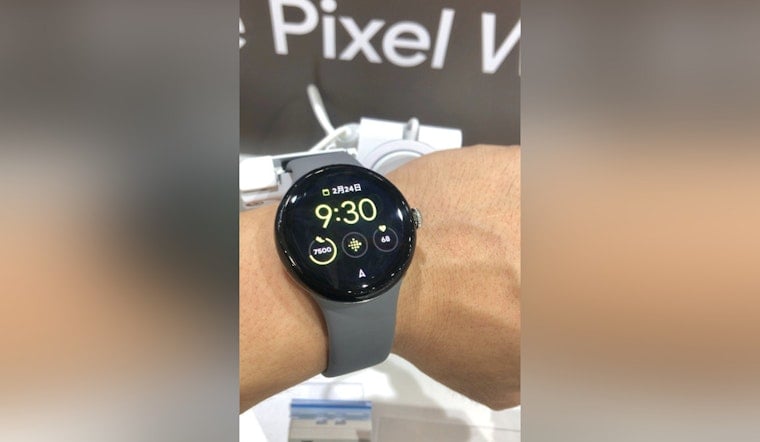
Google is putting a new kind of health monitor on your wrist: one that doesn't measure blood sugar directly but instead watches for the subtle physiological shifts that can signal a person is sliding toward diabetes before they ever get a diagnosis. The feature, called Insulin Resistance Trends, debuted alongside the Pixel Watch 5 and is part of a broader suite Google calls Health Guardian, combining artificial intelligence with accelerometer, barometer, heart-rate and skin-temperature sensors to track how hard the body is working to turn food into energy.
Alphabet Inc.'s Google unveiled the tool at a Wednesday event in New York, according to the Los Angeles Times. The company says Health Guardian is designed to help users understand subtle physiological trends and take proactive lifestyle steps, and it stresses that the new tool does not continuously monitor glucose levels the way a dedicated glucose sensor would. Google is aiming to highlight what it calls invisible bodily stress rather than diagnose, treat or directly measure glucose, the paper reports.
That distinction matters because of where federal regulators have drawn the line. The FDA issued a safety communication in February 2024 warning that no smartwatch or smart ring claiming to noninvasively measure blood glucose had been cleared or approved, cautioning that inaccurate readings could lead to dangerous insulin dosing errors. The agency later updated its general wellness guidance in January 2026 to clarify that wearables estimating physiological trends under low-risk, lifestyle-improvement claims fall under regulatory enforcement discretion, according to Covington & Burling. That framework appears to give Google room to launch a software-based insulin resistance tracker without seeking premarket medical device clearance.
How the Tracking Actually Works
Google developed the insulin feature using training data from more than 100,000 individuals, per the Los Angeles Times report. High insulin resistance can lead to prediabetes and type 2 diabetes if left untreated, and the Google Health app will notify users when signs indicate their insulin resistance has shifted, showing how meals, workouts and sleep affect the body over time. A paid version of the app includes an AI coach that lets users ask more in-depth questions about their results.
Francis Ho, cited in the Los Angeles Times piece, said insulin-resistance shifts are very subtle and that untreated insulin resistance can evolve into more serious conditions. Ho added that integrated glucose monitoring is still evolving, but believes advances in sensors and artificial intelligence will eventually move the industry toward more fully integrated glucose monitoring.
Users who already own a continuous glucose monitor can connect it through the Health Connect app. Google is integrating insights from Abbott Laboratories' Lingo continuous glucose monitor directly into Google Health. Abbott received FDA clearance for the over-the-counter Lingo device in June 2024 and launched the 14-day upper-arm biosensor in the U.S. that September for adults managing metabolic wellness, according to Abbott.
A Crowded, Fast-Moving Market
Google isn't alone in chasing this space. Dexcom's Stelo became the first over-the-counter continuous glucose monitor cleared by the FDA for adults not using insulin in March 2024, and that clearance was expanded in June 2026 to include children as young as two, per the FDA. Dexcom Inc. also invested $75 million in Oura Health Oy in 2024, and Whoop Inc. is exploring adding blood-sugar-monitor data to its own platform, while Apple Inc. has tested a blood-sugar app for people with prediabetes, the Los Angeles Times reports.
Samsung has taken a different approach in its Galaxy Watch line, using what it calls an Advanced Glycation End-products Index to track metabolic health indicators over time without offering direct glucose readings, according to TechRepublic. Google's insulin-resistance feature is described as a first among consumer technology companies, though the broader race toward noninvasive metabolic insight is clearly heating up across the industry.
Who This Could Actually Help
The scale of undiagnosed metabolic disease in the U.S. helps explain why tech companies are racing into this space. More than 115 million U.S. adults, over 2 in 5, have prediabetes, and 8 in 10 of them don't know it, according to the CDC's National Diabetes Statistics Report. Separately, 40.1 million Americans are living with diabetes, with roughly 11 million of those cases undiagnosed, per updated CDC surveillance data.
The stakes for catching these conditions early are backed by clinical evidence. NIH-supported clinical trial research found that structured lifestyle interventions cut the risk of developing type 2 diabetes by 58% in adults with prediabetes, and by 71% in adults 60 and older, according to the CDC. That data underscores why flagging insulin resistance early, even imperfectly, could prompt lifestyle changes before a full diabetes diagnosis arrives.
Concerns about wearable glucose technology aren't purely theoretical. An Oakland family's product liability case tied to an Abbott glucose sensor recall has already raised questions about the reliability of glucose-adjacent hardware, a reminder that accuracy and follow-through remain open questions for any algorithmic screening tool, including Google's.
Pricing, Availability and What Else Is Coming
The Pixel Watch 5 comes in canyon, fog and olive colors and is available in 41-millimeter Wi-Fi and 45-millimeter models, with the 41-millimeter version starting at $399 and the 45-millimeter model priced at $429. A Stephen Curry Edition Pixel Watch 5 will run $579 and becomes available September 3. The watch also includes improved GPS, faster speeds, more processing power and 50% more memory than prior models, and it will later receive step-by-step strength-training guidance.
Health Guardian features, including new blood-pressure trend and nighttime-breathing tools announced alongside the insulin tracker, will debut on the Pixel Watch 5 and Fitbit Air before reaching other devices, per Google. Insulin Resistance Trends specifically is expected to roll out via software update to Pixel Watch 3 and Pixel Watch 4 models as well as Fitbit Air in September 2026, according to TechRepublic, meaning current owners won't necessarily need new hardware to get the feature.
Google's Health Guardian platform on the Pixel Watch 5 also includes an opt-in Breathing Emergency Detection feature that uses AI along with heart rate, barometer and accelerometer sensors to alert emergency services if a user's blood oxygen drops critically, according to Engadget. Google says the exact timing for some Health Guardian features will come at a later date.





