

























































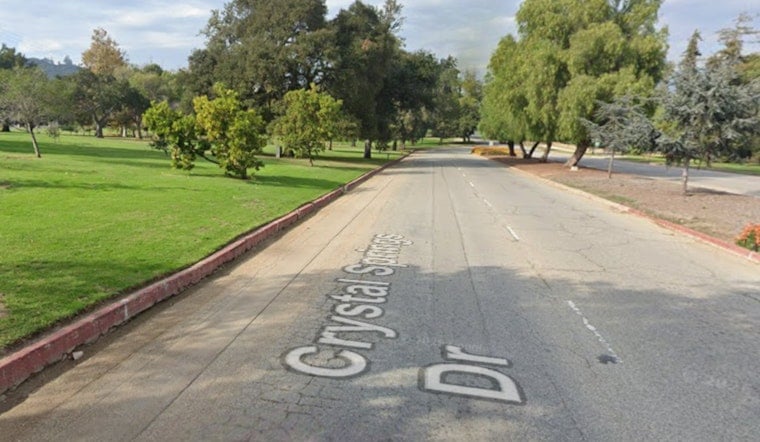
Hundreds of people are expected to gather at Griffith Park this fall for the seventh annual Shatterproof Walk to End Addiction Los Angeles, an event organizers say will honor those lost to substance use while raising money for treatment and recovery resources across the region. The walk is set for November 7 at 4669 Crystal Springs Drive, following an accessible, dog-friendly route through the park.
Shatterproof announced the return of the Los Angeles walk on Wednesday, according to MyNewsLA.com. The event will bring together people in recovery, families, advocates and health care representatives, and it will include a community resource village featuring treatment, recovery and family-support resources, along with remembrance activities and personal stories from people affected by substance use disorder. Los Angeles is one of six Shatterproof walk events held around the country this year, per the outlet's report.
Shatterproof CEO Pam Jenkins said the event is about more than a single day. “The walk brings communities together to honor those lost and celebrate recovery,” Jenkins said, according to the same report. She added that “everyone should have access to quality, evidence-based care,” even as she acknowledged the work still ahead: “Progress is possible but too many families are struggling to find needed care and support,” Jenkins said.
Local Numbers Show Progress, But Gaps Persist
Organizers cited Los Angeles County data showing 1,791 drug overdose deaths in 2024, a 21% decrease from 2023, alongside 3,819 non-fatal drug overdose hospitalizations, down 9% over the same period. Fentanyl remained the dominant driver of the crisis locally, involved in 91% of opioid-related overdose deaths and 48% of non-fatal opioid-related overdose hospitalizations countywide, per the statistics Shatterproof cited.
Newer county figures suggest that decline has continued. Accidental drug overdose and poisoning deaths across Los Angeles County dropped for a third consecutive year in 2025, falling to 2,298 deaths — a reduction of nearly 30% from the 2022 peak of 3,220, according to the Los Angeles County Department of Public Health. Fentanyl-related deaths specifically fell 10% between 2024 and 2025, putting them more than 40% below their 2022 peak, the department reported.
Yet the county's own numbers show that progress hasn't reached everyone equally. Overdose deaths among adults 65 and older rose 14% in 2025 even as the countywide total declined, while adults 40 to 64 accounted for 53% of all drug mortality, the health department found. Shatterproof's cited data similarly showed adults ages 35 to 44 had the highest overdose death rates among age groups in the county, men had an overdose death rate about 3.5 times higher than women, and American Indian and Alaska Native residents had the highest overdose death rate among racial and ethnic groups locally.
Disparities Among Unhoused and Black Residents
Overdose remains the leading cause of death among unhoused residents in Los Angeles County, having claimed more than 1,500 unhoused lives at the peak of the crisis in 2022, according to LAist. The county has directed opioid settlement dollars toward unhoused outreach and recovery housing in response, the outlet reported. Black residents continue to experience the highest per-capita rate of fatal fentanyl overdoses in the county, with fatality rates remaining disproportionately high in lower-income areas, the Los Angeles Times has reported.
Access to care remains a central obstacle underlying the walk's mission. Data cited by Shatterproof found that people with a substance use disorder did not receive needed care in about eight of 10 cases, even though roughly one in six people in California and Los Angeles County had a substance use disorder within the previous year.
State and County Investing in Harm Reduction
Public health officials have credited expanded access to the overdose-reversal drug naloxone with helping drive down fatal overdoses. Los Angeles County expanded its annual public distribution of naloxone nearly tenfold, from roughly 48,000 doses in 2020 to nearly 480,000 doses in 2024, according to AM Health Care. County officials also expanded harm reduction teams and drug-checking programs, the outlet noted.
California has moved to make naloxone cheaper statewide. Starting January 1, the state's CalRx Naloxone Access Initiative lowered the consumer price of generic over-the-counter naloxone nasal spray to $19 per twin-pack for all residents, according to the Office of Governor Gavin Newsom. The state's separate Naloxone Distribution Project has supplied free kits to community groups that have reversed nearly 400,000 overdoses, the governor's office said.
Confronting Stigma Alongside Access
Funds raised through the Griffith Park walk will support efforts to improve addiction treatment, reduce stigma and advance public policy advocacy, organizers said. Shatterproof also operates ATLAS, a free public platform that uses a brief evaluation tool to help patients and families locate and compare addiction treatment facilities based on evidence-based quality standards, a tool the U.S. Senate Committee on Finance has noted was designed to address a widespread lack of standard quality metrics in addiction care.
Stigma remains a persistent barrier nationally. A 2024 Shatterproof survey found that 74% of U.S. adults do not view substance use disorder as a chronic medical illness, and 43% incorrectly believe medications for opioid use disorder substitute one addiction for another, even though major medical associations classify addiction as a treatable chronic brain disease. Hoodline has previously covered how that stigma plays out in care decisions, and reported last year on North Carolina's own efforts to fight stigma around substance use.
Shatterproof was founded in 2012 by former hotel industry executive Gary Mendell after his 25-year-old son, Brian, died in 2011 following a decade-long struggle with substance use disorder. Mendell seeded the nonprofit with $5 million of his own money, according to Wharton Magazine. Registration details for the November 7 Griffith Park walk had not been included in the announcement.





