

























































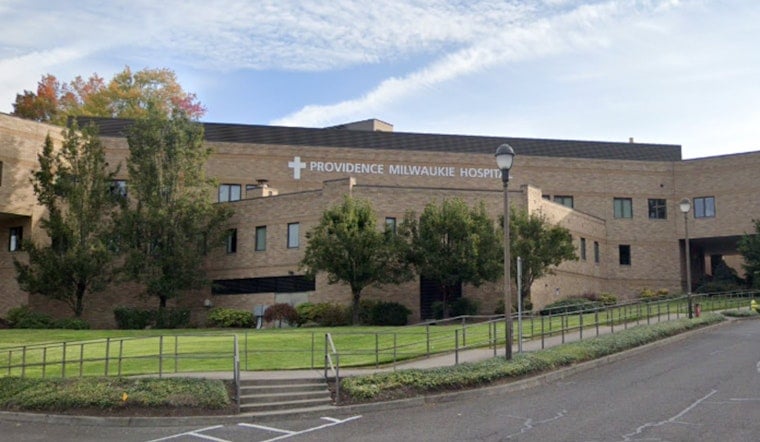
Jean Descamps was 26 years old when he was found incapacitated aboard a Portland light-rail train on December 12, 2023, and rushed to Providence Milwaukie Hospital. Four hours later, emergency room staff sent him home without ordering a toxicology test, having labeled him a “chronic problem” who was “playing possum.” He died from an overdose of street drugs shortly after that discharge.
The details of what happened inside that emergency room come from a Multnomah County District Attorney's Office declination memo, and they paint a picture of a system that saw a dying man and diagnosed defiance instead. Hospital staff administered naloxone to Descamps and believed he was experiencing symptoms of chronic street drug use, according to the prosecutor's findings. Milwaukie police officers who brought him in reportedly challenged the hospital's decision to discharge him, and staff described his condition as malingering rather than a medical emergency, as detailed by Oregon City News Online.
Federal law is unambiguous about what hospitals owe patients in this situation. Under the Emergency Medical Treatment and Labor Act, Medicare-participating hospitals are required to conduct an appropriate medical screening and provide stabilizing treatment for any emergency medical condition before discharging or transferring a patient, according to guidance from the Centers for Medicare & Medicaid Services. Descamps never got that screening, per the prosecutor's memo — no toxicology test, no deeper evaluation, just a discharge based on assumptions about his history.
Regulators Slap Hospital With Rare Warning
The fallout was swift and severe. The Oregon Health Authority and the federal Centers for Medicare & Medicaid Services issued a rare “Immediate Jeopardy” notice to Providence Milwaukie Hospital the following month, giving the facility 23 days to fix its patient discharge safeguards or risk losing federal funding, the highest level of regulatory warning a hospital can receive, according to the Portland Tribune. By February 2024, the Oregon Health Authority found the facility continued discharging vulnerable patients without proper safeguards and warned that a similar event could occur again.
Providence officials acknowledged that the care provided to Descamps was inadequate, but they also argued that hospitals should not be held responsible for what happens after patients leave their care. The hospital said it had enhanced staffing and strengthened procedures for vulnerable patients, and had promised more careful evaluation of patients before discharge in the immediate aftermath of Descamps' death.
Separately, a Multnomah County prosecutor's memo issued that same month cleared the Milwaukie police officers involved of any criminal wrongdoing, concluding that Descamps died during transport to a behavioral health center strictly from a medical event involving drug overdose and natural causes, per the same account from the Portland Tribune. The officers had raised concerns to hospital staff about his condition before that transport occurred.
A National Pattern of Diagnostic Overshadowing
Descamps' case is not an isolated failure. Reporting from KUOW/NPR found that people with serious alcohol or drug addiction regularly leave medical facilities after insufficient or no treatment at all. More than 40 million people in the United States are affected by addiction, and the outlet's reporting notes that more than 80 percent of people needing addiction help receive no medical treatment of any kind. Alcohol- and drug-related disorders kill more than 250,000 people every year in the country, while alcohol-related deaths specifically have doubled over the last two decades.
A CDC study cited in that reporting found that more than two-thirds of Americans who died from fatal overdoses in 2024 had at least one potential opportunity for intervention but did not receive help. The American Medical Association has identified stigma among health workers as a significant barrier to treatment, and the legacy of the drug war has contributed to a lingering view of substance use as a criminal or moral failing rather than a medical condition, per the KUOW/NPR reporting.
That bias shows up in survey data too. A 2024 Shatterproof survey found that 74% of U.S. adults do not view substance use disorder as a chronic medical illness, and 43% of respondents, including some healthcare professionals, incorrectly believe medications for opioid use disorder simply substitute one addiction for another. A 2020 study published in the Annals of Internal Medicine found that only about one in five American physicians expressed interest in treating a patient with opioid use disorder, with a third doubting the efficacy or safety of gold-standard medications like methadone and buprenorphine.
Medications Exist, But Training Lags Behind
The clinical tools to prevent deaths like Descamps' have become far more accessible in recent years. Congress lowered regulatory barriers to buprenorphine prescribing in 2022 when federal lawmakers eliminated the so-called X-waiver requirement under the Mainstreaming Addiction Treatment Act, allowing any DEA-registered clinician with Schedule III authority to prescribe the medication without specialized training or patient caps, according to the University of Minnesota College of Pharmacy. Buprenorphine reduces opioid cravings, misuse of it is rare, and naltrexone reduces the desire for alcohol. Naloxone, the medication given to Descamps at Providence Milwaukie, is used broadly to reverse opioid overdoses.
Following the X-waiver's elimination, the number of U.S. healthcare providers prescribing buprenorphine grew by 48.4% in 2023 to nearly 110,000, with emergency medicine physicians showing an 86.4% surge in prescribing activity, according to research presented at AcademyHealth. Yet medical and nursing schools still do not teach students how to care for patients with substance use disorders as a core practice, and medical professionals continue to show fear and hostility toward people with addiction, per the KUOW/NPR reporting. Bobby Mukkamala said reform is going in the right direction but should move faster, and credited primary care doctors with contributing to the decline in drug overdose deaths since 2023.
That decline has been dramatic on a national scale. Final 2024 mortality data from the Centers for Disease Control and Prevention show U.S. drug overdose deaths dropped by 26.2% from 2023, to 79,384, driven by a 35.6% decline in fatal synthetic opioid overdoses — the largest single-year percentage drop in recorded U.S. overdose mortality, according to the CDC. Researcher Beth Meyerson has said that expanding access to addiction treatment would reduce opioid overdose deaths by 60 to 80 percent.
Oregon lawmakers have also moved to close gaps exposed by cases like Descamps'. The state enacted House Bill 2395 in 2023 to expand public and clinical access to overdose reversal medications like naloxone and strengthen hospital discharge protocols for patients experiencing substance use crises, according to state documentation filed with the Oregon Health Authority. President Trump had declared the opioid crisis a national public health emergency back in 2017, underscoring how long the problem has been recognized even as frontline treatment gaps persisted.


