

























































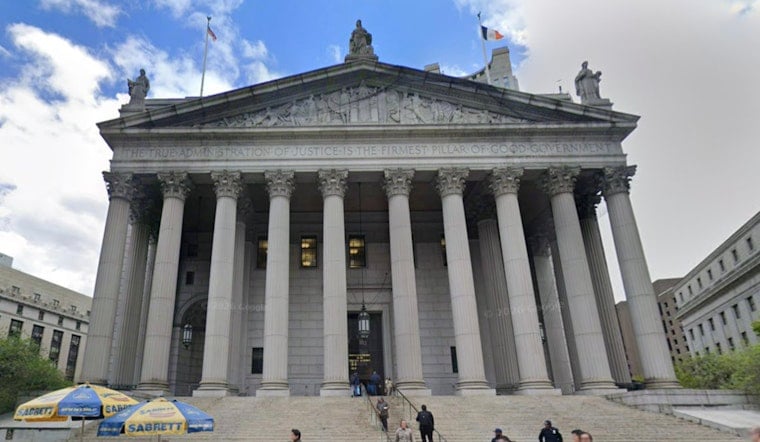
A Picasso painting stolen from a University of Pittsburgh student union building in 1961 has resurfaced after 62 years, and the Solomon R. Guggenheim Museum wants it back — along with $3.5 million in damages from the Massachusetts couple who now hold it. The museum filed suit against Lawrence Jay Handler and Wendy Cohen Handler on August 10 in New York State Supreme Court, seeking the return of Pablo Picasso's Femme dans un Fauteuil, or Woman in an Armchair.
The Guggenheim says its chain of ownership is clear: Solomon R. Guggenheim bought the painting from London's Gallery Zwemmer in 1936, and it was recorded under his name in Christian Zervos's 1949 Picasso catalog. The 13.5-by-10.5-inch oil-on-canvas piece was on loan to the University of Pittsburgh for a campus exhibition when it vanished, and it was due back at the Guggenheim by the end of February 1961. According to the New York Post, a University of Pittsburgh student first reported the theft from the student union building on February 6, 1961, and the disappearance made the front page of the campus paper, The Pitt News, two days later.
A Trail That Went Cold for Decades
Police and the FBI opened an investigation into the theft in 1961, and museums across North America were alerted to be on the lookout for the missing painting, per the Post's reporting. Authorities offered a $100 reward for information at the time — a modest sum even then, given that the painting itself was estimated to be worth as much as $100,000 in 1961. The trail then went cold for more than six decades.
The painting resurfaced only in 2023, when a Christie's researcher discovered it while evaluating a possible private sale for the Handlers, who had purchased it from the now-shuttered Manhattan gallery Beadleston Fine Art in 1999. Beadleston Fine Art closed in 2002. Christie's alerted the Guggenheim, and the museum formally demanded the painting's return that August — a demand the Handlers rejected, according to Artlyst. The painting has remained in storage at Christie's while the dispute has dragged on.
How New York Law Shapes the Case
The lawsuit's viability rests heavily on a legal doctrine the Guggenheim itself helped create. In the 1991 case Solomon R. Guggenheim Foundation v. Lubell, New York's highest court ruled that the three-year statute of limitations for recovering stolen art from a good-faith purchaser does not start running at the time of the theft or resale — it starts only when the true owner demands the work's return and is refused, according to Justia Law. That same ruling held that owners of stolen artwork have no obligation to actively search for missing pieces to preserve their legal claims, a standard that anticipates arguments defendants might raise about a museum's delay in locating its property.
That doesn't mean the Handlers are without options. Under New York law, possessors of stolen art can still raise an equitable defense known as laches if they can show the original owner unreasonably delayed demanding the work back after learning where it was, and that the delay caused them harm, according to the Harvard Law Review. Court papers reviewed by the Post do not establish that the Handlers knew the painting had been stolen when they bought it in 1999. Neither the Handlers nor attorneys for either side responded to the Post's inquiries.
Clearing the Museum's Own Title First
Before it could sue, the Guggenheim had to settle its own paperwork. After the 1961 theft, the museum had collected a $7,000 payout from its insurer, Chubb — a routine step that can otherwise cloud legal ownership of a recovered artwork until the proceeds are repaid. The Guggenheim repaid Chubb in full in late 2023 once the painting resurfaced, restoring its sole legal title, according to Hyperallergic.
A Guggenheim spokesperson said the museum has always been the painting's rightful owner and expects its recovery, per the Post. This is not the first time the institution has gone to court over a stolen piece from its own collection: in the late 1980s, the Guggenheim sued to recover Marc Chagall's 1912 gouache The Cattle Trader, which had been stolen by a mailroom employee two decades earlier. That earlier case produced the very Lubell ruling now underpinning the Picasso lawsuit.
A Honeymoon Painting Turned Legal Battleground
Picasso painted Femme dans un Fauteuil in 1918 during his Synthetic Cubist period, while honeymooning near Biarritz, France, with his first wife, Russian ballet dancer Olga Khokhlova, according to the same Hyperallergic report. Picasso, who died in 1973 at age 91, produced an estimated 50,000 works over a 78-year career — a body of work so vast that a single small canvas could vanish for six decades before its story caught up with it.
The painting's exact current value has not been publicly disclosed, though it is estimated to be worth millions of dollars today, a staggering jump from its 1961 valuation of between $10,000 and $60,000, according to the Economic Times. Lawrence Jay Handler is a practicing internal medicine physician in Massachusetts, while his wife, Wendy Cohen Handler, operates a private art and jewelry brokerage. How the painting traveled from a Pittsburgh student union in 1961 to a Manhattan gallery by 1999 remains unclear, leaving one of the case's central mysteries unresolved as the lawsuit moves forward.





