

























































A welfare check at an East Portland apartment turned into a homicide investigation after officers discovered the body of 47-year-old Johnny Alexander, and days later, detectives say they spotted injuries on him that had not been noticed at first. Portland police have now arrested 37-year-old Kenneth A. Lacey, charging him with second-degree murder and unlawful use of a weapon in connection with Alexander's death.
According to KATU, officers were conducting a welfare check at an apartment in the 12000 block of East Burnside Street on August 5 when they found Alexander's body. It wasn't until August 7 that homicide detectives were formally notified of suspicious injuries on the body, according to the station's report, prompting them to open a full investigation. The Multnomah County Medical Examiner's Office took custody of Alexander's body, and the Oregon State Medical Examiner ultimately ruled his death a homicide caused by stab wounds. Investigators believe Alexander likely died on August 1, days before he was found.
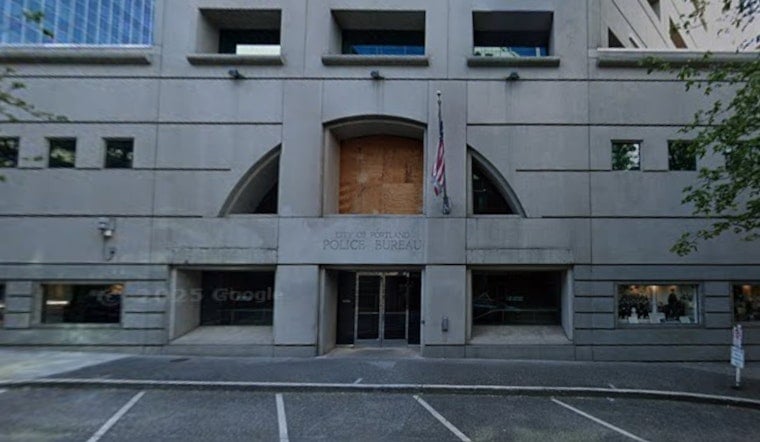
Portland Police Bureau's own account of the timeline, detailed in a release posted to the city's official website, notes that officers first responded to the apartment at 11:44 p.m. on August 5 for the welfare check, and that homicide detectives were only looped in two days later once the previously unobserved injuries were identified. That gap between the initial call and the homicide determination has not been fully explained publicly.
Suspect Arrested Blocks From the Scene
Police obtained an arrest warrant for Lacey and took him into custody on August 17 near NE 122nd Avenue and NE Oregon Street, a short distance from the East Burnside Street apartment where Alexander was found, per the same account. He was booked into the Multnomah County Detention Center and charged with second-degree murder and unlawful use of a weapon. Police assigned the case number 26-228121 and say it remains under investigation.
A significant question hangs over the case: whether Lacey and Alexander knew each other before the fatal stabbing. As KGW reported, Portland police have not publicly disclosed the nature of any relationship between the two men, leaving the circumstances that led to the killing unresolved. Police are asking anyone with information to email [email protected].
Legal Stakes Under Oregon's Measure 11
If convicted of second-degree murder, Lacey would face a mandatory minimum sentence of 25 years in state prison without the possibility of parole or sentence reduction, under Oregon Revised Statute 163.115 and Ballot Measure 11, according to the statute's full text as compiled by Crime Victims United. The separate unlawful use of a weapon charge, a Class C felony under Oregon Revised Statute 166.220, carries a maximum penalty of up to five years in prison and fines as high as $125,000, according to a guide published by oregongunlaw.com.
Another Deadly Stabbing Just Days Earlier
Lacey's arrest became public just five days after another fatal stabbing rattled the same neighborhood. On August 22, a man was killed in a parking lot in the 10200 block of Southeast Pine Street in Hazelwood, with a separate Hoodline report noting that the suspect in that case was detained near East Burnside Street shortly afterward. It marked at least the second fatal stabbing in Hazelwood within the same summer, and it follows an earlier incident on April 2, when an adult and a child were injured in a late-night stabbing near Village Square, leading to a felony arrest by East Precinct officers.
Hazelwood, one of East Portland's largest residential areas with a population exceeding 25,000, spans roughly four square miles along the East Burnside commercial transit corridor, according to City of Portland demographic data. About 61% of households in the neighborhood are rent-burdened, while 47% own their homes, the data shows, painting a picture of an area facing housing pressure alongside recurring violent incidents.
Part of a Broader, Complicated Trend
The case unfolds against a citywide backdrop of falling homicide numbers. Homicides in Portland dropped by 51% in 2025, marking the steepest mid-year decline among major U.S. cities, according to data highlighted by the Multnomah County District Attorney's Office. Fatal shootings specifically fell from 30 year-to-date in 2022 to just 6 during the same period in 2026, per public safety reports from the City of Portland, and Portland had reached only its eighth homicide of 2026 by early June, according to KATU's earlier reporting.
Even so, Hazelwood's run of knife violence in 2026 stands apart from that citywide trend. The neighborhood has now seen multiple high-profile stabbings this year alone, including the Village Square incident in April and the East Burnside corridor case that led to a December 2025 second-degree murder charge in a separate fatal apartment stabbing on SE Stark Street. Together, the cases underscore that even as gun violence recedes across Portland, knife attacks continue to test public safety along the East Burnside corridor.





